To track button clicks in Google Tag Manager (GTM), enable the built-in Click variables, create a Click trigger (Click – All Elements for buttons, or Click – Just Links for links) that matches only the button you care about, then attach it to a GA4 Event tag. Test it in Preview mode with Tag Assistant, publish the container, and optionally mark the event as a key event in GA4 so it counts as a conversion.
The whole setup usually takes 15–30 minutes once GTM and GA4 are installed. Below is the step-by-step process we use, plus the common reasons a click trigger doesn’t fire.
Why track button clicks?
Standard GA4 reports show traffic sources, pages viewed and engagement, but not which calls to action people actually use. Click tracking answers questions like:
- Do visitors click “Get a quote”, “Call now” or “Learn more” more often?
- How many people tap your phone number or email link on mobile?
- Which page or section drives the most enquiry clicks?
With that data you can test button wording and placement, and feed meaningful actions (such as quote-button clicks) into Google Ads as conversions. GA4’s enhanced measurement already records outbound link clicks and file downloads automatically, so GTM click tracking is most useful for on-site buttons, phone and email links, and form-opening buttons.
Before you start
- A GTM container installed on every page of your site (head and body snippets).
- A GA4 property, with the Google tag (your
G-measurement ID) firing on all pages, ideally via GTM. - Publish access to the GTM container.
Step 1: Enable the built-in Click variables
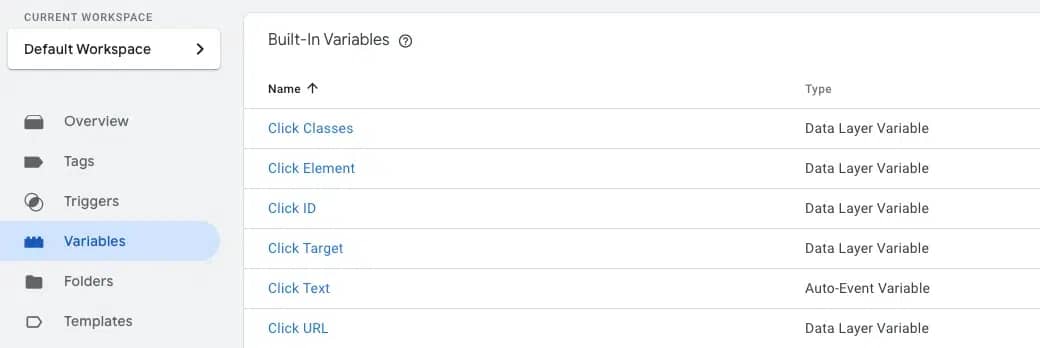
Triggers can only filter on variables that are enabled. In GTM go to Variables > Built-In Variables > Configure and tick all the Click variables:
- Click Element
- Click Classes
- Click ID
- Click Target
- Click URL
- Click Text
Step 2: Create a temporary “All Clicks” trigger to inspect the button
You need to know what GTM “sees” when the button is clicked (its text, ID, classes or URL) before you can target it. The easiest way is a temporary catch-all trigger:
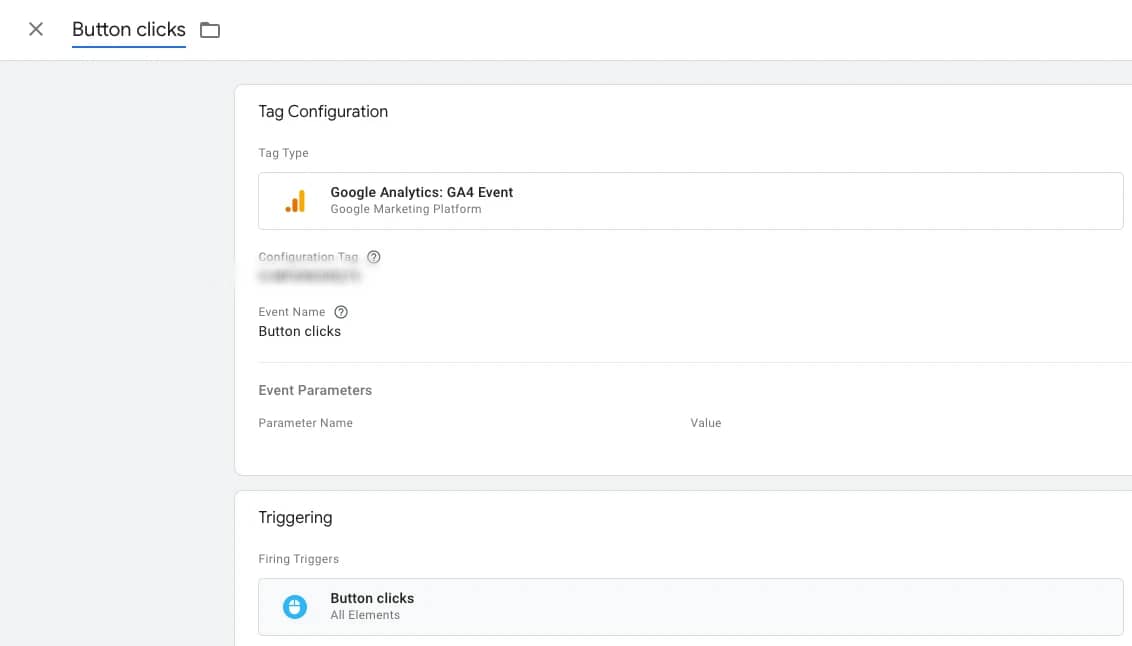
- Go to Triggers > New.
- Choose Click – All Elements (or Click – Just Links if the button is an
<a href>link). - Select All Clicks and save it.
All Elements or Just Links?
| Trigger type | Fires on | Best for |
|---|---|---|
| Click – All Elements | A click on any element (buttons, divs, images, spans, links) | <button> elements, form buttons, styled divs |
| Click – Just Links | Clicks on <a> elements only |
Links, tel: and mailto: links, buttons built as links |
Just Links also offers “Wait for tags” and “Check validation” options, which help when a link navigates away before the tag has finished sending.
Step 3: Preview and click the button
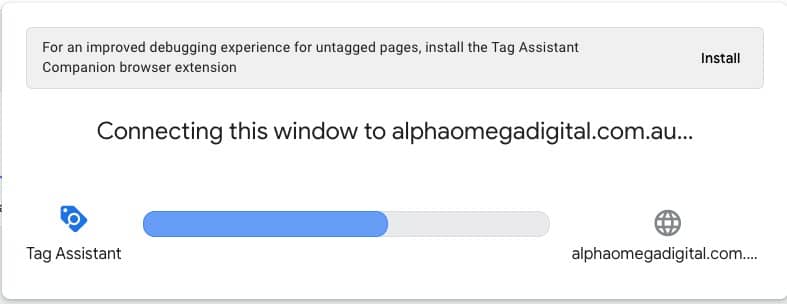
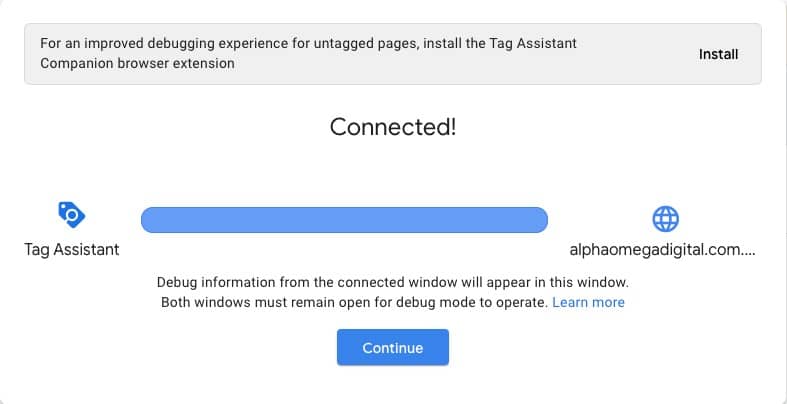
- Click Preview in GTM. Tag Assistant opens; enter your site URL and click Connect.
- Your site opens in a new window. Wait for the “Connected” confirmation.
- Click the button you want to track.
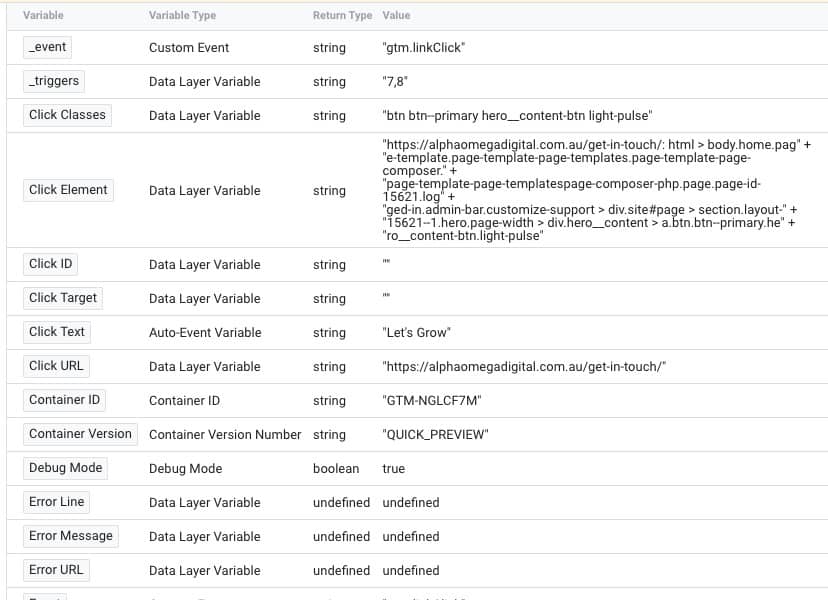
Back in the Tag Assistant tab, select the new Click (or Link Click) event in the left-hand timeline and open the Variables tab. Note the values for Click Text, Click ID, Click Classes and Click URL.
Step 4: Narrow the trigger to your button
Edit the trigger (or create a new one) and change All Clicks to Some Clicks. Add a condition that uniquely matches your button, for example:
- Click ID equals
quote-button(most reliable if the button has an ID) - Click Text equals
Get a quote(simple, but breaks if the wording changes) - Click URL starts with
tel:(all phone-number clicks) - Click Classes contains
cta-button
If clicks land on an icon or <span> inside the button, Click Text or Click ID can come through empty. In that case use the condition Click Element matches CSS selector with a selector such as #quote-button, #quote-button * so clicks on child elements also count.
Name the trigger clearly, for example “Click – Get a quote button”.
Step 5: Send the click to GA4 with a GA4 Event tag
- Go to Tags > New > Google Analytics > Google Analytics: GA4 Event.
- Enter your measurement ID (
G-XXXXXXX). - Set an Event name in lowercase with underscores, e.g.
quote_button_click. Avoid GA4’s reserved and automatically collected names such asclick. - Optionally add event parameters, e.g.
button_text={{Click Text}}andlink_url={{Click URL}}. - Under Triggering, choose the trigger from Step 4 and save.
Delete or pause the temporary All Clicks trigger once you’ve finished, so it doesn’t clutter Preview mode.
Step 6: Test, then publish
- Run Preview again and click the button. Under the click event, your GA4 Event tag should show as Tags Fired.
- Click another button and confirm the tag does not fire.
- In GA4, open Admin > DebugView to see the event arrive.
- Click Submit in GTM to publish the container. Preview mode alone does not make tags live.
Custom events can take 24–48 hours to appear in standard GA4 reports; Realtime and DebugView show them sooner.
Step 7 (optional): Mark the click as a key event
If the click represents a meaningful action, such as a quote request or call tap, mark it as a key event (GA4’s current name for what used to be called a conversion). In GA4 go to Admin > Data display > Events (or Key events) and mark the event. The event needs to have been received at least once to appear in the events list; you can also create the key event by typing its exact name.
Key events in GA4 are separate from Google Ads conversions. To use the click for bidding, either import the GA4 key event into Google Ads or add a Google Ads Conversion Tracking tag in GTM using the same trigger. For high-value actions, a completed form submission or a real phone call is usually a better optimisation signal than a button click, since many clicks don’t turn into enquiries.
Troubleshooting: why isn’t my click trigger firing?
| Symptom | Likely cause | Fix |
|---|---|---|
| No Click event appears in Preview | No click trigger exists, or GTM isn’t on that page | Keep at least one click trigger in the container and check the GTM snippet is on the page |
| Click event appears but variables are blank | Click variables not enabled, or the click landed on a child element | Enable built-in Click variables; use “matches CSS selector” with #id, #id * |
| Link clicks appear only as Click, not Link Click | The button isn’t an <a> element |
Use Click – All Elements |
| Tag fires in Preview but not in GA4 reports | Container not published, or reports not yet processed | Publish the container; check Realtime/DebugView |
| Tag fires on every click | Trigger still set to All Clicks | Switch to Some Clicks with a specific condition |
Frequently asked questions
Do I need GTM to track button clicks in GA4?
Not strictly. You could add gtag('event', …) code to the button, but GTM lets you add and change tracking without editing site code, which is easier to maintain.
Can I track form submissions the same way?
GTM has a Form Submission trigger, but many form plugins submit via JavaScript and don’t trigger it reliably. Tracking the thank-you page or a plugin’s success event is usually more accurate than tracking the submit button click.
Will click tracking work with my cookie banner?
If you use consent mode or a consent platform, GA4 tags may be blocked or send cookieless pings until a visitor consents, so reported clicks can be lower than actual clicks.
If you’d rather have click, form and call tracking set up properly across GA4 and Google Ads, our conversion tracking service covers it. Running Shopify? See how to set up Google Tag Manager for your Shopify store, or, if your Google Ads numbers don’t line up, read why Google Ads and GA4 conversions don’t match.
Jane James
Jane James is an experienced digital marketer focused on Google Ads, Meta Ads and social media. At Alpha Omega Digital she plans, builds and manages paid advertising campaigns and conversion tracking for Australian businesses, with an emphasis on measurable leads and sales rather than vanity metrics.