When I chat with online store owners, the biggest frustration I hear is the constant, draining cycle of paying for ads. You pump money into Facebook and Google, see a rush of visitors, but the second you switch the ads off? Silence. The traffic vanishes. It feels like you’re renting an audience, not building one.
This is exactly where a smart ecommerce SEO strategy flips the script.
I often compare it to setting up a physical shop. Paid ads are like hiring a promoter to stand on the street corner with a massive sign, shouting to pull people in. It works for a bit, sure, but it’s temporary and expensive.
Ecommerce SEO services, on the other hand, are like securing the best retail spot in the busiest part of Melbourne. People find you naturally because you’re right there, exactly where they’re already looking. It’s not about tricks; it’s about building a permanent, valuable asset that drives sales day in and day out.
Why Ecommerce SEO Matters More Than Ever
Let's look at the real-world impact. From my experience working as a digital marketing agency in Melbourne, I've seen that organic search is the undisputed king of traffic for Australian ecommerce, consistently driving a huge portion of visitors to retail sites.
But this isn't just about getting clicks. It’s about attracting customers with serious buyer intent. When someone types "buy men's waterproof running shoes Melbourne" into Google, they aren't just browsing—they have their wallet out, ready to make a purchase. Showing up at the top of that search is incredibly powerful. You can find out more about how SEO impacts Australian businesses here.
For local businesses, the numbers are even more convincing:
- Local SEO can be responsible for a significant chunk of a small business's search traffic.
- That local traffic is known to have much higher conversion power than generic organic results.
- A massive percentage of local mobile searches result in a purchase.
For a brand using a platform like Shopify or WordPress, optimising for these searches isn't just a nice-to-have; it's fundamental to competing and growing. It’s how you build a reliable stream of revenue that continues to deliver value long after the initial work is done. My experience as a Melbourne-based WordPress developer has shown me this time and time again.
Ultimately, it turns your website from a simple online catalogue into a powerful, automated sales machine.
The Three Pillars of a Winning Ecommerce SEO Strategy
So, what does a top-tier agency actually do? When I break it down for clients, I explain that successful ecommerce SEO isn’t just one thing; it’s a coordinated effort across three critical areas. Getting these three pillars right is the foundation of any strategy that delivers real, lasting results.
I like to think of it like building a high-performance race car. Each pillar is essential, and if one is weak, the whole machine sputters.
Pillar 1: Technical SEO – The Engine
First up is Technical SEO. This is the engine room of your website—the part customers don't see but absolutely feel. It’s all about making sure your site is fast, secure, and incredibly easy for search engines like Google to crawl and understand. This includes setting up tracking correctly with GTM and Google Analytics, and ensuring things like the Meta Conversion API are installed for accurate data.
A huge part of this, especially for large ecommerce stores, is making sure search engines can find all your important pages. This is where technical elements like sitemaps are fundamental. For anyone wanting to dig deeper, this guide to understanding the role of sitemaps in SEO is a great resource.
Key activities here include:
- Improving Site Speed: We aim for pages to load in under two seconds. Even a one-second delay can cause conversion rates to plummet.
- Mobile Optimisation: Making sure your store works flawlessly on smartphones, where a massive chunk of online shopping now happens.
- Clean Site Architecture: Building a logical structure so that both users and search engine bots can find any product within just a few clicks.
Without a solid technical foundation, even the best content and products will struggle to be seen.
Pillar 2: On-Page SEO – The Body and Dashboard
Next, we have On-Page SEO. If technical SEO is the engine, on-page is the sleek, aerodynamic body of the car and the intuitive dashboard. It’s everything you do on your actual product and category pages to signal their relevance to Google and persuade customers to buy.
This is where my experience as a Shopify developer and WordPress web developer comes into play, as each platform has its own quirks and best practices. The goal is to align your pages with the exact long-tail keywords with high buyer intent that your ideal customers are searching for.
On-page SEO is where you bridge the gap between what a search engine wants to see and what a human customer needs to feel confident in their purchase. It’s both a science and an art.
This involves meticulously optimising:
- Product Titles and Descriptions: Writing compelling copy that includes target keywords naturally.
- Keyword Research: Finding those high-intent, long-tail keywords that signal a customer is ready to pull out their credit card.
- Image Optimisation: Using descriptive file names and alt text so your product images can show up in Google Image search.
Pillar 3: Off-Page SEO – The Reputation and Roar of the Crowd
Finally, there's Off-Page SEO. This is the roar of the crowd, the glowing reviews, and the media buzz that builds your car’s legendary status. It’s all about building your store’s authority and reputation across the web, including optimising your Google My Business profile for Local SEO.
This is primarily achieved through link building—earning links from other reputable websites back to your store. In Google's eyes, every high-quality backlink is a vote of confidence.
This infographic shows how these three pillars work together, with the services supporting the store to drive traffic and, ultimately, revenue.
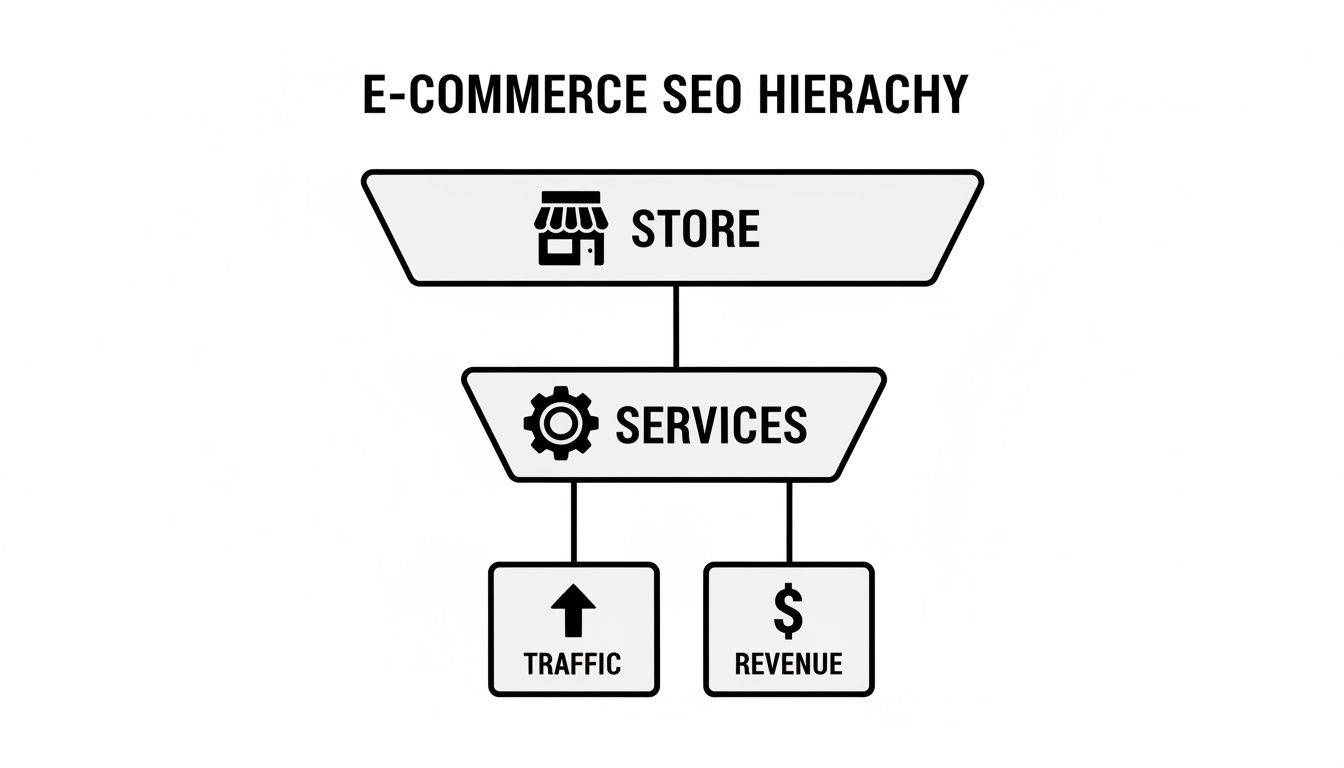
The visualisation clearly shows that a strong store foundation, supported by robust SEO services, directly translates into increased traffic and sales. When a digital marketing agency in Melbourne combines these three pillars, they create a powerful, self-sustaining growth engine for your ecommerce business.
Turning Product and Category Pages into Conversion Machines
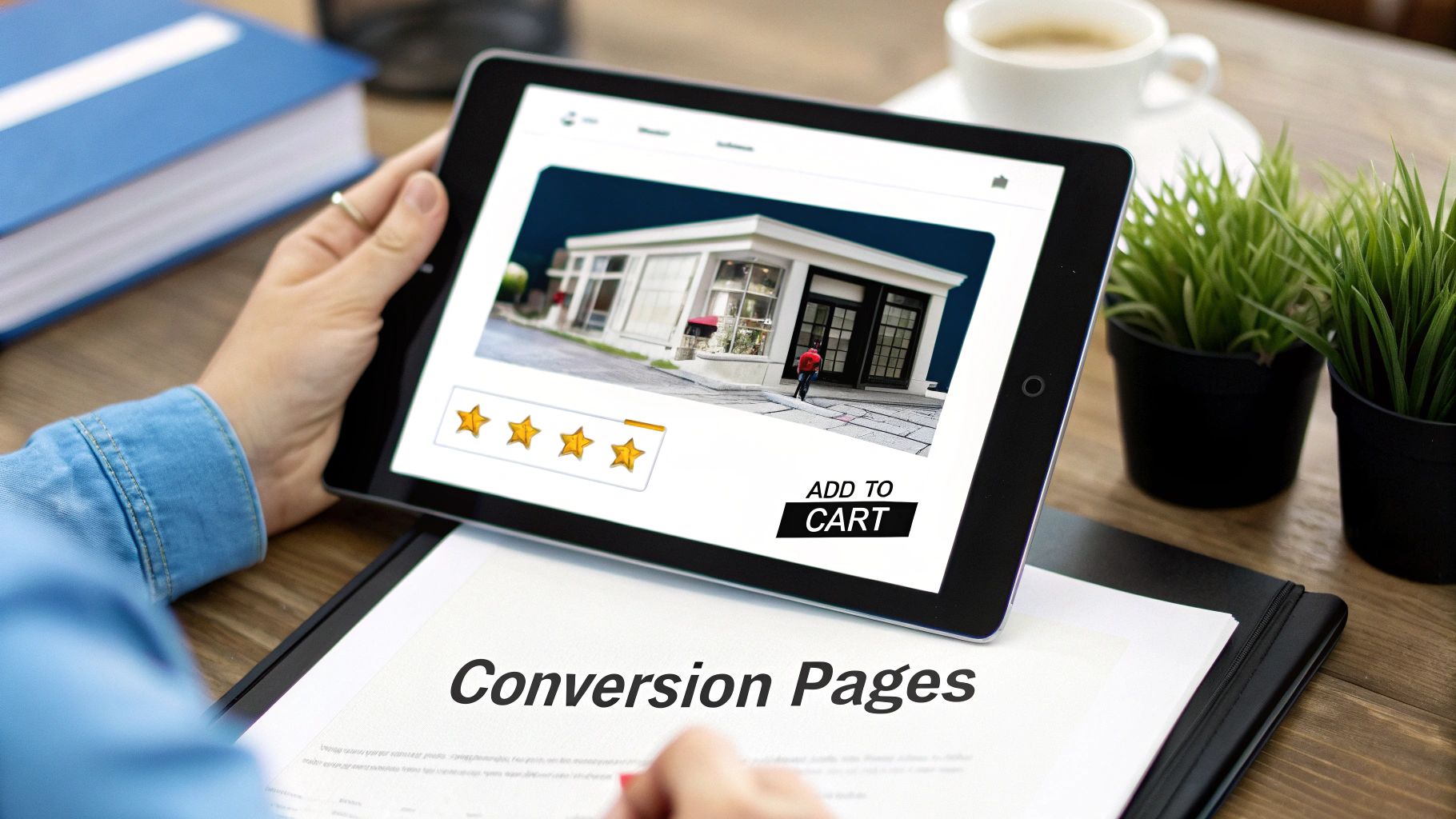
If your website’s technical SEO is the engine, your product and category pages are the showroom. This is where the magic happens. It’s where browsers become buyers, and it’s one of the most direct levers you can pull to increase revenue.
After years of hands-on work with ecommerce stores in Melbourne and right across Australia, I’ve seen that the best results come from getting inside your customer’s head. What words are they actually typing into Google when they’re ready to buy? My process always starts with deep keyword research to find these high-intent phrases—not just the obvious ones, but the long-tail keywords that signal a shopper is moments away from pulling out their credit card.
Crafting Pages That Sell and Rank
Once we know what people are searching for, the real work begins. The goal is to weave these keywords into every part of the page, but not just for Google. It has to feel natural and helpful for the person on the other side of the screen.
Here’s my approach:
- Compelling Product Descriptions: I ditch the generic, copy-pasted manufacturer blurbs. Instead, I write unique, persuasive copy that focuses on benefits, answers common questions before they’re asked, and uses target keywords in a way that feels completely natural. The aim is to inform and sell at the same time.
- Optimised Page Titles and URLs: The page title (your H1 tag) and the URL need to be crystal clear. A URL like
/womens-waterproof-trail-running-shoestells both users and search engines exactly what to expect. It’s a world away from a generic string like/products?id=8754. - Lightning-Fast Images: Slow-loading images are absolute conversion killers. I make sure every single product photo is compressed for speed without sacrificing quality. I also write descriptive alt text for each one, which helps with accessibility and gets you found in Google Image search.
The Power of Structured Data
One of the most powerful—and often overlooked—tools we have is structured data, also known as schema markup. It’s a snippet of code that gives Google specific, organised information about your product, which can then be shown directly in the search results.
Think of structured data as a special label you put on your products for Google. It allows the search engine to show rich results like star ratings, price, and stock availability right on the search page, making your listing stand out dramatically.
In my experience, the impact of these small technical tweaks is massive. Sites using structured data can see their click-through rates jump significantly. That's a huge advantage, especially when you're competing in crowded product carousels.
This simple addition transforms a standard blue link into an eye-catching, informative snippet that builds trust before a user even clicks on your site. For any modern ecommerce store, it's non-negotiable.
Perfecting Your Listings for Maximum Impact
Optimising these pages isn't a "set and forget" task. It’s an ongoing process of refinement. It means keeping an eye on what competitors are doing, understanding user behaviour with tools like heatmaps, and constantly testing new copy and layouts to see what works best.
For a deeper look into auditing your listings, especially on major marketplaces, this Amazon Listing Audit Checklist for AI Optimization is a great resource.
By treating your product and category pages as dynamic sales tools rather than static placeholders, you create powerful assets that not only climb the search rankings but, more importantly, drive conversions.
A lot of online store owners I've worked with think SEO is just about tweaking product and category pages. That's a huge mistake. As a digital marketing agency in Melbourne, I've seen firsthand that leaving content and link building out of the picture is like leaving a massive pile of money on the table. A smart content and link strategy is what builds a real, long-term competitive advantage that paid ads just can't buy.
Think of it like this: your product pages are your digital salespeople, ready to close the deal. But your content—your blog posts, your buying guides, your tutorials—is your team of expert advisors. They’re the ones building trust and guiding customers toward the right solution long before they’re ready to buy.
Creating Content That Actually Helps People
The real magic happens when you create genuinely useful content that solves your customers' biggest problems. This isn't about churning out generic blog posts for the sake of it. It's about becoming the go-to expert in your niche.
Over the years, I’ve found a few content types that consistently deliver for ecommerce stores:
- In-depth Buying Guides: A post like "The Ultimate Guide to Choosing the Right Hiking Boots" is gold. It targets people deep in the research phase and immediately positions your store as an authority. It's also the perfect spot to naturally showcase your own products without being pushy.
- Detailed Comparison Posts: So many shoppers are searching for things like "PMAX vs Google Shopping Ads." If you create an honest, detailed comparison that helps them make a decision, you’ll drive incredibly qualified traffic right to your doorstep.
- How-To Tutorials: Sell art supplies? A video or blog post like a 'Beginners guide to Google Shopping ads' is a no-brainer. It not only helps your audience but also shows off the very products you sell in action.
This kind of content does more than just pull in visitors. It builds your brand’s credibility. When a customer sees you as a helpful resource, they’re far more likely to buy from you when the time comes.
Earning Backlinks the Right Way
This is where all that great content starts paying serious SEO dividends. When you create something valuable, other reputable websites—like industry blogs, news sites, or product reviewers—will naturally want to link to it.
In Google's eyes, every high-quality backlink is a vote of confidence for your website. The more authoritative "votes" you collect, the higher your entire site can rank. It’s a powerful signal that your store is a trusted and important player in its field.
As a Melbourne-based agency, we've really honed our process for earning these votes. It’s never about begging or buying links. It’s about creating content so good that other sites want to reference it. A well-researched guide or a unique data-driven post can become a go-to resource that earns links for years to come, forming a core part of any real ecommerce search engine optimization services.
For example, imagine you sell eco-friendly packaging. A detailed guide on the "Best Eco-Friendly Packaging for Small Businesses" could get linked to by business blogs, sustainability websites, and shipping forums. Each one of those links sends powerful authority signals back to your domain. This is sustainable link building, and it creates a protective moat around your business that competitors will find incredibly difficult to cross. It's one of the many things our seo agency melbourne team excels at.
A Platform-Specific Approach: Shopify vs. WordPress SEO
While the big ideas behind SEO are universal, how you actually do it is completely different depending on your platform. I’ve spent years with my sleeves rolled up, deep in the code of both Shopify and WordPress sites, and I can tell you that a one-size-fits-all strategy just doesn’t cut it.
Real expertise comes from knowing the specific quirks and hidden opportunities of each ecosystem.
As a Shopify developer, I often see store owners getting tripped up by the platform's rigid URL structure or completely missing the chance to optimise their collection pages, which are SEO goldmines. On the flip side, as a WordPress developer, I see sites weighed down by slow plugins or using themes that were never built for speed and sales.
This is where a good agency really proves its worth. It’s not just about knowing SEO; it’s about knowing how to make SEO work flawlessly within the technical world of your chosen platform.
Mastering Shopify SEO
Shopify is brilliant for getting a store up and running fast, but it comes with a few specific challenges we need to navigate for top-tier SEO. My experience with Shopify development and design means I know how to tackle these head-on.
- URL Structure: Shopify automatically adds
/collections/and/products/to your URLs, which isn't ideal. While we can't get rid of them completely, we can make sure the rest of the URL slug is clean, keyword-rich, and easy for both people and search engines to understand. - Collection Page Optimisation: These are your most powerful category-level pages. We put a lot of focus here, writing unique, in-depth descriptions for each collection, internally linking to key products, and ensuring they target those broad, high-volume keywords.
- App Selection: The Shopify App Store is a double-edged sword. I help clients pick lightweight, powerful apps for things like reviews and schema that actually boost SEO without dragging the site down. A few poorly coded apps can absolutely destroy your page speed. We can even build custom Shopify apps using the Shopify CLI to meet unique business needs.
Unlocking WordPress and WooCommerce SEO
With WordPress and WooCommerce, you get almost endless flexibility—but that freedom can be a trap if you don’t know what you’re doing. As a WordPress developer in Melbourne, my focus is always on building a lean, powerful foundation from the get-go.
The Australian market is fiercely competitive. From my experience, I can tell you that local businesses will spend a massive amount on SEO services, with ecommerce brands leading the charge as organic search drives a huge portion of retail website traffic. This surge shows just how vital tailored ecommerce search engine optimisation services have become for businesses in Melbourne and beyond, where platforms like Shopify and WordPress are the backbone of online sales. Discover more insights about Australian SEO spending.
For WordPress, our focus includes:
- Plugin Strategy: Choosing the right plugins is critical. We stick to the essentials like Yoast or Rank Math for on-page SEO, plus a few performance-focused plugins for caching and image optimisation to keep the site blazing fast.
- Custom Gutenberg Blocks: Instead of relying on bloated page builders, we have experience building custom blocks in Gutenberg. This gives us complete control over the code, ensuring it's clean and efficient for great WordPress design.
- Theme and Speed: We often recommend starting with a lightweight theme or a completely custom build. This prevents code bloat and ensures the site is built for speed from the ground up—a major ranking factor.
Ultimately, a skilled digital marketing agency in Melbourne doesn't just apply generic SEO rules. We tailor our entire strategy to your specific tech stack, and that’s how we get far better results.
Choosing the Right Ecommerce SEO Agency in Melbourne
Finding the right partner for your ecommerce store is probably the single most important decision you'll make on this journey. A great agency becomes an extension of your team, genuinely driving growth. A bad one, on the other hand, can burn through your budget and, in some cases, even do lasting damage to your website's reputation.
In my years in this space, I've seen it all. That’s why I want to help you cut through the flashy sales pitches and focus on what truly matters. The goal here isn't just to hire a service; it's to find a partner who is as invested in your store's success as you are.
Moving Beyond the Sales Pitch
Any agency can promise you the world. They can show you impressive-looking graphs and talk a big game. But real expertise shows up in the details of their process. When you're vetting a potential marketing agency in Melbourne, you need to ask specific, probing questions that reveal how they actually work.
Vague answers are a massive red flag. A true expert will be able to walk you through their methodology with clarity and confidence. They should be transparent about their strategies and, frankly, excited to explain why they do things a certain way.
Critical Questions to Ask Any Potential SEO Partner
Before you even think about signing a contract, make sure you get clear, detailed answers to these questions. This isn't just a checklist; it's your way of gauging their depth of knowledge and their commitment to ethical, sustainable growth.
“Can you walk me through your keyword research process?”
Listen for more than just, "we use Ahrefs." A great answer will dive into understanding your ideal customer, analysing buyer intent, and hunting for those high-value, long-tail keywords that signal someone is ready to pull out their credit card.“What is your approach to link building?”
If they mention buying links, private blog networks (PBNs), or anything that sounds like a shortcut, run the other way. You're looking for an agency that talks about earning links through high-quality content, digital PR, and building genuine relationships.“How do you measure and report on ROI?”
The answer should go far beyond simple traffic numbers. A top-tier agency will talk about tracking organic revenue, conversion rates, and tying SEO efforts directly back to your bottom line using tools like Google Analytics and GTM. They should also be able to discuss setting up Meta Conversion API for Facebook Ads and how they measure success there.“What is your experience with our specific platform (Shopify/WordPress)?”
Ask for examples. As we've covered, a skilled Shopify developer or WordPress developer understands the unique technical quirks of each platform. They should be able to speak confidently about things like Shopify app performance or building custom Gutenberg blocks for WordPress. For instance, our experience with the Shopify developer API allows us to build solutions that go far beyond what standard apps can do.
The biggest red flag of all? Unrealistic guarantees. If an agency promises you "#1 rankings" on Google, they are either inexperienced or being dishonest. SEO is an ongoing process with countless variables, and no one can guarantee specific positions.
Finding the right SEO agency in Melbourne is about finding a true partner. At Alpha Omega Digital, we’re a marketing agency based in Melbourne, Australia but we also service clients from Sydney, Brisbane, Newcastle, Perth, Adelaide, Darwin and Hobart. We pride ourselves on transparency, data-driven strategies, and being genuinely invested in seeing your store succeed.
Have a project in mind? Contact us.
Frequently Asked Questions About Ecommerce SEO
I get it—investing in SEO can feel like a big leap, especially when you're trying to figure out where every dollar of your budget should go. Over the years, I've heard a lot of the same questions from ecommerce owners. Let me give you some clear, straightforward answers.
How Long Does Ecommerce SEO Take to See Results?
This is the big one, and the honest answer is: it depends. SEO isn’t an overnight fix like a Google Ads campaign. It’s more like planting a garden; it needs good soil, consistent effort, and time to grow. Marketing your business is all about consistency.
Generally, you can expect to see the first signs of life—positive movements in rankings and traffic—within 3 to 6 months.
More significant, business-impacting results, like a steady stream of organic sales, often take between 6 to 12 months to really take hold. This timeline is shaped by things like how competitive your industry is, the current health of your website, and the intensity of the SEO work being done.
Think of the first few months as laying the foundation. We're fixing technical glitches, optimising pages, and building out content. The later months are when that foundation starts to support real, sustainable growth.
Is SEO Better Than Paid Ads for My Online Store?
They aren't competitors; they're teammates. Paid ads (PPC) from a Facebook ads agency or Google Ads expert are fantastic for getting immediate visibility and testing out product demand. You pay the money, and you get traffic straight away. Simple.
SEO, on the other hand, is about building a long-term, sustainable asset for your business. The key with paid ads is not to quit too early; a proper Meta ads creative testing process takes time to yield results.
The traffic you earn from a high-ranking page is essentially free and keeps delivering value 24/7, long after an ad campaign has been switched off. A smart strategy often uses paid ads for short-term wins while building your organic presence with ecommerce search engine optimization services for lasting success.
How Much Should I Budget for Ecommerce SEO?
SEO pricing varies wildly. It can range from a few hundred dollars a month for the basics to several thousand for a comprehensive strategy from a top marketing agency in Melbourne. The right budget really depends on your business goals, the size of your store, and how aggressively you want to grow. The question isn't just about SEO but also how much does it cost to start Google Ads, and what budget to spend on Google Ads to see a return.
Instead of focusing just on the cost, I encourage clients to think about the potential return on investment. A well-run SEO campaign should pay for itself many times over through the increase in organic revenue it generates.
At Alpha Omega Digital, we build custom strategies that line up with your specific goals and budget. As a marketing agency based in Melbourne, Australia, we also service clients from Sydney, Brisbane, Newcastle, Perth, Adelaide, Darwin and Hobart. Have a project in mind? Contact us.