A Melbourne store owner once asked me for the one trick that would fix sales fast. After years in the trenches, I've learnt the answer is usually less exciting and far more useful: small moves, done properly, beat big ideas done badly.
The "Mini Orange" Misconception and the Secret to Real Growth
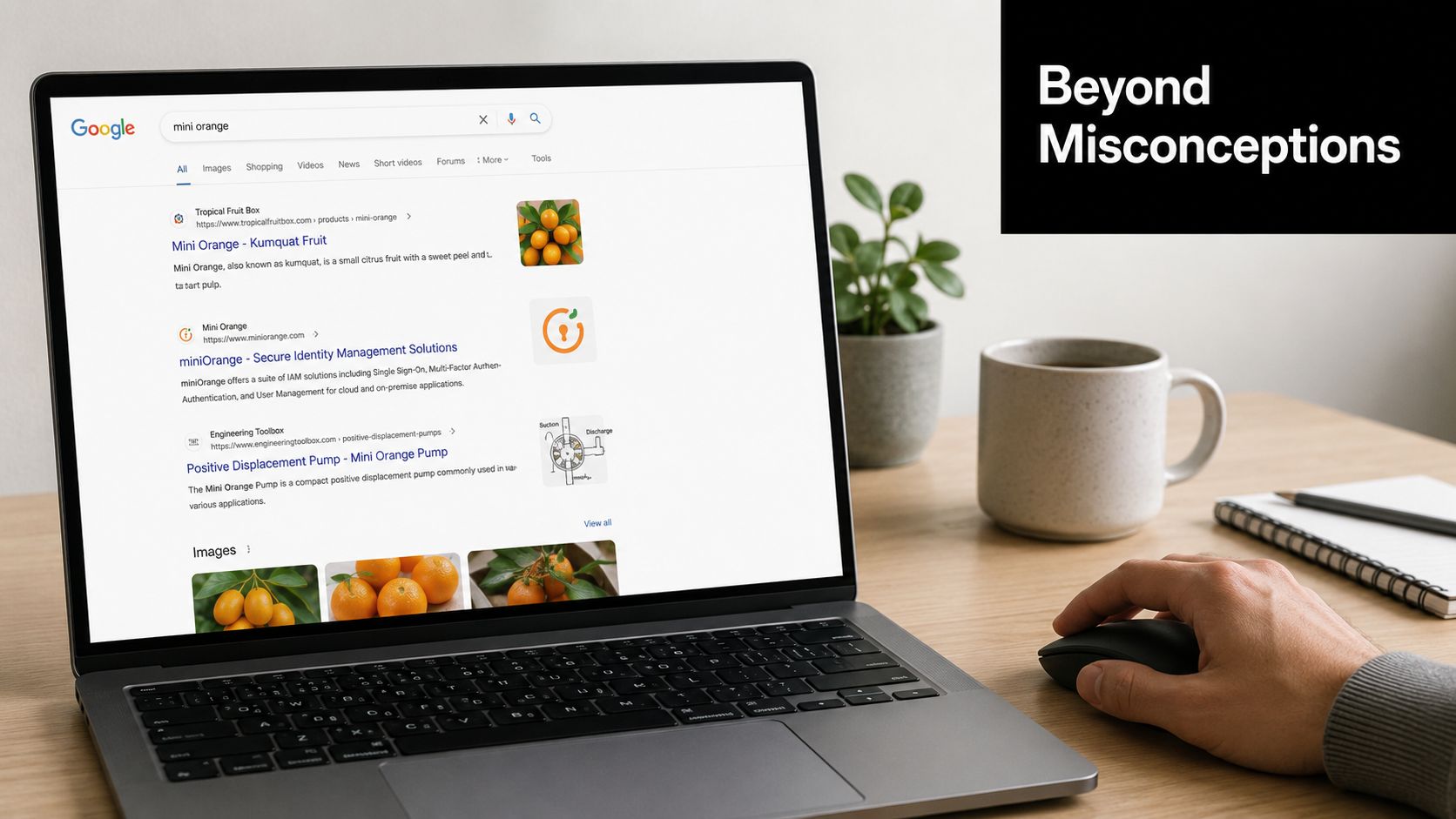
If you searched for Mini Orange, you might have meant a few different things. The term often points to miniOrange, an identity and access management platform with Australian clients like Aristocrat Technologies Australia Pty Ltd. That's real, and it matters in the software world.
But in my work as a marketing agency Melbourne operators call when growth stalls, I use “Mini Orange” differently. I use it as a shorthand for the compact, overlooked actions that create outsized business results.
Most businesses don't have a traffic problem first. They have a clarity problem. Their site is slow, their offer is vague, their tracking is half set up, and their campaigns are trying to do too much at once.
What Mini Orange really means in marketing
The Mini Orange method is simple. Find the small levers that change buying behaviour, then tighten them one by one.
That usually means things like:
- Cleaner product pages that remove hesitation instead of adding more design clutter
- Faster site builds so paid traffic doesn't land on a frustrating experience
- Better feed structure for Google Shopping so products are able to compete
- Accurate tracking through GTM, GA and Meta Conversions API
- Stronger creative testing so Meta ads stop relying on guesswork
- Local trust signals such as reviews, suburb pages and a polished Google Business Profile
None of those sound glamorous. All of them matter.
Practical rule: the boring fix is often the profitable fix.
I've seen ecommerce owners spend weeks debating logo tweaks while their checkout experience leaks revenue. I've also seen stores improve performance by tightening collection page copy, cleaning up image hierarchy, and fixing broken event tracking. The second group usually wins because they're solving real friction.
Why ambiguous keywords can reveal buyer intent
“Mini orange” is a funny keyword because it's unclear on the surface. It might refer to software, fruit, equipment, or something else entirely. That ambiguity is useful because it mirrors what happens in marketing accounts every day. Business owners chase broad ideas, but the wins often sit inside very specific, lower-competition search terms and tightly defined buyer problems.
That's why I'd rather target high-intent, long-tail queries than vanity phrases with weak commercial intent.
A few examples of the kind of searches that tend to attract stronger buyers:
| Search style | Why it matters |
|---|---|
| WordPress developer Melbourne | Clear service intent and local relevance |
| Shopify developers Melbourne | Buyer likely needs technical help soon |
| Google Ads for plumbers | Strong fit between service and need |
| Conversations API installation for Meta | Technical problem, immediate demand |
| Google Shopping ads not spending budget | Existing advertiser looking for solutions |
These are the searches that often convert better because the user already knows what problem they need solved.
The silver bullet myth hurts good businesses
A lot of Australian SMBs are sold the idea that one platform will save them. One campaign. One app. One funnel. One plugin. It rarely works like that.
Real growth usually comes from stacking competent decisions:
- Pick the right platform.
- Build a site that's easy to use.
- Set up tracking before scaling ads.
- Match channel to business model.
- Keep testing without changing everything at once.
That's the difference between random marketing and a system.
What works for ecommerce businesses in Australia
For ecommerce, the strongest setups tend to have a few traits in common.
They respect the platform
Some stores should be on WordPress with WooCommerce. Others should be on Shopify. Problems start when owners force the wrong platform because a mate recommended it or a cheap freelancer promised everything.
They treat design as sales infrastructure
A nice-looking site isn't enough. WordPress design and Shopify design need to help users buy. That means clean navigation, obvious product categorisation, strong mobile layouts, and fewer distractions.
They don't launch ads on broken tracking
A lot of wasted ad spend starts before the campaign even goes live. If GTM, Google Analytics and Meta events aren't trustworthy, optimisation gets messy fast.
Small technical errors can make smart marketers look incompetent.
They stay consistent
This is the part people skip. Good stores publish, test, refine and improve. They don't panic after a few quiet days and rebuild the whole account every week.
The real secret to growth
The secret isn't hidden. It's just overlooked because it lacks drama.
The businesses that grow usually do a handful of things better than competitors:
- They answer the customer's main objection quickly
- They make the path to purchase feel easy
- They use paid ads to amplify a good offer, not rescue a bad one
- They build pages around commercial search intent
- They review data regularly and act on it
That's the Mini Orange idea. Small, potent, concentrated actions.
If you're looking for a digital marketing agency Melbourne businesses trust for practical execution, this is the lens worth keeping. Not hacks. Not gimmicks. Not random trend chasing. Just focused work on the few variables that move sales.
Your Website Core WordPress and Shopify Development
I've seen Australian businesses burn months choosing the wrong platform, then blame Google Ads, Meta, or SEO when sales stall. In practice, the platform decision shapes everything that follows. It affects how quickly you can launch offers, how easily staff can update pages, how cleanly products are managed, and how painful future fixes become.
That is the core Mini Orange lesson at website level. Small technical decisions made early can produce outsized gains later.
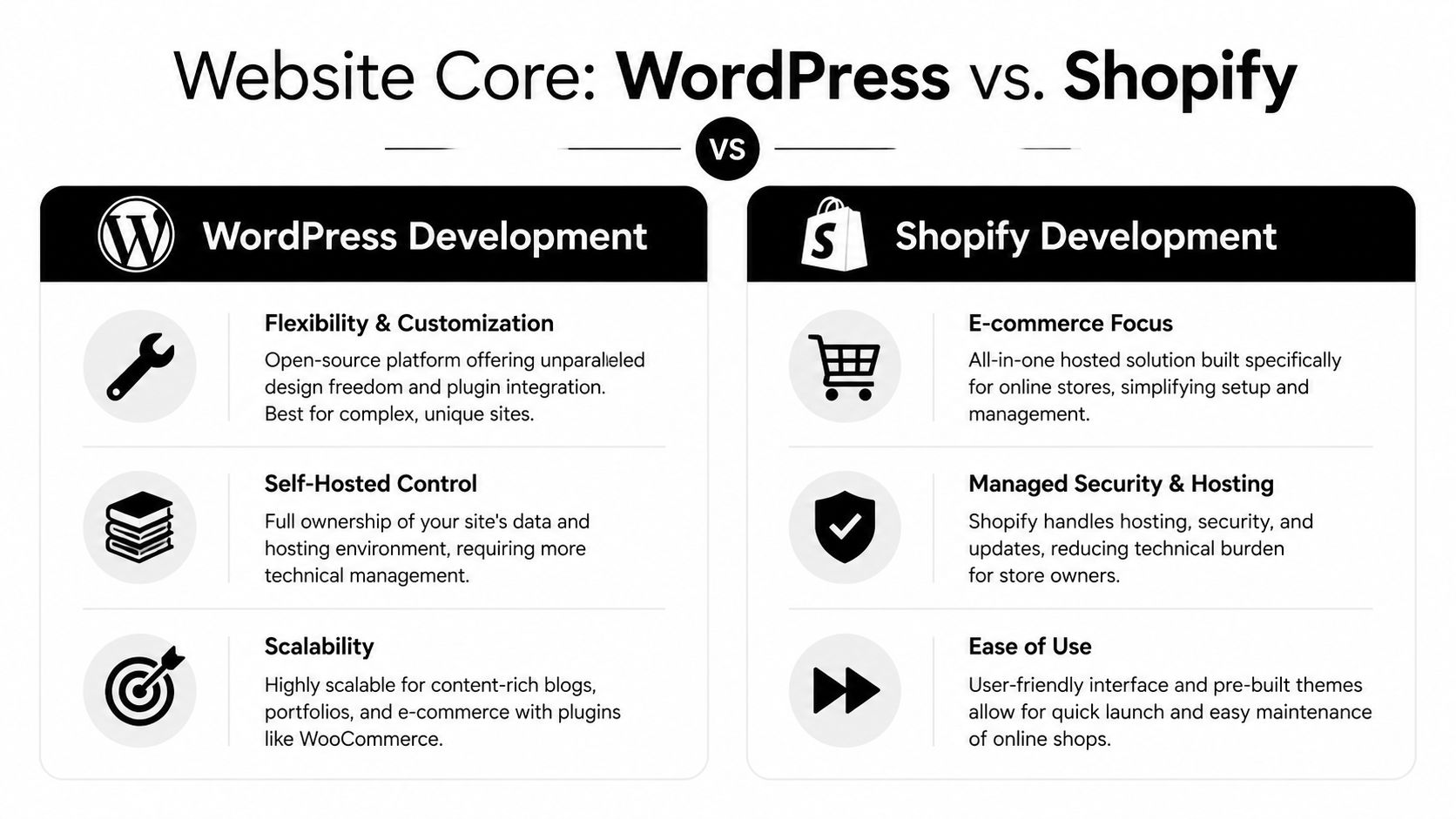
I've built on both for years, and neither platform wins by default. The better option depends on what the business is trying to do. A content-heavy brand with complex landing pages has different needs from a product-led store that wants fast operations and fewer moving parts.
For businesses looking for hands-on help with platform builds, custom themes or technical fixes, a skilled WordPress developer in Melbourne often solves very different problems from a Shopify specialist.
When WordPress is the better choice
WordPress suits businesses that need content to do heavy lifting. If organic search, education, category content, service pages, and custom landing page structures all matter, WordPress gives far more control.
WooCommerce can be a strong commerce layer too, but only if the build is disciplined. Poor theme choices, overlapping plugins, and cheap hosting turn a flexible setup into a maintenance job.
WordPress usually fits these businesses
- Content-led ecommerce brands with guides, blogs, FAQs, and SEO category pages
- Service businesses that need high-converting location pages and lead-gen funnels
- Stores with unusual layouts that do not fit standard theme logic
- Teams that want hosting control and more flexibility across plugins, fields, and templates
From my journey, one of the best WordPress decisions is building the backend for the client, not for the developer. Staff should be able to publish a page, update a trust section, or add a comparison block without ringing a dev for every small change.
Building custom blocks in Gutenberg properly
Custom Gutenberg blocks solve a problem I see all the time. A business wants consistent pages, but the marketing team keeps recreating sections manually, and every new page drifts off-brand.
A clean block library fixes that. It gives the team approved layouts for reviews, FAQs, promo bars, comparison tables, buying guides, and trust sections. Publishing gets faster. Pages stay consistent. Conversion elements appear where they should.
Good WordPress development Melbourne work should improve daily operations, not just produce a polished homepage.
A few practical wins from a proper Gutenberg setup:
- Faster content production
- Fewer layout mistakes
- Less developer dependence for routine edits
- More consistent conversion design across the site
When Shopify is the better choice
Shopify is usually the stronger option for ecommerce-first businesses that want a simpler operating system. Product management is cleaner, maintenance is lighter, and smaller teams make fewer expensive mistakes.
That matters more than features on a sales page.
In Melbourne, I generally see Shopify costs vary widely based on custom theme work, app complexity, integrations, and whether the build sits on standard Shopify or Shopify Plus. Simple builds can be manageable for SMBs. Heavily customised stores with ERP, subscription logic, wholesale rules, or custom apps can get expensive quickly, so scope needs to be tight before development starts.
What I like about Shopify for SMB ecommerce
Shopify removes a lot of avoidable friction. That is a commercial advantage for stores that need to launch, test offers, and keep operations simple.
Shopify tends to suit
| Business type | Why Shopify often fits |
|---|---|
| Lean ecommerce teams | Easier admin and lighter maintenance |
| Fast-launch stores | Less setup friction than a custom WooCommerce stack |
| Product-led brands | Strong native product and order management |
| Paid traffic stores | Faster deployment for product and landing page tests |
If the main job of the site is selling products, running promotions, managing inventory, and connecting standard apps, Shopify is often the safer choice.
For store builds, theme customisation and ongoing support, experienced Shopify developers in Melbourne can save you from expensive workarounds later.
Shopify API and custom app development
Shopify gets much more useful once a developer starts using the Shopify API and Shopify CLI properly. The platform handles standard ecommerce well out of the box, but custom development becomes valuable when the business has specific operational needs.
That might include:
- Custom fulfilment workflows
- Third-party system connections
- Specific product logic
- Internal tools for staff operations
- Automation around customer tags, orders, or subscriptions
Not every store needs a custom app. Many do not. But once a business starts stacking app after app to force Shopify into workflows it was never configured for, speed drops, costs rise, and troubleshooting becomes painful.
A cheap app stack often turns into technical debt.
WordPress vs Shopify in plain English
Clients usually need a direct answer, not a lecture.
Choose WordPress if you need
- Greater content freedom
- Deeper page-level customisation
- Custom Gutenberg workflows
- More control over hosting and infrastructure
- A site that blends publishing and commerce tightly
Choose Shopify if you need
- A cleaner ecommerce operating system
- Less maintenance overhead
- Faster setup for product-led stores
- Simpler admin for non-technical teams
- A platform built around selling first
Platform choice should follow business model, team capability, and growth plan. Trend-following is expensive.
Design is sales infrastructure
I rarely treat design as an aesthetic exercise. Good WordPress design and Shopify design reduce hesitation and make buying easier.
The strongest ecommerce design decisions usually improve four things:
- Clarity. Shoppers understand the product quickly.
- Trust. Reviews, shipping details, returns info, and contact options are easy to find.
- Flow. Every page makes the next step obvious.
- Speed. Mobile pages load quickly and feel responsive.
If a site looks polished but hides delivery times, buries sizing info, or makes filtering painful, the design is working against revenue.
Common mistakes I keep seeing
The expensive problems are usually ordinary ones repeated across dozens of pages.
WordPress mistakes
- Too many plugins doing overlapping jobs
- Bloated themes that drag down mobile speed
- No block governance so staff create inconsistent pages
- Weak hosting choices that limit performance gains
Shopify mistakes
- Over-customised themes with poor documentation
- Too many apps loading scripts sitewide
- Weak collection structures that hurt shopping flow
- Visual choices that look premium but slow purchasing decisions
What a good build should include
Whether the site runs on WordPress or Shopify, the commercial basics stay the same.
- Mobile-first layouts
- Fast page rendering
- Clear navigation and collection logic
- Simple product page hierarchy
- Visible trust elements
- Accurate analytics planning
- Content structures that support SEO growth
From my journey, the highest-performing builds are rarely the flashiest ones. They are the ones that make editing easy, keep the tech stack clean, and remove friction from the path to purchase.
Targeting buyer-intent website keywords
For agencies and service pages, broad traffic terms can fill the top of the funnel, but commercial-intent phrases usually bring stronger leads. Terms like wordpress developer melbourne, wordpress website developer, wordpress development company, shopify developer, shopify development partners, and shopify developer api tend to attract buyers with a real project, not just casual browsers.
That fits the Mini Orange approach perfectly. Small wording choices, page structure decisions, and platform calls can produce a far bigger result than another round of surface-level redesign.
Driving Traffic with Google Ads for Ecommerce
A lot of Australian store owners treat Google Ads like a volume switch. Turn it on, add budget, get sales. From my journey, it behaves more like a stress test. It exposes weak pricing, messy product feeds, poor landing pages, and shaky tracking faster than almost any other channel.
That is why I see Google Ads as a Mini Orange channel. Small inputs matter more than people expect. A tighter product title, a cleaner search term report, a better negative keyword list, or a faster reply to inbound leads can change account performance far more than another broad campaign launch.
For ecommerce, the work starts with feed quality, campaign structure, search intent, and page alignment. For service businesses, the pressure points are keyword discipline, lead quality, and follow-up speed.
How much should you spend to start Google Ads
The starting budget should match your margin, search demand, and tolerance for testing. I usually push clients to answer a few commercial questions before we talk numbers.
- Can the site convert paid traffic today?
- Which products or services produce the best margin?
- Can your team respond to leads quickly?
- Have you taken the time to identify your target audience?
- Is tracking accurate enough to trust the results?
Weak answers in those areas usually lead to wasted spend.
For Australian ecommerce businesses, I treat build cost as a practical warning sign, not a fixed benchmark. A basic store can be relatively affordable, while custom builds with advanced UX, integrations, and operational logic can become expensive fast. If the store foundation is weak, paid traffic reveals the problem sooner.
A beginner's guide to Google Shopping ads
Google Shopping performs best when Google can clearly match a product to a buyer's query. Clever copy matters less here than clean product data, relevant pricing, strong images, and clear landing pages.
The core setup I care about
Product data quality
Titles, categories, GTINs, brands, and attributes need to be structured properly. Weak feeds create weak matching.Landing page consistency
The clicked product page should match the query, image, price expectation, and offer. Any disconnect hurts conversion rate.Merchant Centre health
Feed errors, policy warnings, and missing fields often explain poor reach before bidding does.Search query review
Shopping still needs management. Irrelevant queries can drain budget.
PMAX vs Google Shopping ads
Performance Max works well when the account already has reliable conversion tracking, decent creative assets, and enough historical data for Google's automation to make good decisions. Standard Shopping is usually better for early-stage testing, tighter control, and clearer insight into search behaviour.
Here is the practical trade-off:
| Option | Best use case | Trade-off |
|---|---|---|
| Standard Shopping | Better control and cleaner testing | More manual work |
| PMAX | Broader automation and multi-placement reach | Less transparency |
For a newer store, I usually prefer the cleaner signal of Standard Shopping first. For a mature account with strong inputs, PMAX can scale well. Trouble starts when businesses use PMAX to skip strategy.
Automation performs better when the account structure, feed data, and tracking are already sound.
Campaign priority in Google Ads
Campaign priority matters when you want to guide search behaviour intentionally inside Shopping structures. I use it to separate generic traffic from high-intent product searches, or to segment around margin, branded queries, and bestseller ranges.
If there is no commercial reason to set that layer up, I leave it alone. Extra complexity should solve a real business problem.
Why Google Shopping ads sometimes don't spend
This is one of the first troubleshooting jobs I get pulled into. In most accounts, the issue comes back to a small group of causes:
- Feed limitations that reduce eligibility
- Low bids compared with the market
- Narrow targeting settings
- Weak product data
- Poor account history
- Very low search demand for the product
I check those in that order before making broader changes.
Google Shopping ads for dropshipping
Dropshipping is hard on Google Ads because product sameness kills your edge. If ten stores use the same supplier photos, similar descriptions, and near-identical prices, Google has very little reason to favour one seller over another.
The way through is differentiation. Better bundles. Sharper offers. Clearer product pages. Stronger trust cues. Faster shipping communication. Narrower niche positioning. Those are Mini Orange moves. Small adjustments, big commercial effect.
Google Ads for service businesses
Even in a section focused on ecommerce, service campaigns offer a useful lesson. Search intent is often clearer, so poor structure shows up quickly.
Local operators usually get stronger results from Google Ads for contact form submissions when the landing page is tightly matched to the search. Someone looking for a specific service should land on a specific service page, not a generic homepage.
That is especially true in trades. A focused campaign built around a page like Google Ads for plumbers usually outperforms broad traffic because the message, service, and action all line up.
Keyword choices that signal buying intent
For readers comparing a digital marketing agency Melbourne option, I would rather target and bid on intent-rich searches than broad awareness terms that look good in a report but convert poorly.
Examples include:
- how much does it cost to start google ads
- google shopping ads not spending budget
- pmax vs google shopping ads
- google ads for service based businesses
- ppc for tradies
- google ads for contact form submissions
- beginners guide to google shopping ads
These queries usually come from people trying to solve a real problem or make a buying decision.
My standard Google Ads sanity checklist
Before I scale anything, I check six basics:
- Search terms are commercially relevant
- Conversion actions are defined properly
- Landing pages match intent
- Budget allocation reflects product or service priority
- Negative keywords are reviewed regularly
- Merchant Centre is healthy if ecommerce is involved
If those pieces are clean, improving performance becomes much more straightforward.
For businesses that want managed support instead of doing it all in-house, a focused Google Ads agency in Melbourne should be able to explain campaign structure, spend decisions, and trade-offs in plain English.
Mastering Meta Ads for Sales and Leads
I've seen Melbourne business owners spend weeks tweaking audiences while their ads say nothing memorable. Meta usually rewards the opposite approach. Clear positioning, a strong offer, and creative that matches how people buy will beat clever button-pushing in Ads Manager.
That is the mini orange idea in practice. Small changes often produce the biggest lift. A sharper hook, a better first three seconds of video, a landing page headline that matches the ad, or an offer framed around risk reduction can change results faster than another round of audience layering.
Creative testing decides whether Meta scales
From my journey managing campaigns for ecommerce stores and lead gen brands, weak creative is still the bottleneck in a lot of accounts. Business owners often assume targeting is the problem because that feels more technical. In reality, the ad has to earn attention first.
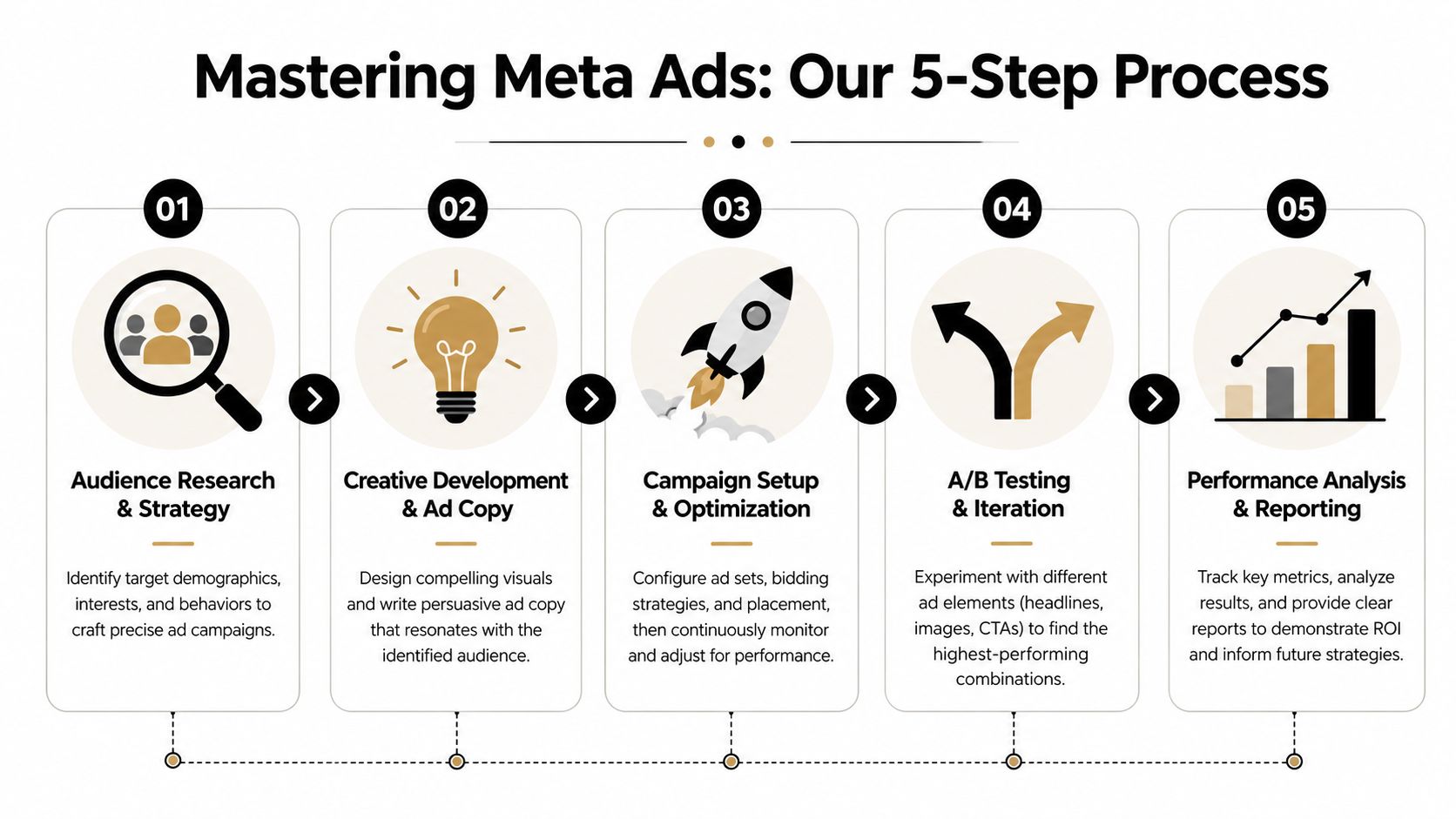
A useful Meta ads creative testing process varies four things on purpose:
- Hook style such as pain point, aspiration, offer-led, founder-led, or problem-solution
- Format such as static image, short-form video, carousel, or UGC-style content
- Message angle such as price, convenience, quality, speed, social proof, or guarantee
- Call to action based on whether the buyer is browsing, comparing, or ready to act
If all five ads push the same message with different colours or slightly different crops, the test is too shallow to teach you anything.
Audience clarity comes before campaign build
Before spending a dollar, you need to identify your target audience properly. That means knowing who buys, what they want, what makes them hesitate, and which words they use before purchase.
A pet product buyer does not respond like a premium furniture shopper. A local service lead does not behave like a skincare customer buying on impulse.
Meta can distribute a message efficiently. It cannot rescue weak positioning.
What strong Meta accounts usually share
A real offer
An offer does not have to be a discount. For Australian SMBs, it might be a starter bundle, free shipping threshold, low-risk first purchase, bonus gift, limited release, or a stronger guarantee. The trade-off is margin versus conversion rate. Some brands protect profit by holding price and improving the value stack instead.
Fast creative turnover
The accounts that improve fastest replace tired concepts quickly. They do not cling to a polished ad just because it took time to make. If frequency rises and response drops, fresh angles usually matter more than more budget.
A post-click experience that matches the ad
If the ad promises fast quotes, the landing page should show that immediately. If the ad sells a bundle, the product page should not force people to hunt for it. I see this mismatch constantly, especially when the ad team and website team work in silos.
Measure business outcomes, not vanity signals
Likes and friendly comments make owners feel good. They are a poor way to judge whether Meta is producing revenue or qualified leads.
For ecommerce, I focus on:
- Purchase quality
- Add-to-cart and checkout intent
- Landing page engagement
- Creative fatigue
- Offer response by audience segment
For lead generation, I look harder at lead quality, booking rate, close rate, and sales follow-up speed. Cheap leads can be expensive if the phone never gets answered or the enquiries are a poor fit.
Give the campaign enough room to learn
Plenty of businesses cut Meta too early. They launch with narrow creative, rough messaging, or a weak page, then blame the platform before they have isolated the actual problem.
Patience does not mean letting bad ads burn budget for weeks. It means reviewing the right variables in the right order. I usually check offer strength first, then creative fit, then landing page friction, then audience quality. That sequence saves a lot of wasted tinkering.
This video gives a useful visual overview before going deeper into campaign structure.
Instagram Shop and Facebook Shop can shorten the path to sale
For product businesses, Instagram Shop and Facebook Shop help reduce the gap between discovery and product exploration. They do not replace your website. They make it easier for someone to move from interest to browsing without extra friction.
That matters most for visual products, impulse-friendly offers, and brands with a catalogue people want to compare quickly.
Ecommerce and service campaigns need different logic
| Business model | What usually matters most |
|---|---|
| Ecommerce | Product-market fit, offer strength, creative angles, product page flow |
| Service business | Lead quality, local relevance, trust signals, response speed |
Service businesses usually need proof, clarity, and a simple next step. Ecommerce brands usually need stronger merchandising, sharper creatives, and cleaner product-page alignment. Same platform. Different buying behaviour.
If a business wants outside help, a specialist Facebook Meta ads agency should be able to explain campaign structure, creative decisions, and where the account is losing money.
My working Meta process
I keep it simple because simple scales.
- Review the offer
- Map customer objections
- Build clearly different creative angles
- Match the landing page to the ad promise
- Watch quality signals before making major changes
That process is less exciting than chasing the latest account hack. It works better. On Meta, small strategic improvements often carry far more weight than flashy tactics. That is why the mini orange approach matters. The overlooked details are often the ones that produce the strongest sales lift.
The Technical Zest Analytics Tracking and APIs
A store can look polished and still be impossible to optimise if the tracking is wrong. This is the part many businesses postpone because it feels technical. That delay costs money.
If you can't trust your data, you can't make clear decisions about channels, products, audiences or creative.
Google Tag Manager is the control room
I treat Google Tag Manager as standard infrastructure. It keeps tracking organised, reduces direct code changes, and gives you a cleaner way to manage events across platforms.
A proper GTM setup usually includes:
- Base platform tags for analytics and ads
- Consistent event naming
- Form tracking
- Scroll or engagement triggers where relevant
- Purchase or lead events aligned with business goals
- Testing before publish
The biggest mistake I see is messy implementation. People add tags over time without naming conventions, version discipline or event planning. Months later, nobody knows which event is reliable.
Google Analytics should answer commercial questions
I don't want GA set up just to collect data. I want it configured to answer useful business questions.
Examples:
- Which landing pages attract the most qualified traffic
- Which traffic source drives better purchase intent
- Where shoppers drop off in the path to checkout
- Which campaigns create leads that convert offline
That's why setting up Google Tag Manager containers and Google Analytics properly is worth doing early. Once the data layer is confused, every report becomes a debate.
Good reporting starts before the first ad launches.
Meta Conversions API is no longer optional for serious advertisers
Browser-side tracking alone leaves gaps. That's why Meta Conversions API installation matters. It helps send event data more reliably from the server side, which improves signal quality when browser tracking is limited.
For ecommerce stores, that usually means cleaner event flow around actions like view content, add to cart, initiate checkout and purchase. For lead generation, it helps strengthen the signal around form submissions or qualified leads.
I keep the implementation simple in principle:
- Map the events that matter
- Ensure browser and server events are coordinated
- Use sensible deduplication logic
- Test events carefully before scaling campaigns
- Review event match quality and consistency over time
Conversions API setup mistakes I see often
- Duplicated events because browser and server tracking aren't aligned
- Missing parameters that weaken event usefulness
- No testing process before campaigns rely on the data
- Overcomplication when the business only needs a clean core setup
A good CAPI setup doesn't need to feel mysterious. It just needs to be methodical.
Shopify API and the real value of integrations
The Shopify API becomes valuable when you stop thinking about it as a developer toy and start seeing it as an operational tool. Good integrations can reduce manual work, improve data flow and support better customer experiences.
That might include connecting the store with:
- Inventory systems
- ERPs
- CRMs
- Support platforms
- Internal tools
- Custom fulfilment workflows
When building those connections, I like this guide for robust SaaS API integrations because it focuses on practical implementation quality rather than hype.
Building custom Shopify apps using Shopify CLI
Stores can create an edge. If a merchant has repeatable internal processes that apps don't solve well, a custom app can make the backend far more efficient.
Common examples include:
| Use case | Benefit |
|---|---|
| Custom order handling | Reduces repetitive staff tasks |
| Workflow automation | Speeds up operational decisions |
| Unique customer logic | Supports tailored promotions or access |
| Special product configuration | Handles edge cases standard apps miss |
A lot of stores don't need this. The ones that do usually know because they're already wasting time on manual workarounds.
My rule for technical marketing setup
Don't add technical complexity just because you can. Add it when it improves measurement, automation or decision-making.
That's the Mini Orange approach again. Small technical improvements can create major downstream gains:
- Cleaner attribution
- Fewer reporting arguments
- Faster troubleshooting
- Better media buying decisions
- More confidence in scale
For serious ecommerce operators, this backend layer is where profitable marketing becomes repeatable rather than lucky.
Cultivating Growth with Local SEO
One of the easiest Mini Orange wins I see is local SEO. Small fix, big payoff.
From my journey working with Melbourne businesses, I've watched plenty of ecommerce owners dismiss local search because they ship Australia-wide. Then they wonder why branded searches don't convert as well as they should, or why a competitor with a weaker offer keeps looking more trustworthy. Local SEO often fills that gap. It gives buyers a real-world signal that the business exists, answers the phone, and will still be there after the sale.
That matters for more than cafés, plumbers, and dentists. It matters for online stores with a showroom, a warehouse, a studio, a pickup point, a service area, or a strong connection to one city.
Google Business Profile pulls more weight than many owners realise
A Google Business Profile does one job extremely well. It reduces hesitation.
After someone clicks an ad, sees you on Instagram, or hears about your brand from a mate, they often search your business name before buying. At that point they are checking for proof:
- Is this business real?
- Is it active?
- Can I contact it easily?
- Do other customers trust it?
- Does it look local and established?
A complete profile, current photos, accurate hours, and genuine reviews answer those questions fast. That can lift click confidence without any fancy tactic behind it.
What I actually prioritise
I keep local SEO tight and commercial. Australian SMBs do not need bloated local campaigns full of busywork. They need a clean trust layer that supports search visibility and conversion.
The core jobs are simple:
- Keep business details consistent across listings
- Choose the right categories and services
- Collect reviews steadily, not in bursts
- Build location-relevant pages where there is real intent
- Show clear contact details and service areas
- Publish useful local content only when it helps the buyer
If you're looking at a seo agency melbourne provider, this is the standard I'd measure them against. Can they improve visibility and trust without filling your site with thin local filler pages?
Why local SEO helps ecommerce brands
A national store still benefits from local relevance. Buyers often prefer to purchase from a business that feels closer, easier to deal with, and more accountable.
For Melbourne, Sydney, Brisbane, Perth, Adelaide, Darwin, Newcastle, or Hobart searches, a well-written city page can support discovery and reassurance at the same time. The trade-off is quality. If the page says nothing useful beyond swapping city names, it usually adds little value and can weaken the site overall.
Useful local pages tend to include:
| Element | Why it helps |
|---|---|
| Delivery or pickup context | Sets expectations clearly |
| City-specific FAQs | Removes common objections |
| Local testimonials | Adds relevant proof |
| Service details for that area | Matches buyer intent |
| Local contact or support info | Strengthens credibility |
Google My Business optimisation, kept practical
Owners often overcomplicate this part. A good profile is complete, active, and believable.
Here's the baseline I expect:
| Area | What good looks like |
|---|---|
| Business info | Accurate and consistent |
| Photos | Current and professional |
| Reviews | Genuine and regularly earned |
| Services | Clear and relevant |
| Website link | Goes to the right page |
| Posts and updates | Used with purpose |
That foundation supports stronger local performance. It also improves branded search behaviour because people get answers faster.
Local intent pages still matter for digital services
I've seen this firsthand with service businesses in Melbourne. Buyers searching terms like web design Melbourne, wordpress developers Melbourne, or marketing agency Melbourne are often looking for local accountability as much as technical skill. They want to know who they're dealing with, where the business is based, and whether help is close by if something goes wrong.
That's why location-aligned service pages still earn their place. As noted earlier, a strong Melbourne service page can improve organic visibility and buyer confidence without resorting to duplicated suburb content.
The trust halo is real
A business that looks established in Melbourne often feels safer to someone in Sydney or Brisbane too.
That effect shows up all the time. Real reviews, a maintained profile, clear service areas, and location-aware content create broader brand confidence. Local SEO is not just about map pack visibility. It shapes how trustworthy the whole business feels.
Local relevance often strengthens national credibility.
What usually fails
A few tactics disappoint almost every time:
- Mass-produced suburb pages with recycled wording
- Fake reviews or review schemes that look staged
- Inconsistent business details across directories
- Keyword stuffing in profile descriptions or footers
- Local SEO work disconnected from website UX
That last one matters. If the listing earns the click but the page feels outdated, confusing, or thin, the trust you built in search disappears fast.
The local SEO mindset I recommend
Treat local SEO like a credibility system. Every small signal should make the buyer more comfortable taking the next step.
For most businesses, that comes down to five things:
- Clear services
- Real proof
- Easy contact
- A polished website
- Visible local presence
That's the Mini Orange angle again. Small, often-overlooked local signals can produce outsized gains in clicks, enquiries, and conversion confidence.
A Unique Solution PPC Call Tracking for Tradies
From my journey working with Melbourne tradies, one pattern keeps showing up. The campaign looks fine in Google Ads, clicks are coming in, but the owner still says, "We're not getting enough work." Then you check the actual buying path and find the gap. People are calling, calls are being missed, and the ad platform gets credit for a click while the business loses the job.
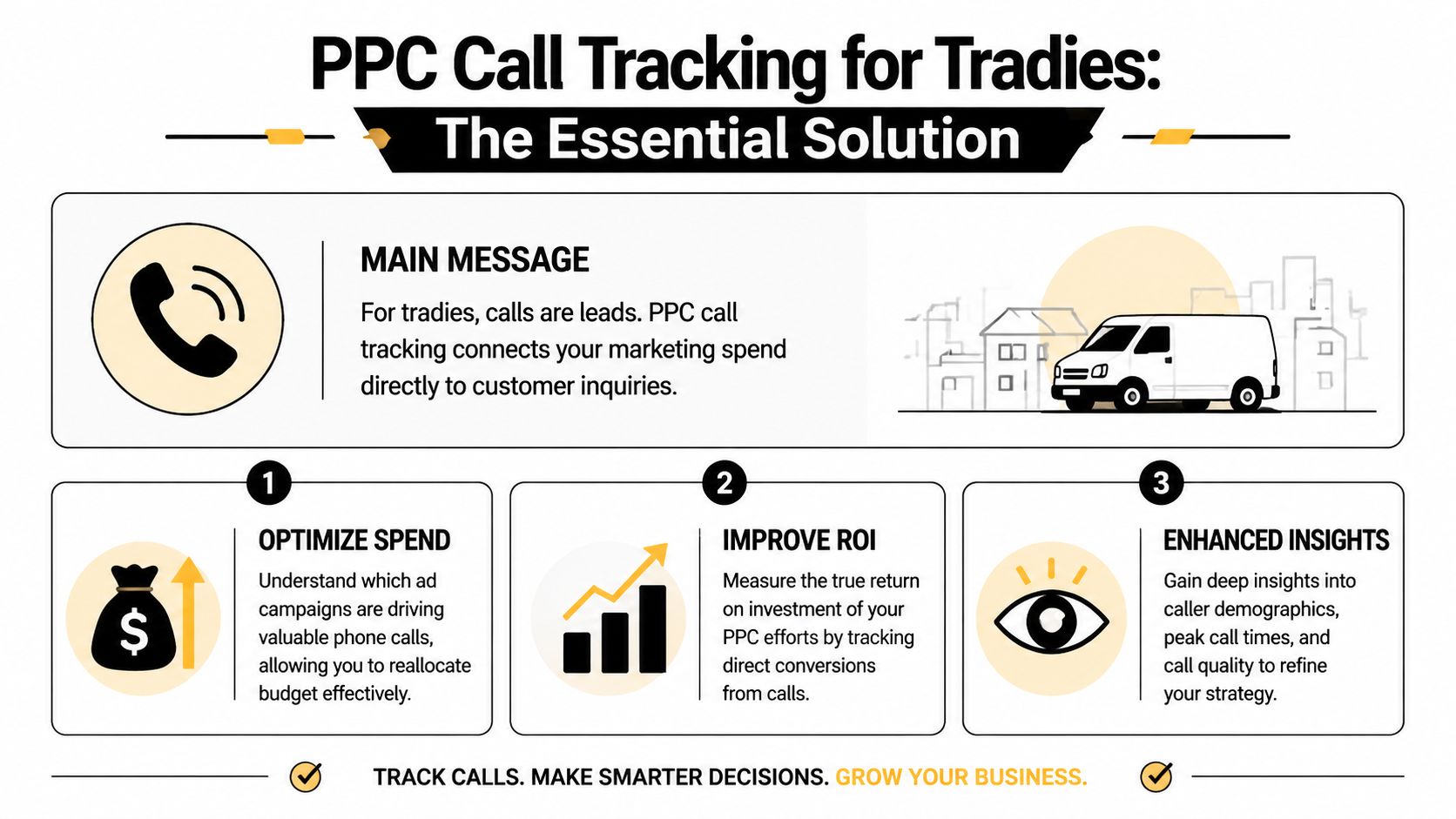
For call-driven businesses, the phone is often the conversion point that matters. If tracking stops at form submissions or landing page metrics, reporting misses the part that produces revenue.
Why standard lead tracking breaks down for service businesses
A lot of local operators still piece things together with forms, call notes, and memory. That might work at very low volume, but it falls apart once paid traffic ramps up. A prospect clicks, calls during a busy job, gets no answer, and moves on to the next business.
That problem hits hard in appointment-led categories like:
- Tradies
- Hairdressers
- Beauty therapists
- Dentists
- Restaurants
- Doctors
In these businesses, missed calls usually mean missed quotes, missed bookings, or a lost high-intent lead that was ready to act.
The Twilio setup I rate for PPC call campaigns
One option I've found useful is a Twilio setup with specific phone numbers assigned to campaigns or traffic sources. The goal is straightforward. Give each campaign a clear path to the phone so attribution is based on actual enquiries, not just click reports.
That changes decision-making fast. You can see which campaigns generate calls, which ones generate answered calls, and which ones produce booked jobs. That's a much better basis for budget decisions than guessing from CTR and page engagement alone.
What a good setup should handle
- Specific campaign numbers so attribution is easier to trust
- After-hours answering or routing so strong leads do not die in voicemail
- Calendar or booking integration for faster follow-up
- Call outcome tracking so you know what turned into work
- Lower lead leakage in high-value, phone-first campaigns
This is the Mini Orange idea in practice. A small technical layer can produce a disproportionate lift because it fixes the hidden gap between ad click and booked work.
Twilio vs off-the-shelf call tracking tools
There are solid platforms in this category. CallRail and Go High Level both come up often, and for plenty of SMBs they are a sensible starting point. They are quicker to deploy and easier for a small team to manage.
Custom Twilio workflows become more attractive when the intake process is more involved. That usually means businesses that need call routing by service, suburb, or urgency, or want the phone flow to connect directly with booking logic and internal systems.
Here's the trade-off:
| Option | Strength | Limitation |
|---|---|---|
| Off-the-shelf software | Faster setup and simpler management | Less flexibility in routing and lead handling |
| Custom Twilio workflow | More specific call handling and process control | Higher setup complexity and stronger implementation requirements |
Neither option is automatically better. The right choice depends on how the business sells.
Why tradies get outsized value from call tracking
Tradies rarely sit at a desk reviewing marketing reports between jobs. They need quick answers to practical questions:
- Which campaign made the phone ring
- Whether someone answered
- Whether the lead was qualified
- Whether the call turned into a booking or quote
- Whether the ad spend should keep running
That's why call tracking matters more here than in many other sectors. It ties PPC performance to operational reality. If the phones are not being answered, the problem is not only the ads. It is the system behind the ads.
The business impact goes beyond attribution
The biggest gain is not a prettier dashboard. It is fewer lost opportunities.
A strong setup can catch after-hours calls, route urgent enquiries properly, collect key details, and push bookings into the calendar faster. That matters for plumbers, electricians, locksmiths, and other service businesses where response time often decides who wins the job.
For call-driven businesses, response handling is part of conversion rate optimisation.
If I were auditing a tradie account, I would treat call handling as part of the campaign build, not an afterthought. That's often the overlooked mini orange. Small fix. Big commercial effect.
Best call tracking software for PPC call campaigns
If the business wants basic attribution and a faster rollout, CallRail or Go High Level may be enough. If the goal is tighter control over routing, booking logic, and post-call workflows, a custom Twilio build can be the better fit.
I'd choose based on operational complexity, not software hype. For trade businesses, the winning setup is the one that helps turn calls into booked work consistently.
Your Growth Blueprint Consistency and Expert Help
The businesses that grow steadily don't usually have one magical advantage. They apply the basics consistently and resist the urge to rebuild everything every time results wobble.
That's the whole point of the Mini Orange idea. Small, potent actions. Done repeatedly. Improved over time.
The blueprint I'd follow
If I were reviewing an ecommerce or lead generation business from scratch, I'd work through this checklist.
Platform fit
Is the business on the right system for its model. WordPress with WooCommerce for flexibility and content depth, or Shopify for simpler ecommerce operations.Conversion-ready design
Does the site help users buy, enquire or book without friction.Tracking accuracy
Are GTM, Google Analytics and Meta event setups reliable enough to trust.Paid traffic discipline
Are Google Ads and Meta Ads structured around real intent, clear offers and solid landing pages.Local trust
Does the business look credible in its main service areas or cities.Lead handling
If calls matter, are they tracked, answered and turned into appointments.
When DIY still makes sense
Keep doing it yourself if:
- You enjoy the operational side
- Your budget is still modest
- You can implement changes quickly
- You understand your numbers well enough to make decisions
- Your setup is simple and controlled
A lot of founders should stay hands-on longer than they think. It helps them learn what customers respond to.
When expert help becomes the better move
Bring in support when:
- Your store or ad account has become technically messy
- You're spending money but can't trust the data
- The site needs custom development
- You've outgrown generic freelancers
- You need channel strategy and execution to work together
This is usually the point where good businesses stop looking for hacks and start looking for systems.
If you're searching for a marketing agency Melbourne or digital marketing agency Melbourne partner, that's what I'd assess first. Not promises. Not jargon. Just whether the team can tighten the few levers that move revenue.
If you're a business with a paid ads budget of at least 3k a month, I'd love to offer you a low risk deal. Get a month of paid ads management FREE. Apply now through the contact page. Alpha Omega Digital is a marketing agency based in Melbourne, Australia but also services clients from Sydney, Brisbane, Newcastle, Perth, Adelaide, Darwin and Hobart. Have a project in mind? Contact us.