If your phone’s gone quiet while the Google Ads dashboard still shows spend, you’re not dealing with a mystery. You’re dealing with a targeting, tracking, or timing problem, and in HVAC that usually means paid clicks are landing on the wrong kind of searcher. A Melbourne operator can burn budget fast on generic traffic, while the competitor down the road gets the emergency call, the install enquiry, and the booked job.
That gap matters more in a fragmented market like Australia’s HVAC sector. One market estimate puts the Australian HVAC market at USD 8,218.5 million in 2025 and projects USD 29,806.2 million by 2034, with a 14.93% CAGR from 2026 to 2034 (IMARC Group). Another Australia-focused view values air-conditioning and heating services at $13.1 billion in 2026, with 7,383 businesses operating in the sector and 1.0% CAGR between 2020 and 2025 (IMARC Group). That combination tells me the opportunity is real, but so is the competition.
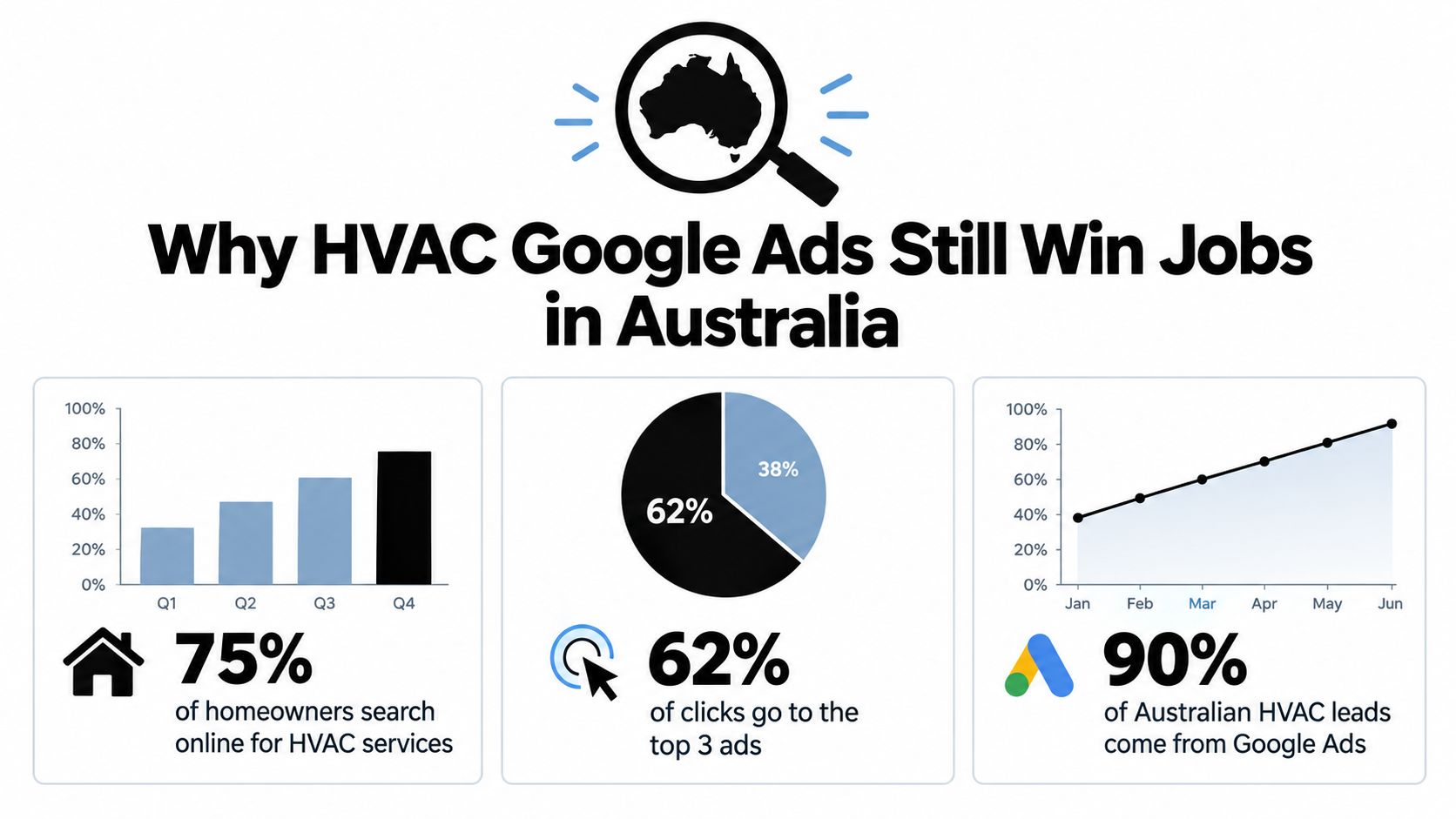
Why HVAC Google Ads Still Win Jobs in Australia
Australian advertisers spent a record $8.0 billion on search advertising in 2025, up 11.5% year on year, inside an $18.4 billion online ad market (Loud A Chris). Google also handles around 88% of Australian searches as of June 2026, which is why Google Ads still sits at the centre of paid search for local service businesses.
For HVAC, that matters because search intent is immediate. A person looking for help with a broken unit is already halfway through the buying decision, and if your campaign is set up properly, that search can turn into a phone call within minutes. In Melbourne, that speed matters even more when weather swings push people to act now.
Emergency repairs and install enquiries behave differently
Urgent repair intent and planned install research need different treatment. Someone searching “AC not cooling” wants a fix, usually fast. Someone comparing split system options is still weighing brands, capacity, and quote timing.
That changes the whole account structure. Repair campaigns should push for calls, tighter suburb coverage, and shorter response times. Install campaigns can sit on a longer buying cycle, with ads and landing pages built to answer questions before the lead is ready to book. If you treat both the same, you pay repair prices for research traffic and miss jobs that should have been easy to win.
Budget, suburb targeting, and call tracking decide what you actually book
I’d rather run a smaller campaign across the right Melbourne suburbs than spread spend across half the city and hope for the best. Geo-targeting should match where you can service quickly, especially in peak season when response time can decide who gets the job.
Tracking also has to go beyond form fills. For HVAC, phone calls are usually the outcome, so the account needs call tracking tied back to booked jobs, not just clicks. That is the difference between reporting activity and proving revenue.
Done well, hvac Google Ads keeps your business in front of the right person at the right moment, with enough control to separate emergency work from install leads and spend where demand is ready to convert.
Building Your HVAC Keyword Strategy That Filters Waste
A Melbourne homeowner searching “air conditioner not cooling” is close to calling. Someone searching “best split system” may still be comparing brands and capacity. Your keyword structure needs to separate those jobs before Google spends the budget.
Start with service intent, not service categories
Build tightly themed Search campaigns around the work customers request. Keep repair, installation, and maintenance in separate campaign or ad group themes. The wording should reflect the customer’s problem and buying stage, rather than the way your office labels work orders.
Emergency AC repair, AC not cooling, and same-day air conditioning repair belong together because they indicate urgency. Split system install, ducted heating installation, and replacement quote belong in another group because those searches usually involve more research. Mixing them forces one bid strategy and one message to serve very different leads.
Give urgent repair terms enough budget to capture calls during demand spikes, while keeping install research controlled until the account shows which queries produce worthwhile enquiries. That separation also makes it easier to judge whether a keyword creates a booked job or merely a form submission.
Use exact and phrase match first
Start high-intent campaigns with exact match and phrase match. Broad match on short, generic HVAC terms can pull in DIY research, employment searches, parts enquiries, and people outside your service area. Review the search term report frequently at launch, then add irrelevant queries to the negative list.
Block terms such as DIY, training, jobs, salary, and parts only from the outset. Keep refining negatives by suburb, service type, and customer intent. A keyword that generates clicks but no qualified calls should not keep receiving budget because its conversion column looks active.
Australian benchmark guidance places HVAC leads at roughly AUD 100 to 440 per lead, with strong accounts often below AUD 180 (XYZ Lab). Treat that as a planning range, not a target you can judge without checking lead quality. A cheaper form lead is not better if the customer never answers, falls outside your suburbs, or does not book.
The keyword list is where you prevent wasted spend before it becomes a sales problem.
A practical structure stays clear: separate job types, protect each campaign with negatives, and adjust budgets according to booked-job results. Use call records and CRM outcomes to identify which search themes create real work. During hotter demand, prioritise proven repair terms; during quieter periods, allow more controlled spend on installation research. That gives hvac Google Ads room to capture demand without paying equally for every HVAC-related search.
Writing Ads and Targeting Suburbs That Actually Get Calls

A strong keyword set still won’t save weak ads. If the headline is vague, the location is too broad, or the call to action doesn’t match the job, you’ll get clicks that don’t turn into ringbacks. I’ve seen that especially with service businesses that want to look polished but forget the ad has to be useful first.
Match the message to the urgency
For repair campaigns, the ad should sound immediate and local. For install campaigns, it should sound organised and quote-driven. That means different promises, different extensions, and different landing pages, even if the brand is the same.
Use call assets and location extensions so the ad feels close to the customer’s postcode, not like a faceless interstate listing. Suburb-level geo targeting helps keep spend inside the area you service, which matters when a campaign starts attracting searches from outside your coverage zone. In Melbourne, that can mean drawing sharper lines around suburbs rather than assuming the whole city behaves the same.
The wording also needs to filter the lead. Repair ads should speak to speed, availability, and phone response. Install ads should speak to site visits, quote requests, and product fit. If both ads read the same, the account loses intent clarity.
Make phone-first ads easy to act on
For urgent HVAC work, the phone often beats the form. That’s why call assets, click-to-call behaviour, and mobile-friendly ad copy matter so much. A person with a failed system at home is not browsing to admire your brand voice.
Here’s the media asset that makes this point visually.
The best accounts separate the campaign by service area and by job type before they ever separate by device. If you’re running across Melbourne, Sydney, Brisbane, or another city, the message should be adapted to how people search in that market. A strong agency process, whether it’s an internal team or a digital marketing agency Melbourne businesses hire, keeps that alignment tight so the budget goes to calls, not curiosity clicks.
Landing Pages and Call Tracking That Turn Clicks Into Bookings
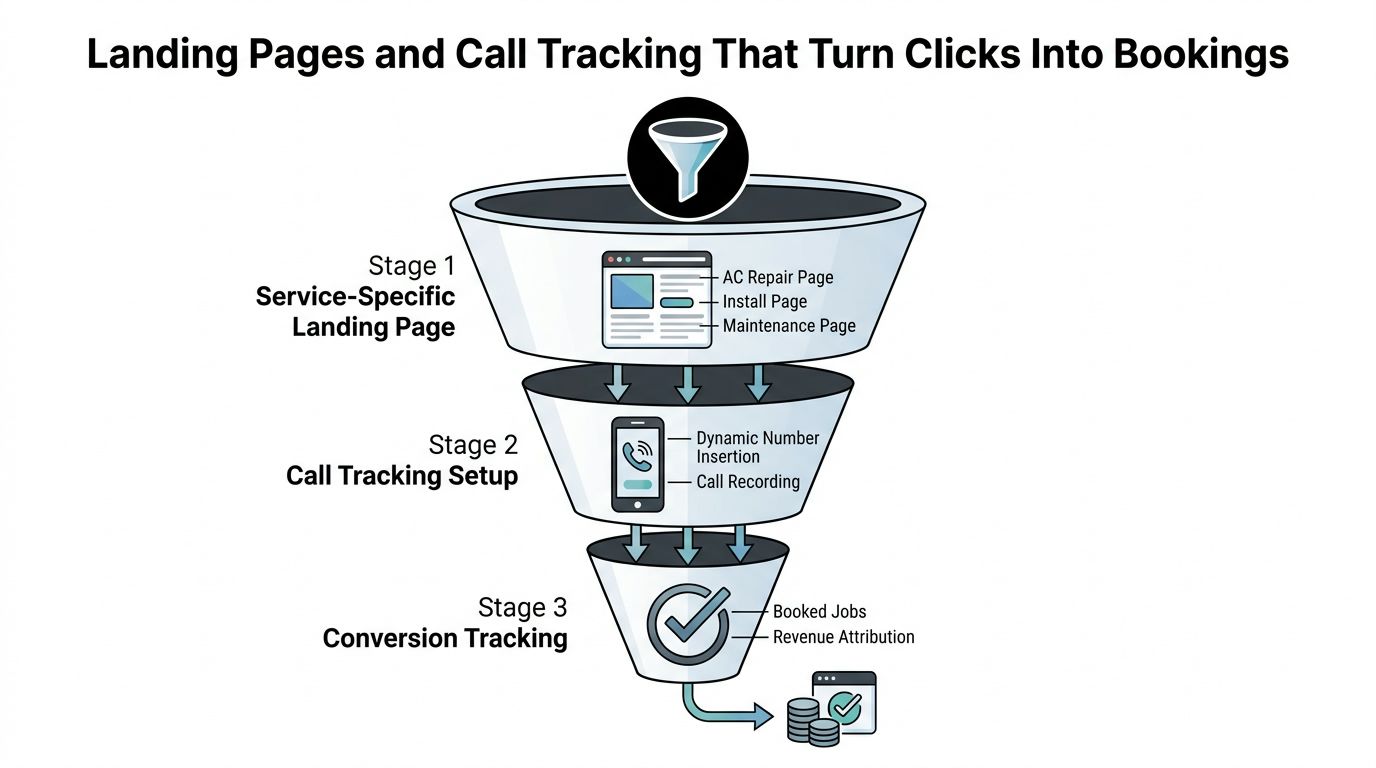
Clicks don’t pay the bills. Booked jobs do. That’s why the post-click setup matters just as much as the ads, because a decent campaign can still fail if the landing page is generic or the phone tracking is invisible.
Send people to the right page
A repair search should land on a repair page. An install search should land on an install page. Maintenance traffic should see a maintenance page. That message match cuts friction and makes the call to action obvious, instead of forcing the visitor to interpret the business structure.
A generic homepage usually underperforms because it asks the searcher to do too much work. Service-specific pages keep the promise tight and let you place a visible phone number, a short form, and trust signals where people can see them immediately. For HVAC, that matters more than clever copy.
Track calls, not just form fills
A lot of HVAC accounts report “conversions” when all they really have is page visits or loose form submissions. That’s not good enough if the outcome is booked work. The useful setup tracks phone calls back to the keyword, ad group, and service page that triggered them.
Call tracking software earns its keep. Tools like CallRail and GoHighLevel are common in PPC call campaigns because they help tie a call to a source and campaign. I also like using a custom Twilio number when a business wants a dedicated line that can support 24 hour call answering, route into a calendar or Calendly, and keep missed calls from becoming missed revenue. That kind of setup is useful for tradies, hairdressers, beauty therapists, dentists, restaurants, and doctors when calls matter as much as clicks.
For teams that need both site work and ads, a broader partner can help with the whole stack. Alpha Omega Digital handles Google Ads plus website build work, which can matter when the landing page needs to be fixed, not just the campaign.
If the call can’t be traced back to the keyword, the optimisation meeting becomes guesswork.
The metric is not how many forms came in. It’s how many enquiries became scheduled jobs, quoted jobs, or closed jobs. That’s the number that should guide bids, budgets, and creative changes.
Bidding Budgets and Seasonal Pacing for Maximum ROAS
Money management is where otherwise solid HVAC campaigns lose profit. Summer and winter bring more searches, but they also raise CPCs. Industry benchmarks report peak-season CPCs running 30 to 50% above off-peak levels. Broad campaigns can therefore look healthy in Google Ads while producing fewer profitable jobs. Set budgets around weather, intent, and suburb-level demand.
Use a budget split that respects intent
Emergency repair searches deserve the largest share because the caller usually needs help immediately. Installation campaigns need enough funding to collect quote enquiries, while maintenance and tune-up terms can support demand between seasonal peaks.
| Campaign Type | Budget Share | Bidding Approach | When to Scale or Pause |
|---|---|---|---|
| Emergency repairs | 40 to 50% | Tight exact and phrase match, conversion-focused bidding | Increase before heatwaves and cold snaps, then remove weak queries quickly |
| Install enquiries | 30 to 35% | Service-specific bids with close landing-page alignment | Increase when quote demand is steady, reduce during soft periods |
| Maintenance and tune-ups | 10 to 15% | Efficient bidding with reliable call tracking | Keep active through shoulder months, trim when job quality falls |
| Broad awareness terms | 0 to 5% | Conservative bids, or exclude entirely | Pause when spend starts crowding out booked-job keywords |
These percentages are a starting allocation, not a fixed rule. A Melbourne business with strong emergency demand may shift more budget into repairs, while an installer with a longer sales cycle may reserve more for research-led searches. Review performance by suburb as well as campaign. A suburb that produces calls but few completed jobs should not receive the same budget as one producing profitable bookings.
Separate emergency pacing from install pacing
Emergency campaigns need room to spend when extreme weather hits. Set location targeting around the suburbs the team can service quickly, then increase budgets before demand peaks rather than waiting until the daily limit is already restricting calls. Install research behaves differently. Keep it funded across the season, but pace increases gradually because prospects may compare systems, request several quotes, and book later.
Know when to tighten bids
Watch whether each keyword group stays within the customer acquisition cost the business can support. If calls are producing booked work, let the campaign keep funding that demand. If clicks rise while qualified calls or booked jobs fall, reduce bids or cut the relevant suburb, query, or time period.
A small local operation should start with controlled coverage instead of trying to buy every HVAC search. Track phone calls through to scheduled and completed jobs, then use that result to adjust budget and bidding. The aim is to have money available when weather changes, without paying peak prices for searches that never become work.
Testing Remarketing and Scaling What Already Works
HVAC accounts scale best after the campaign has proved it can produce profitable bookings. Give new campaigns enough time to distinguish useful search terms and calls from early noise, then make controlled changes rather than rebuilding after a few weak days.
Test small things before changing the whole account
Change one variable at a time. Compare ad headlines first, then test the landing page headline and call-to-action placement. If every element changes together, you cannot identify what improved booked jobs or what reduced them.
Remarketing suits installation researchers who visited without calling. They may compare systems, request quotes, and return later, so the message should give them a clear reason to re-engage. Keep it narrower than the search ad because the audience already knows the business. Emergency repair visitors need a faster, more direct path, while install audiences can receive follow-up messaging over a longer consideration period.
Scale with geography and weather rules
After the core campaigns convert, expand into nearby suburbs with similar service behaviour. Increase spend when weather is likely to lift emergency demand, while keeping install research campaigns funded steadily enough to capture slower decisions. Geo-targeting should reflect the team’s real service area, not every suburb within theoretical reach.
Judge expansion by qualified calls and completed work, not click-through rate alone. A high CTR with few booked jobs is expensive attention. Review call recordings and CRM outcomes so the account learns which searches produce work, not merely enquiries.
For operators in Melbourne, Sydney, Brisbane, Newcastle, Perth, Adelaide, Darwin, and Hobart, consistency matters across seasonal changes. Refresh service pages before each season so the ad promise matches the live offer, and audit call tracking whenever forms, numbers, or booking processes change. A partner managing both the site and the ad stack can connect the campaign to the page, the call, and the booked job.
If you’re running HVAC ads and you’ve got at least a $3k monthly paid media budget, Alpha Omega Digital can manage the build, tracking, and optimisation around booked jobs, not vanity clicks. They work on Google Ads, landing pages, and lead tracking for service businesses, so if you want a lower-risk way to test the channel, visit Alpha Omega Digital and apply through the contact page.
Alpha Omega Digital
Read more insights from our team on web design, paid ads, and growth strategy.