A few years ago, I sat with a Melbourne client who sold products with a clear Christian mission, and they said they were nervous about “marketing” because it sounded too salesy. Two months later, we were in Shopify, tightening product pages, cleaning up tracking, and rebuilding Google Ads around actual purchase intent instead of wishful thinking.
My Journey into Christian Marketing Services
The shift happened in a client meeting in Melbourne.
A Christian founder had a healthy product range, a loyal audience, and plenty of conviction behind the brand. But once we got into the account, the usual problems showed up fast. Shopify collections were hard to follow, conversion tracking was patchy, and Google Ads was spending money on broad interest traffic that looked warm in a report but did not convert. The mission was clear. The mechanics were not.

Where the misconception starts
A lot of faith-based organisations have been taught to treat marketing as something that should stay soft around the edges. The result is usually the same. Vague positioning, weak calls to action, generic landing pages, and reporting that cannot tell you which channel produced a sale, an enquiry, or a donation.
I have seen this with ecommerce brands, schools, ministries, and service businesses with a Christian identity. The intent is sincere, but sincerity does not fix a broken funnel.
One Shopify store stands out. The founder had done the hard part already. They had a real product, a genuine customer base, and a strong reason for existing. What held them back was execution. The site buried key products, the checkout journey was not measured properly, and the ad targeting pulled in people who liked inspirational content but had little buying intent. Once we cleaned up the structure and fixed the tracking, performance improved for very ordinary reasons. The store became easier to use and easier to measure.
Practical rule: Mission supports the offer. It does not replace site speed, message clarity, or accurate tracking.
That lesson carried over into ministry work as well. If the goal is event registrations, volunteer applications, school enrolment enquiries, or online giving, the basics still matter. Pages need to load properly on mobile. Forms need to be easy to complete. Follow-up needs to happen quickly. Tracking needs to record the action that matters, not just a page view.
What changed my view
Ecommerce trained me to be less sentimental about digital performance. Shopify is useful that way. It shows very quickly whether traffic turns into revenue or whether a campaign is only producing activity.
That discipline shaped how I approach Christian marketing services. I look at a faith-based organisation the same way I look at any account that needs to grow responsibly. What is the ultimate goal? Where is the friction? Which channel deserves budget? What can we measure with confidence?
For Christian-owned brands selling online, I usually start with four checks:
- Product page clarity: Can a new visitor understand the product, the value, and the next step without effort?
- Tracking quality: Are purchases, lead events, and high-intent actions recorded accurately?
- Ad intent: Are Google Ads and paid social campaigns reaching people likely to act?
- Post-click alignment: Does the landing page match what the ad promised?
Those checks sound simple because they are. They also catch a surprising amount of waste.
Why Melbourne shaped my approach
Running agency work in Melbourne taught me to keep strategy close to execution. Clients here usually do not want theory first. They want to know what is broken, what should be fixed this month, and whether the spend is producing something useful.
That mindset fits the Australian market. The Australian Government's Digital Service Standard pushed clearer, user-centred service design across government, and it helped set expectations around usability, accessibility, and plain-language journeys. It also matters that small business dominates the local economy. The Australian Bureau of Statistics states that most Australian businesses are small businesses. For faith-based organisations with lean teams and tight budgets, that usually means every page, campaign, and follow-up sequence has to justify itself.
That is why I do not treat Christian marketing services as a separate, gentler category. I treat them as disciplined digital work for organisations that care strongly about trust, stewardship, and message integrity. The values change the standard for how you communicate. They do not remove the need for strong systems, clear offers, and measurable growth.
Redefining Goals for Faith-Based Organizations
A lot of faith-based organisations say they want “more awareness”. That sounds sensible, but it's usually too vague to help with decisions.
Awareness on its own doesn't tell you whether the campaign attracted the right people, whether the site answered their questions, or whether any of that activity produced meaningful action. For Christian marketing services to work, the organisation has to define what a good outcome looks like.
Good goals are concrete
For a Christian ecommerce brand, the goal might be more online sales from a tighter product range. For a church, it might be new family visit enquiries rather than broad traffic. For a ministry, it could be donation intent, event registration, or volunteer applications. For a school, it may be qualified enrolment enquiries, not just form fills from the wrong suburb or year level.
The mistake I see most often is measuring the cheapest signal instead of the most useful one.
A campaign that sends lots of low-intent traffic can make a dashboard look busy. It doesn't help the organisation if the sales team can't close the leads, if parents don't meet the enrolment criteria, or if the audience clicks but never engages again.
Values matter, but they don't replace targeting
Faith-based organisations often have a clearer internal sense of purpose than mainstream brands. That's a strength. But purpose still has to be translated into targeting, offer structure, and messaging hierarchy.
A useful audience profile usually includes more than age, location, and device. It also includes:
- Buying motivation: Are they shopping for themselves, for family, for a gift, or for church use?
- Community context: Are they connected to a local church, school, ministry network, or broader Christian audience?
- Decision friction: What would stop them from enquiring, purchasing, or visiting?
- Message sensitivity: How direct should the faith language be on ads, landing pages, and emails?
The strongest faith-based campaigns usually aren't the loudest. They're the clearest.
That distinction matters on Google Ads and Meta. A Christian audience doesn't respond just because an ad sounds faith-friendly. They respond when the message matches what they need in that moment and the next step feels trustworthy.
What success looks like in practice
I prefer a short decision table before any campaign goes live.
| Focus area | Weak goal | Stronger goal |
|---|---|---|
| Ecommerce | More traffic | More qualified product page visits and completed purchases |
| Church outreach | More reach | More visit plans, event sign-ups, or direct enquiries |
| Education | More clicks | More relevant enrolment enquiries |
| Services | More leads | More enquiries that match service area and budget |
That process changes the whole campaign. It affects ad copy, keyword selection, landing page structure, and follow-up automation.
When a client tells me they want “better visibility”, I usually ask what they'd consider a win in the CRM, inbox, or checkout. That's where useful strategy begins. Not in the platform. In the business outcome.
Building Your Digital Foundation for Ministry and Commerce
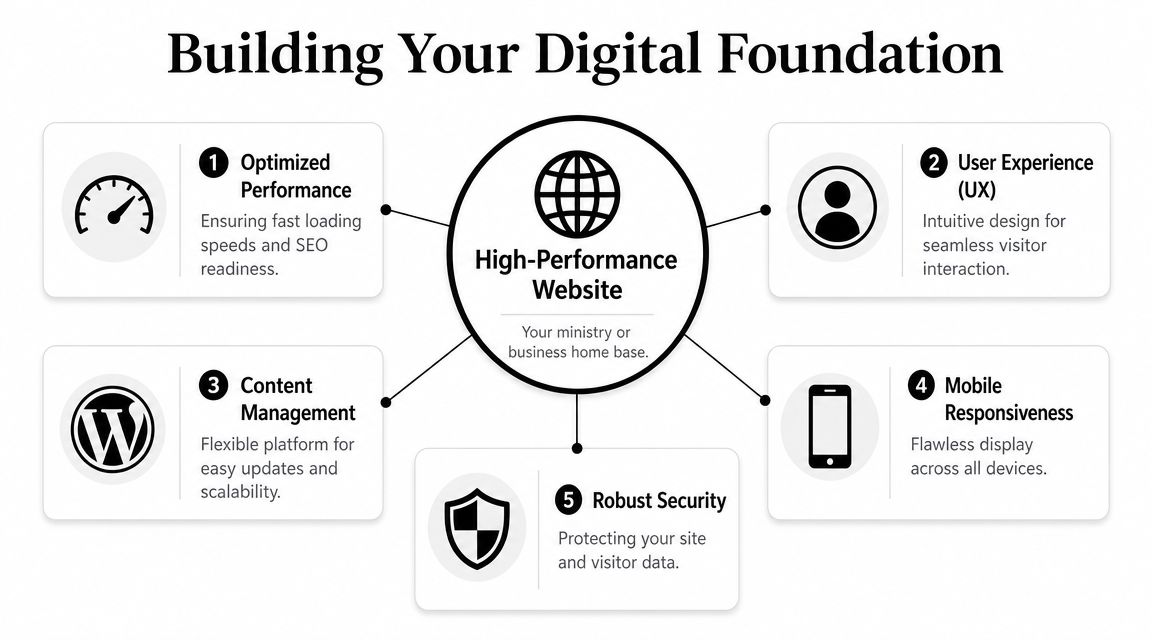
A few years ago, I took over a Google Ads account for a faith-based retailer that had been burning budget for months. The keywords were fine. The underlying problem sat underneath the ads. A slow mobile store, confusing navigation, and a checkout flow that asked too much of first-time visitors. We changed the site before we touched scale, and conversion performance improved because the business finally had a platform that could carry demand.
That pattern comes up all the time with Christian marketing services. Churches, ministries, schools, and ecommerce brands often put energy into messaging first, but the website is what turns interest into action. If the structure is messy, if the mobile experience is poor, or if trust signals are missing, every campaign channel gets harder to make profitable.
Why WordPress still makes sense for many faith-based organisations
WordPress still suits content-heavy organisations very well, especially when internal staff need control. I mean real day-to-day control, not a site that technically has a CMS but still needs a developer every time someone wants to update a sermon series page or publish an event.
For churches and ministries, that matters. Teams often need to manage service times, location information, ministries, team pages, articles, donation prompts, event registrations, and resource libraries without breaking layouts. A clean Gutenberg setup with custom blocks usually handles that better than a bloated page builder.
I look at four things before recommending WordPress:
- Editing workflow: staff should be able to update pages without guessing which module controls what
- Content scale: sermon archives, blogs, location pages, and resource hubs need structure that can grow
- Search visibility: page hierarchy, metadata control, schema options, and internal content organisation all affect discoverability
- Maintenance load: plugins, theme quality, hosting, and update processes need to be manageable for the team that inherits the site
There is a trade-off. WordPress gives flexibility, but only if the build is disciplined. Too many plugins, inconsistent templates, and unclear user roles create a site that staff avoid touching. I have seen that happen more than once.
When Shopify is the smarter move
If the core job of the site is selling products, Shopify is usually the cleaner choice.
I have worked on Shopify builds for Christian brands selling books, gifts, church resources, apparel, and subscription products. In those projects, the gains came from operational simplicity as much as design. Product management was faster. Payment handling was more reliable. The team could launch collections and promotions without opening a support ticket every second day.
Here is where Shopify tends to win:
| Need | Why Shopify helps |
|---|---|
| Product management | Easier catalogue updates for lean teams |
| Checkout reliability | Fewer moving parts in the purchase flow |
| App ecosystem | Faster rollout for reviews, bundles, subscriptions, and email tools |
| Custom development | Strong support for APIs, theme sections, and tailored storefront features |
The trade-off is also real here. Shopify is excellent for commerce, but it is not always the best fit for organisations whose site behaves more like a content hub than an online store. If 80 percent of the workload is articles, sermons, event content, or ministry resources, WordPress often gives the team better publishing control.
I usually tell clients to decide based on the primary action. Read, register, enquire, or donate points one way. Browse, add to cart, and buy points the other.
Local search matters more than many ministries realise
Local discovery often decides whether someone visits, calls, or enquires. That is true for churches, Christian schools, counselling services, op shops, and community programs. Google has published research showing that people who conduct a local search on their smartphone often visit a related business within a day, and many do so within hours, according to Google's consumer insights on local search behaviour.
For faith-based organisations, local search work is usually not glamorous. It is practical. It means keeping the Google Business Profile accurate, building proper location pages, checking that service times and contact details are current, and making sure a parent or visitor can find parking, accessibility info, and the next step without hunting for it.
That work creates confidence fast.
I have seen ministries spend serious money on creative, then lose enquiries because the mobile site hid the phone number, the map pin was wrong, or the event page looked abandoned. Those are not brand problems. They are operational website problems.
A solid foundation also supports the broader digital ecosystem around the organisation. If you publish teaching content, study resources, or app recommendations, structured content pages help those assets rank and stay useful over time. A simple example is curating trusted tools such as these Best Bible apps for 2026, then giving that content a clean page structure, good mobile readability, and clear next actions.
The goal is straightforward. Build a site that your team can manage, your audience can trust, and your campaigns can send traffic to without wasting the click.
Driving Growth with Paid Ads and Targeted Campaigns
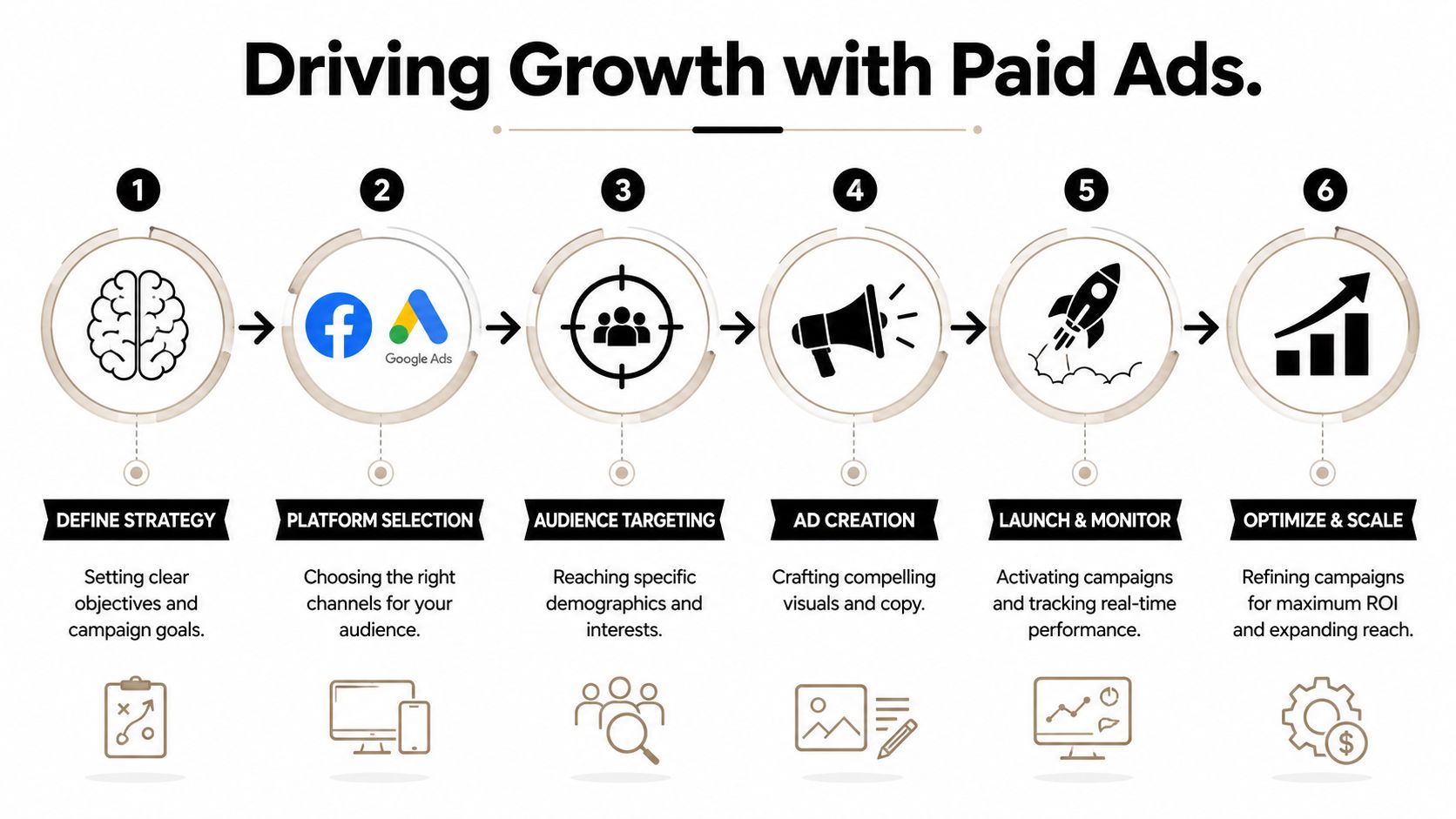
A few years ago, I took over a Google Ads account for a Christian retailer on Shopify. The previous agency had built a busy-looking account with plenty of campaigns, broad targeting, and enough clicks to make the reports feel productive. Sales were flat. Once we got into the account, the true issues were obvious. Product titles were weak, landing pages did not match search intent, and the team was paying for traffic that had little chance of turning into revenue.
That is a common pattern in Christian marketing services. Paid media works well when the organisation already knows what outcome matters and has a site that can carry the traffic properly. Churches, schools, ministries, and faith-based ecommerce brands all need visibility, but they do not all need the same campaign structure, offer, or conversion path.
Google Ads for buyers and high-intent enquiries
Google Ads remains one of the strongest channels for capturing demand that already exists. If someone is searching for a Christian bookshop, school enrolment information, church venue hire, counselling support, or faith-based gifts, intent is already on the table. The job is to match that intent with the right keyword set, ad copy, and landing page.
The scale of online buying in Australia supports that approach. Australia Post reported that online purchases reached AUD 63.7 billion in 2023 in its 2024 eCommerce Report, and the same report states that 9.5 million households shopped online in 2023. That matters because faith-based organisations are competing inside the same buying habits as every other brand. People research online first, compare options quickly, and expect a clear next step.
For service-based accounts, I usually start narrower than clients expect. A smaller search campaign built around strong commercial terms often outperforms a sprawling account full of weak intent. Tight location targeting, call extensions, form tracking, and landing pages written for one audience beat broad traffic almost every time.
I have also found that ministries can be too cautious with commercial language in ads. There is a difference between being respectful and being vague. If the service is counselling, say counselling. If the offer is enrolment, say enrolment. If the store sells devotionals, gifts, or church supplies, put the product in front of the buyer clearly.
Meta works differently and needs a different standard
Meta is useful, but for different reasons. It is better for message testing, audience development, retargeting, and offer packaging than for harvesting high-intent demand out of the gate.
The main mistake I see is not theological. It is operational. Teams launch campaigns with three audience changes, two creative styles, a new offer, and a weak landing page, then wonder why the result is muddy. Meta needs a cleaner testing process than that.
My approach is simple:
- Keep the offer fixed first
- Test one message angle at a time
- Change creative format after the message is clear
- Use retargeting to reconnect with warm visitors
- Judge results against the actual goal, not likes or reach
That discipline matters for faith-based organisations because values language can hide weak positioning. An ad can sound heartfelt and still fail to explain what is being offered, who it is for, and why someone should act now.
A useful side resource, especially if your organisation is thinking about content ecosystems and how digital tools shape audience habits, is this roundup of Best Bible apps for 2026. It gives a practical window into how people engage with faith content through mobile-first products.
A short explainer helps if you're weighing campaign structure and platform choices:
Ecommerce decisions that actually affect spend
For Shopify stores, channel choice is rarely the whole story. Feed quality, product economics, and purchase friction usually matter more.
I get asked about Performance Max versus standard Shopping all the time. The honest answer is that both can work. Standard Shopping gives more control over queries and products. Performance Max can scale faster if the account already has enough conversion data, strong creative assets, and a healthy product feed. If those inputs are poor, Performance Max often hides problems rather than solving them.
Here is the trade-off in plain terms:
| Option | Better when | Watch out for |
|---|---|---|
| Standard Shopping | You want tighter query and product control | Slower scaling if the account is thin |
| Performance Max | You have decent assets and enough conversion signal | Reduced visibility into what drives outcomes |
I have seen Christian ecommerce brands increase budget when sales dipped, only to find the actual problem sitting inside Merchant Center. Disapproved products, weak titles, missing GTINs, poor image quality, or thin category coverage can all choke performance before bidding strategy even gets a fair run.
Paid ads can drive real growth for ministries and Christian businesses in Australia. They just need to be built on commercial clarity, tested with discipline, and tied to outcomes that matter, whether that is donations, enquiries, enrolments, event registrations, or Shopify revenue.
Mastering Measurement and Advanced Technical Setups
A few years ago, I audited a Christian retailer's ad account after a rough quarter. Google Ads looked passable on the surface. ROAS was unstable, Meta numbers were higher than Shopify, and the team had started debating creative, audience targeting, and budget levels. The underlying problem was simpler. Purchases were firing twice in one platform, not at all in another, and phone enquiries from branded search were disappearing into a generic "direct" bucket.
That kind of reporting mess is common. It also gets expensive fast.
Start with clean tracking, not fancy reporting
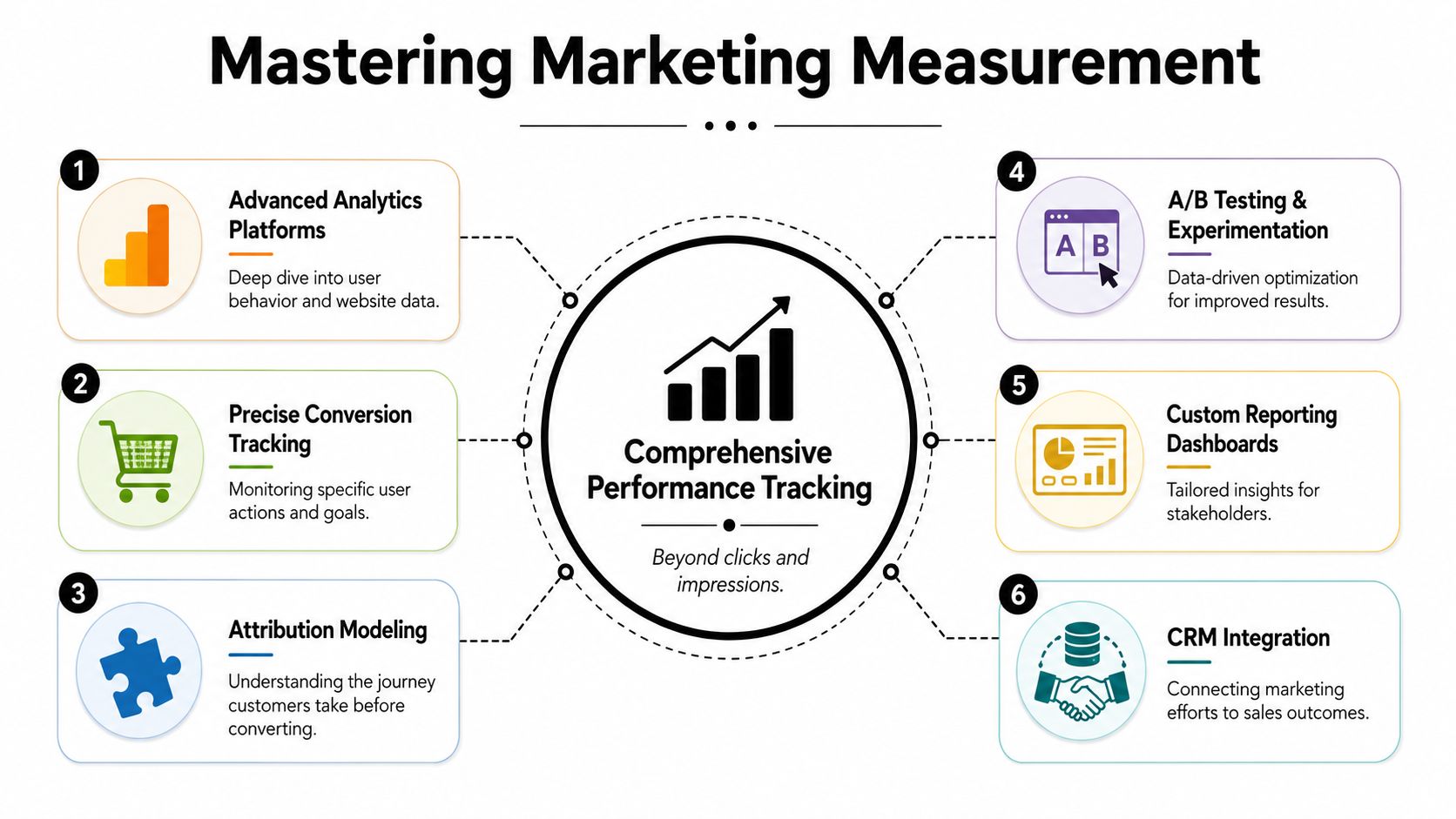
Measurement quality usually decides whether paid media gets scaled with confidence or cut too early. A polished dashboard does not fix broken implementation. If Google Tag Manager is cluttered, GA4 events are inconsistent, and thank-you page triggers are unreliable, every report downstream becomes harder to trust.
I usually check four things first:
- GTM structure: Containers are named clearly, grouped sensibly, and documented well enough that another marketer or developer can work on them without guessing.
- Event logic: Form submissions, purchases, calls, donations, and booking events fire once, at the right time, across the main user paths.
- Platform alignment: Google Ads, GA4, Shopify, and Meta will never match perfectly, but they should line up closely enough for budget decisions.
- Testing discipline: Events are checked on mobile and desktop, across real journeys, not just in preview mode.
For Christian organisations in Australia, the opportunity is already there. DataReportal's Digital 2025: Australia snapshot reports 20.80 million internet users and 78.2% social media user penetration. The Australian Bureau of Statistics also reports that online sales accounted for 17.2% of total retail turnover in March 2025. Reach is not the limiting factor for most ministries, schools, and Christian businesses. Reliable attribution is.
That changes the conversation. Instead of arguing over which channel "feels" better, teams can measure which keyword drove the phone call, which campaign produced qualified enrolment enquiries, and which Shopify product set generated margin.
I have seen this matter most in two cases. The first is donation and lead generation accounts where offline follow-up carries its primary value. The second is Shopify stores where platform-reported sales can make a campaign look healthier than it really is.
Meta Conversions API and server-side sanity
Post-iOS, browser-only tracking leaves too many gaps for serious advertisers. Meta Conversions API helps recover signal quality, improve matching, and feed cleaner conversion data back into the platform.
On Shopify, that often starts with checking the native integration instead of assuming it is fine. On custom sites, it usually means more developer input and stricter testing. In both cases, the question is the same. Are the events accurate enough to trust optimisation?
For accounts spending real money on paid social, these technical details deserve close attention:
| Technical area | Why it matters |
|---|---|
| Event deduplication | Stops inflated conversion counts |
| Purchase value passing | Improves optimisation for revenue, not just volume |
| Domain and source consistency | Reduces attribution conflicts across platforms |
| CRM handoff | Connects ad clicks to real lead quality and sales outcomes |
As noted earlier, Alpha Omega Digital is one Melbourne-based option working across web builds, paid media, and tracking implementation.
Most tracking problems come from several small setup faults sitting on top of each other. A tag fires on one page template but not another. A form event triggers on button click instead of confirmed submission. Meta records a purchase value that does not match Shopify because tax or shipping is handled differently. None of these issues look dramatic alone. Together, they distort budget decisions for months.
Call tracking that ties ad spend to actual conversations
For service-based Christian businesses, schools, and care organisations, forms only tell part of the story. A lot of high-intent prospects still call, especially when the decision carries urgency or trust concerns.
We have built Twilio-based call tracking for businesses that needed more than a forwarding number. The useful setups record source data, route leads properly, and make sure missed calls do not disappear. In one case, a client was spending steadily on Google Ads while after-hours enquiries were going nowhere. Once call routing and attribution were fixed, the ad account looked completely different because the actual conversion path was finally visible.
A practical setup can include:
- Always-on answering: Helpful when staff are on-site, in meetings, or unavailable
- Calendar booking: Calls can push straight into a calendar or Calendly flow
- Lead routing: Different campaigns can send enquiries to different teams or locations
- Source attribution: Calls are tied back to channel, campaign, and keyword data where possible
This matters more than many faith-based organisations expect. If a ministry wants to measure event registrations, if a Christian school wants to track enrolment enquiries, or if a Shopify brand wants to compare Google Ads against Meta using actual revenue, the technical setup has to support those decisions. Good intent does not compensate for weak instrumentation.
For teams preparing for discovery beyond classic search, this article on how to understand AI search for marketers is worth reading alongside your reporting setup.
Ethical Marketing and Building Authentic Community
Trust is the asset you can't afford to burn in faith-based marketing.
A lot of organisations talk about ethics as if it's separate from performance. In real campaigns, it isn't. Ethical handling of data, honest messaging, and clear consent processes all affect deliverability, audience quality, and long-term response. Respectful systems usually perform better because they attract people who want to hear from you.
Consent-first isn't red tape
In Australia, effective Christian marketing services need a consent-first CRM segmentation approach because the Spam Act 2003 requires commercial electronic messages to include clear identification, functional unsubscribe facilities, and lawful consent. In practice, that means first-party data capture, unsubscribe syncing, and auditable opt-in records matter just as much as the email copy itself, as outlined in this overview of Christian marketing compliance priorities.
That's not just a legal box-tick. It's a list quality issue.
If a ministry, school, or Christian business keeps adding vague contacts into broad email lists without proper consent records, a few things happen. Deliverability gets weaker. Audience trust drops. Internal reporting becomes less reliable because nobody knows which segment asked to hear from you.
What ethical setup looks like in practice
The healthier approach is usually less dramatic and more disciplined.
- Use clear forms: Say what the person is signing up for.
- Keep records: Store timestamped consent data and source details.
- Segment properly: Buyers, donors, event attendees, and enquiry leads shouldn't all get the same sequence.
- Honour exits fast: Unsubscribes should sync across platforms without delay.
I also prefer double opt-in in many scenarios, especially when the list quality matters more than list size. Plenty of clients resist that at first because they worry about friction. I get it. But a smaller list with clean intent usually beats a bigger list full of people who barely remember signing up.
The unsubscribe link isn't the enemy. Sending unwanted emails is.
Community beats extraction
The deeper issue is mindset. Some organisations build marketing systems to collect names. Better organisations build systems to earn ongoing permission.
That changes the tone of everything. Welcome sequences become clearer. Follow-up content becomes more relevant. CRM tags start reflecting behaviour instead of guesswork. Even ad audiences improve because suppression and segmentation are cleaner.
For Christian organisations, this isn't a compromise with performance. It's a more mature version of it. If your audience feels respected, they're more likely to stay engaged, respond to the right message, and trust future communication.
Ethics in this space isn't about sounding nice. It's about operating in a way that your audience would still respect if they saw the backend.
How to Choose the Right Christian Marketing Partner
A few years ago, I took over a Google Ads account for a Christian organisation that had already been through two agencies. The meetings had sounded good. Plenty of language about purpose, community, and storytelling. But once I got into the account, its true nature was clear. Conversion tracking was patchy, branded and non-branded traffic were mixed together, and nobody could explain which enquiries were translating into ministry impact or sales.
That experience shaped how I advise teams to choose an agency. Start with operating detail.
An agency working in this space should be able to explain how it builds, tracks, tests, and improves. Shared values matter, but they do not make up for weak implementation. If the partner cannot explain what happens inside Shopify, Google Ads, GA4, GTM, or your CRM, you are buying reassurance rather than capability.
Questions worth asking in the first meeting
Good first meetings get specific fast. I would ask questions like these.
- How do you define success for an organisation like ours? Look for answers tied to donations, qualified enquiries, event registrations, book sales, course purchases, or store revenue. Clicks alone are not enough.
- How do you handle websites in practice? Ask whether they can work properly in WordPress and Shopify, including theme changes, product feeds, form handling, page speed, and technical SEO.
- How do you track leads and sales? They should be able to explain form submissions, phone calls, online purchases, and CRM attribution in plain English.
- How do you test campaigns? Serious teams have a method for creative testing, search term review, landing page changes, and budget shifts.
- What do you do when results flatten out? The right answer sounds like diagnosis, not spin.
If your team also manages member groups, volunteer communities, or social channels, this piece with insights for professional community managers is worth reading. It treats community management like operational work, which is how good agencies should treat it too.
Look for clear user-centred thinking
A strong partner should care about clarity as much as channel execution. In Australia, that expectation has been reinforced by the Australian Government's Digital Service Standard, which pushed public-facing digital services toward user-centred design. That matters for churches, Christian schools, ministries, and faith-based businesses because the same basics apply. Clear pages, simple journeys, fast forms, and mobile-first layouts usually outperform vague brand language.
The same practical lens applies to business context. The Australian Bureau of Statistics notes that most Australian businesses are small businesses. Many Christian organisations and businesses fit that reality. They do not need bloated retainers or enterprise theatre. They need an agency that can make sensible trade-offs, explain priorities clearly, and focus spend where it will produce results.
Here is the difference in plain terms.
| Good sign | Warning sign |
|---|---|
| Explains trade-offs clearly | Hides behind jargon |
| Talks about user journeys and conversion paths | Talks only about reach |
| Understands WordPress and Shopify constraints | Pushes one-size-fits-all builds |
| Connects ads to enquiries or sales | Reports only platform metrics |
The partner should fit the mission and the mechanics
I have seen this play out on both sides. One ministry had a strong message and a loyal audience, but its site made donations harder than they needed to be. Another client sold Christian products through Shopify and had decent traffic, yet the product feed was messy and Google Ads was optimising toward the wrong actions. In both cases, the issue was not intent. It was execution.
Ask the agency what it would change first. On Shopify, that might mean fixing feeds, improving checkout tracking, cleaning up product taxonomy, or separating prospecting from remarketing. On WordPress, it might mean improving page speed, rebuilding templates, tightening form attribution, or reducing friction on key pages.
A Melbourne agency that understands Christian marketing services should be able to talk comfortably about mission, but also about account structure, tracking integrity, landing page behaviour, and lead quality. That is the standard. If the conversation stays vague, keep looking.
Your Next Step to Measurable Growth
Christian marketing services work best when they're treated as serious performance work, not a separate category with lower standards.
That means a strong website. Clear local presence. Tight paid media strategy. Proper GTM and analytics setup. Meta Conversions API where it belongs. Call tracking that tells you where real enquiries come from. Consent-first CRM processes that protect trust instead of draining it.
I've seen faith-based organisations do very well online when they stop trying to sound vaguely inspirational and start building digital systems that are clear, measurable, and useful. That's true for Shopify stores, WordPress sites, Google Ads campaigns, Meta campaigns, and local SEO.
If you're comparing partners, don't just ask whether they understand Christian audiences. Ask whether they can build, track, test, and improve the machinery behind the message. That's usually the difference between activity and actual growth.
Alpha Omega Digital is based in Melbourne and works with businesses across Sydney, Brisbane, Newcastle, Perth, Adelaide, Darwin, and Hobart. If you're running paid ads or preparing to, the strongest next move is usually an honest audit of the site, the tracking, and the account structure before more money goes out the door.
If you're a business with a paid ads budget of at least 3k a month, I'd love to offer you a low risk deal, get a month of paid ads management FREE. Apply now through the contact page.
If you'd like to talk through your website, tracking, Shopify build, WordPress setup, or paid ads strategy, get in touch with Alpha Omega Digital.
[email protected]
Read more insights from our team on web design, paid ads, and growth strategy.