Most churches I speak with aren't short on heart. They're short on clarity. They've got a website that was built years ago, a Facebook page that gets the occasional update, and a handful of good intentions around outreach. Then they wonder why new people aren't finding them, why event registrations stay flat, or why paid ads feel like money disappearing into the void.
Church marketing works when it stops being treated like a pile of disconnected tasks. A better homepage alone won't fix weak follow-up. More Instagram posts won't solve poor local visibility. And ad spend won't rescue a slow, confusing site. The churches getting traction usually do a few basic things well. They make it easy to find them, easy to trust them, and easy to take the next step.
That matters even more in Australia. The 2021 Census recorded 5,075,907 people (19.8%) reporting “No Religion,” while 4,243,100 (16.6%) identified as Catholic and 1,207,680 (4.7%) as Anglican (reference). So church marketing here isn't aimed at one neat, already-engaged audience. A lot of the people you're trying to reach are starting from a point of low familiarity, low trust, or no formal affiliation at all.
I look at church marketing the same way I look at any serious lead generation system for a Melbourne business. You need a strong digital foundation, clean tracking, local discoverability, and a practical way to measure whether your efforts are producing actual attendance and ongoing engagement, not just clicks and compliments.
Building Your Foundation a Website That Converts
I've seen churches spend months worrying about ad creative while their website repels visitors. The homepage is cluttered. Service times are buried. The mobile menu is a mess. Half the buttons go nowhere. A newcomer lands there and leaves with more questions than confidence.
That's where church marketing usually wins or loses first.
For a church, the website isn't a brochure. It's the digital front door. In a country where 95.9% of households had internet access in 2021–22 and 98% of people aged 15–24 used the internet daily in 2022–23 (reference), most first impressions now happen on a screen. If the site feels dated, slow, or vague, people won't wait around to decode it.
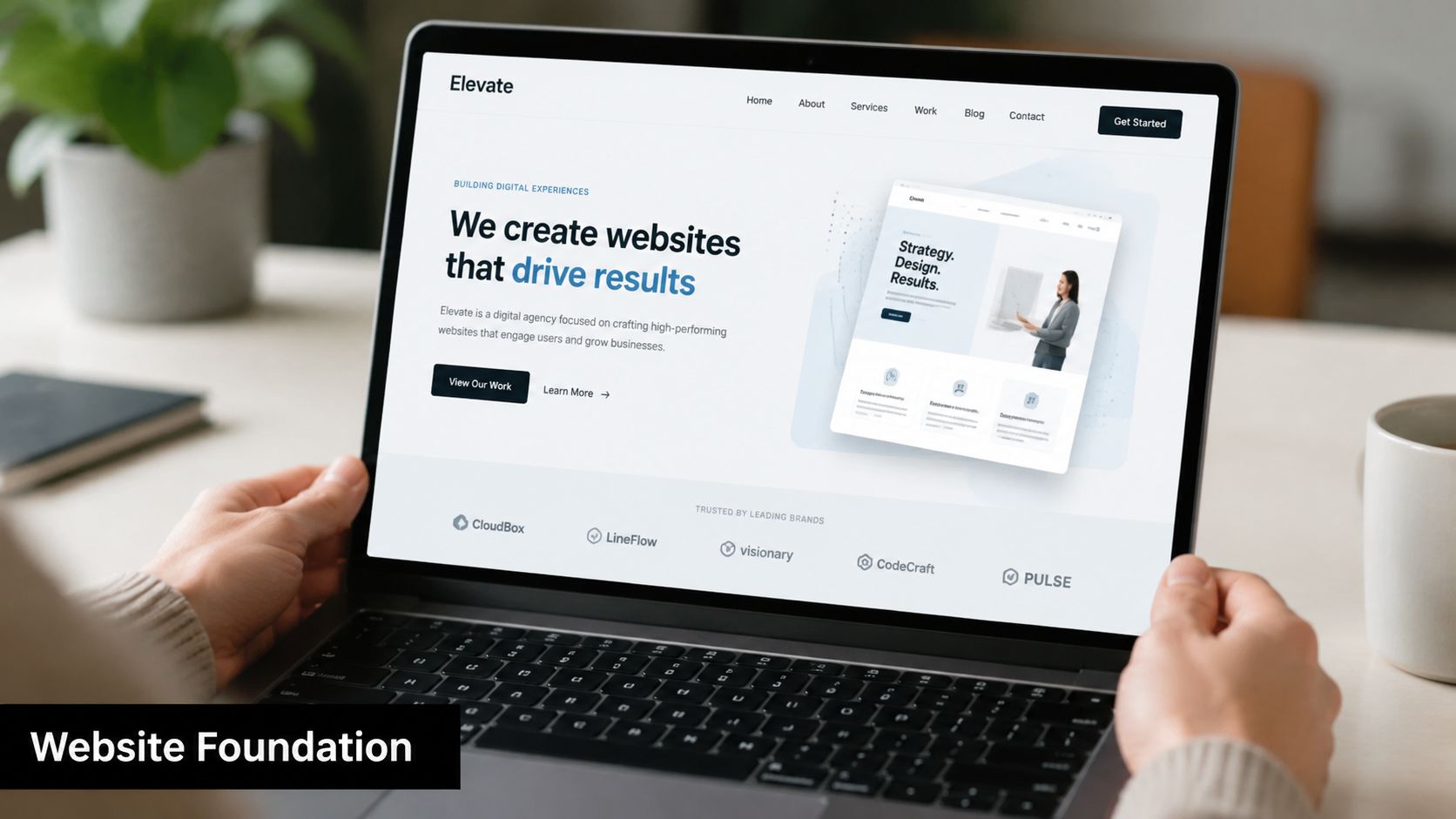
What a church website actually needs
I don't mean flashy animations or trendy layouts. I mean the basics that help a first-time visitor decide whether they should come on Sunday.
A church website should answer these quickly:
- Who you are so a new visitor can tell if your church feels approachable
- When and where you meet without hunting through multiple pages
- What to expect for families, kids, parking, dress, and service style
- How to take a next step such as planning a visit, joining an event, or making contact
For churches with a lot of ministry pages, staff profiles, event calendars, and sermon content, WordPress is often the practical choice. It gives you flexibility, especially if you need custom templates or content structures. For that kind of build, a WordPress developer can help structure the site so ministry teams can update it without breaking the layout.
For churches selling conference tickets, merchandise, books, or paid resources, Shopify can make more sense for the commerce side. We've handled enough Shopify work to know that the platform is strong when transactions matter, but it still needs proper design and conversion thinking.
The pages churches often get wrong
The most common mistake is trying to say everything at once. Churches want to describe every ministry, every belief statement, every event stream, every community initiative. That creates noise.
I'd rather see a church homepage do fewer things, better.
| Page area | What usually goes wrong | Better approach |
|---|---|---|
| Homepage hero | Generic welcome text | State service times, location, and one clear action |
| About page | Internal language and church jargon | Write for someone who's never attended church |
| Kids page | Thin information | Explain check-in, safety, age groups, and what parents can expect |
| Contact page | Basic form only | Add map, parking guidance, and service details |
Practical rule: If a first-time visitor can't work out where to go, what time to arrive, and whether their kids will be okay within a minute or two, the website isn't doing its job.
Design matters, but clarity matters more
Good church marketing doesn't start with trying to look impressive. It starts with removing friction. I've taken over projects where a church had a polished-looking site, but conversions were poor because every page fought for attention. Once we simplified navigation, tightened copy, and gave key actions more prominence, the whole experience made more sense.
If you want a useful external read on that thinking, the Otter A/B conversion guide is worth your time. It's a solid reminder that small changes in layout, messaging, and page flow often matter more than cosmetic redesigns.
A church website should feel welcoming, organised, and current. It doesn't need to feel corporate. It does need to feel trustworthy.
Getting Found by Your Ideal Melbourne Customers
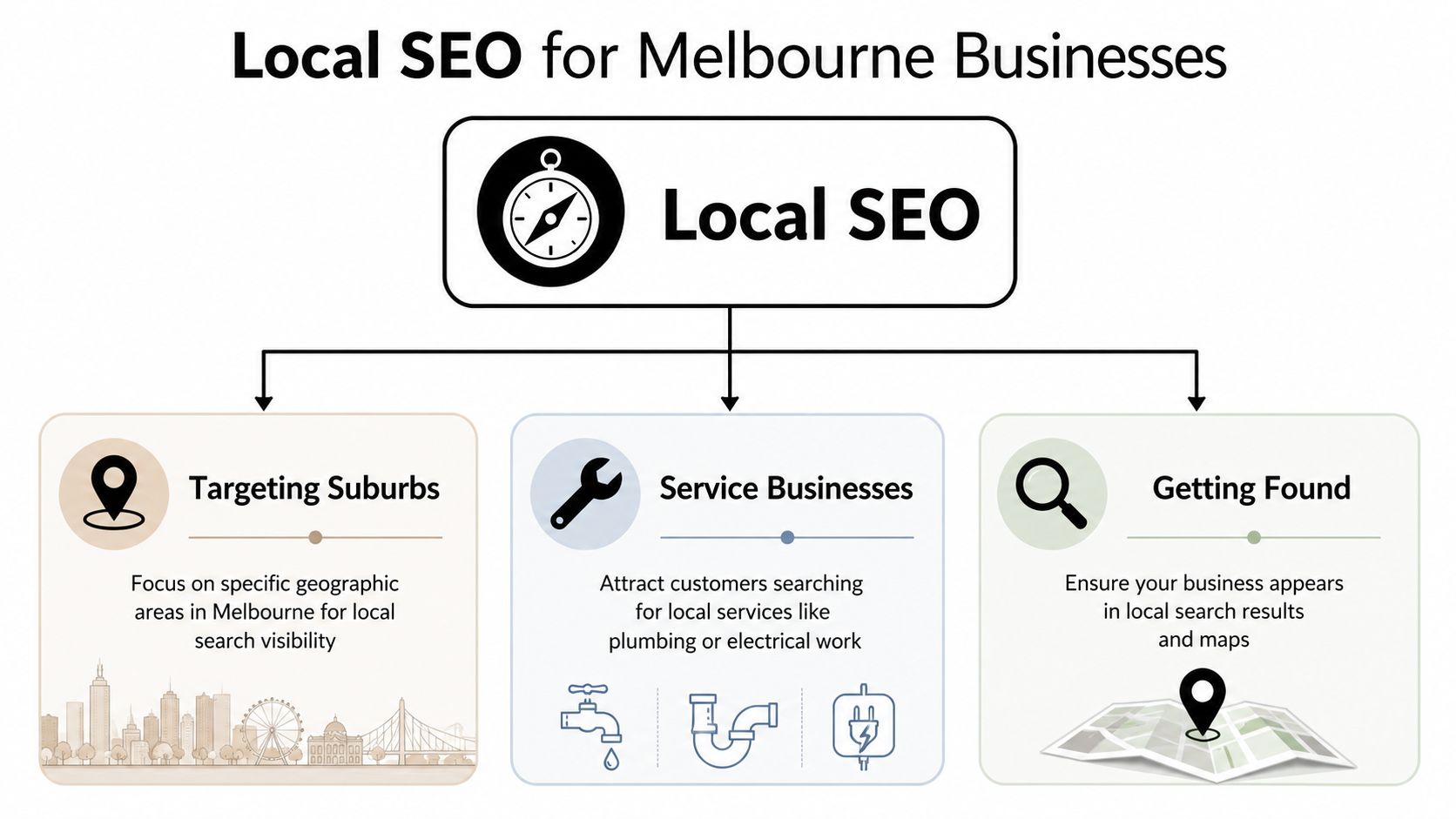
A strong site is useless if nobody sees it. That's why local SEO is one of the first things I'd fix for almost any church trying to improve church marketing in Melbourne or surrounding suburbs.
Individuals don't search for “faith community with a strong sense of belonging.” They search for practical things. Church near me. Sunday service Melbourne. Kids church Brunswick. Youth group in the eastern suburbs. Your visibility depends on whether Google understands where you are, what you offer, and whether you're relevant to nearby searchers.
Start with your Google Business Profile
I treat a Google Business Profile like a mini landing page. Churches often set one up once, then leave it half-finished for years.
The basics matter:
- Use accurate categories so Google can match you to relevant local searches.
- List current service times and keep holiday changes updated.
- Upload real photos of the building, auditorium, kids areas, and entry points.
- Add services or ministry-relevant details in plain language.
- Monitor reviews and questions so the profile stays active and trustworthy.
This is simple work, but it's not trivial work. For many churches, it's the easiest visibility gain available.
Build location relevance on your own site
Local SEO also depends on the website itself. If your church serves people in specific parts of Melbourne, your pages should reflect that naturally. I'm not talking about keyword stuffing suburb names into every paragraph. I mean useful, local context.
That can include:
- Location pages for campuses or service areas
- Event pages that mention the suburb and nearby landmarks
- FAQ content that answers local concerns like parking, public transport, or children's programs
- Consistent business details across the website and directory listings
Most churches don't need more clever marketing. They need stronger local signals and less ambiguity.
Measure discoverability, not just visibility
One thing I like about practical church marketing is that it can be measured without overcomplicating it. Churches are advised to track first-time visitor volume, event attendance, email engagement, website visits, and returning-visitor rate, and to improve discoverability through local search terms, directory listings, and map visibility (reference).
That point matters. Ranking well or getting map views is not the finish line. The key question is whether local search is feeding actual participation.
If your church appears in search but nobody clicks through, the listing needs work. If people visit the website but don't plan a visit, the page experience needs work. If they attend once but don't return, the problem may be follow-up, not traffic.
That's why local SEO works best when it's tied to the rest of the system, not treated as a standalone checkbox.
The Google Ads Playbook for Immediate Leads and Sales
SEO helps over time. Google Ads is what you use when you want visibility now.
For churches, I don't mean blasting broad awareness campaigns with vague messaging. I mean being deliberate. If someone is searching for a church, a Christmas service, a local Easter event, or a family-friendly Sunday service in your area, that's active intent. Google Ads lets you show up in that moment.
I use the same logic here that we use for service businesses. Search traffic is high intent because the person is already raising their hand. The mistake most churches make is either avoiding paid search entirely or running campaigns so loosely that they can't tell what's working.
What Google Ads can actually do for a church
Church marketing through Google Ads works best when the offer is specific. Not salesy. Specific.
That might be:
- Plan your visit messaging for people already searching for a local church
- Seasonal campaigns around Easter, Christmas, carol services, or community events
- Family-focused campaigns tied to kids programs or parenting support events
- Youth or young adult event promotion if the landing page is clear and relevant
Generic campaigns underperform because they ask too much from a cold user. A focused campaign tied to a single next step gives you a better shot at action.
The landing page matters more than the ad
I've seen ad accounts blamed for problems caused by poor pages. If someone clicks and lands on a generic homepage with no obvious next step, the campaign gets judged unfairly.
For churches, a strong landing page usually includes:
| Element | Why it matters |
|---|---|
| Clear event or service info | Removes uncertainty immediately |
| Map and access details | Helps local visitors commit |
| Family and kids information | Reduces anxiety for parents |
| Simple form or contact option | Captures intent while it's fresh |
If the church uses phone enquiries for events, pastoral support, or community programs, call tracking becomes valuable. In broader agency work, we often set up custom numbers through Twilio to route and track calls properly. That can also support features like around-the-clock answering flows and calendar booking logic where it suits the organisation. The point isn't the software itself. The point is knowing which keyword, ad, or campaign generated the enquiry so you can stop guessing.
Don't optimise for vanity metrics
Plenty of church campaigns look busy on the surface. Impressions are up. Clicks are happening. Someone's happy because the ads were seen. That doesn't tell you whether the spend produced anything meaningful.
What matters is whether Google Ads leads to:
- First-time visits
- Event registrations
- Contact form submissions
- Volunteer enquiries
- Repeat attendance after initial contact
That's why I keep coming back to measurement. One of the biggest gaps in church marketing is attribution. Existing advice often repeats the same tactics, but gives little practical help on cost-per-visit thinking or tying online engagement to in-person attendance. That gap matters in Australia because 95.5% of households had internet access in 2024–25 and Australians spent more than 6 hours per day online on average (reference). Digital reach is important, but so is competition for attention.
More content doesn't automatically produce better church marketing. Better measurement does.
For churches already experimenting with search, discipline is paramount. Pick a few high-intent campaigns. Track form completions, tracked calls, and attendance outcomes where possible. Then review weekly. If one campaign brings in event sign-ups and another just burns through budget, the answer is usually obvious.
A lot of churches need less activity and more accountability.
Later in the process, if you want to compare campaign structures, test branded versus non-branded terms, or separate event campaigns from evergreen church discovery campaigns, that's where more advanced account management comes in. But the core principle stays the same. Search is strongest when it captures existing intent and ties it to a measurable next step.
A quick walkthrough of paid search strategy can help make that clearer:
Mastering Facebook and Instagram for Brand Growth
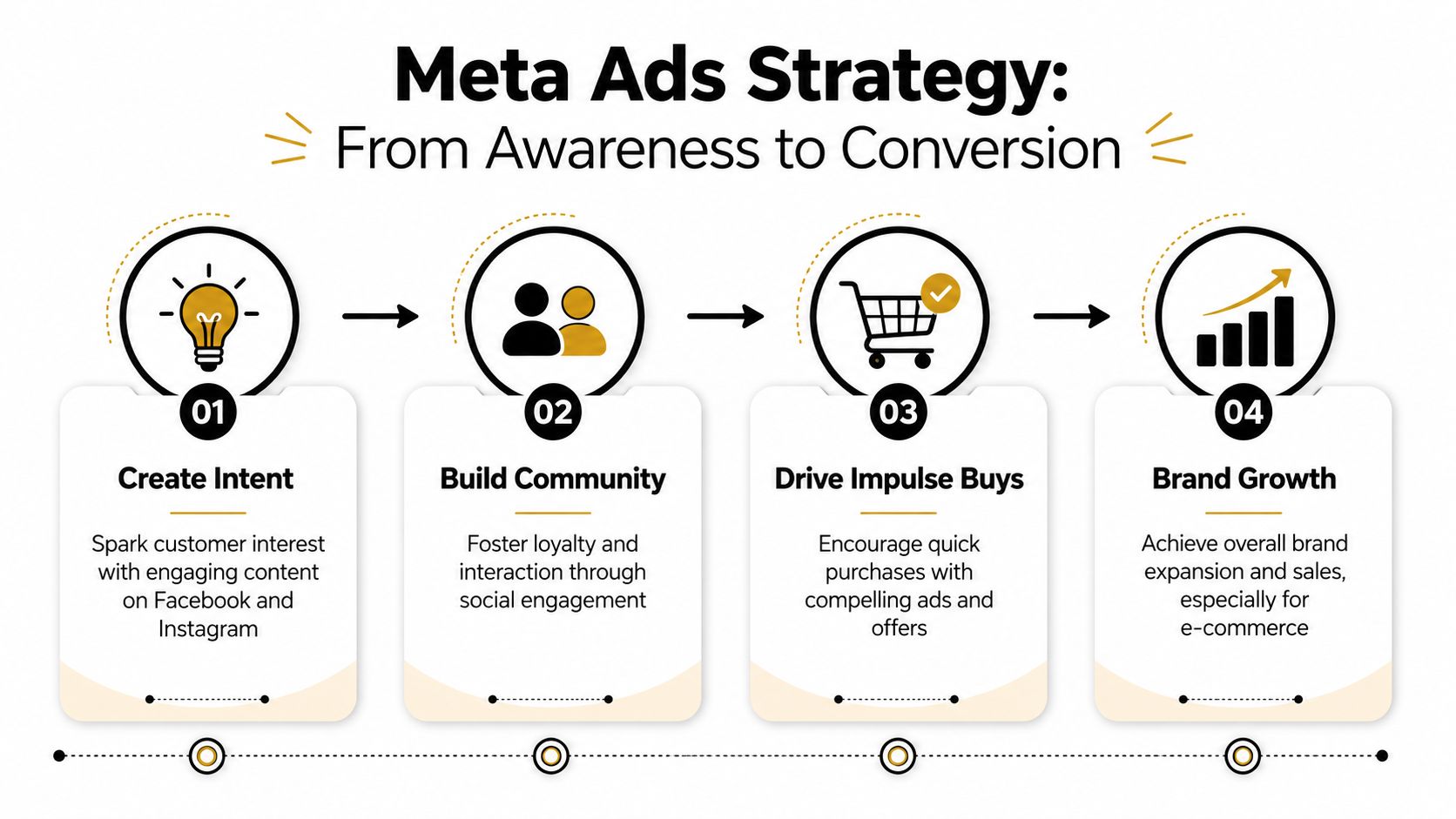
Google captures intent. Meta helps create it.
That distinction matters in church marketing because plenty of people aren't actively searching for a church this week, but they may still respond to the right message in the right format. A short video from a pastor, a community event invite, or a family-focused welcome message can warm up an audience before they ever type a search query.
The problem is that most church Meta campaigns are built on guesswork. Someone picks a photo, writes a few hopeful lines, boosts the post, and waits.
Creative testing is where the real gains happen
When I run Meta campaigns, I care less about one “perfect” ad and more about a repeatable testing process. Different hooks, opening lines, visuals, lengths, and calls to action can change how a campaign performs. If you don't test them systematically, you end up making emotional decisions instead of useful ones.
For churches, the variations worth testing often include:
- Pastor-led video versus static image to see which format builds more trust
- Community-focused messaging versus sermon-focused messaging depending on audience
- Event invitation versus general welcome based on campaign objective
- Short copy versus longer explanatory copy for colder audiences
If you want a broader read on that discipline, Creative testing for Meta ads is a worthwhile reference. It aligns with what we see in practice. Creative rarely improves by instinct alone.
Technical setup decides how much Meta can learn
Good creative without good tracking is a handicap. That's especially true now that browser-based tracking is less reliable than it used to be.
For church marketing, the Meta Conversions API becomes useful. Instead of relying only on browser events, Conversions API can send conversion signals more directly from your site or server-side setup. That gives Meta a cleaner picture of what actions matter, whether that's a plan-your-visit form, an event registration, or another meaningful step.
I'd rather have a modest campaign with sound tracking than a flashy campaign with broken attribution.
If Meta can't see good conversion signals, it can't optimise toward the people most likely to act.
Social growth is not the same as ministry growth
This is the bit that often gets overlooked. A church can build nice engagement metrics on Facebook or Instagram and still fail to turn that attention into attendance or participation.
That's why the campaign has to connect properly to the next step.
A sensible structure looks like this:
- Awareness content that introduces the church through real people and local relevance.
- Consideration content that answers practical concerns, especially for new families or first-time visitors.
- Conversion-focused ads tied to one action, like registering for an event or planning a visit.
- Follow-up through email or personal contact after the form is submitted.
For churches with merchandise, conference registrations, or other product-style offers, Instagram Shop and Facebook Shop can support a smoother path. But for most churches, the bigger win is using Meta to build familiarity and then moving people toward a defined response, not endless passive engagement.
That's where a lot of wasted spend gets cleaned up.
The Technical Backbone That Makes It All Work
Tracking is where church marketing gets real. Without it, you're left with opinions. Someone likes the Instagram post. Someone else feels the Google Ads are helping. The website got a bit more traffic. None of that is enough to make smart decisions.
I start with Google Tag Manager because it gives control over the tracking layer without needing to edit site code every time a new tag is required. If a church wants to track contact forms, button clicks, event registrations, outbound calls, or page-specific actions, GTM makes that setup manageable.
A practical stack that churches can actually use
The core setup is usually straightforward:
- Google Tag Manager to deploy and manage tags
- Google Analytics for traffic patterns, key events, and goal tracking
- Meta Pixel and Conversions API for paid social attribution
- Google Ads conversion tracking for search campaign performance
Churches are also advised to use website analytics and segmented email as the core conversion stack, with Google Analytics for traffic and goal tracking, email dashboards for open and click performance, and weekly review to reallocate effort toward the channels that increase attendance, engagement, and volunteer sign-ups (reference).
That's the practical model. Track the actions that matter. Review them regularly. Shift effort based on evidence.
What churches should track first
You don't need an overbuilt dashboard on day one. You need a small set of useful signals.
I'd usually prioritise:
| Tracking area | Useful action to record |
|---|---|
| Contact forms | Completed submissions |
| Event pages | Registration clicks or form completions |
| Plan a visit pages | Form submissions |
| Phone links | Click-to-call actions on mobile |
| Email follow-up | Opens, clicks, and response patterns |
A local provider like Alpha Omega Digital can handle this kind of implementation work alongside campaign management, but the important point is broader than any one agency. If your tracking is incomplete, your decisions will be shaky.
Where most setups break
The usual issues are boring but costly. Duplicate tags. Forms that don't fire conversion events. Old Universal Analytics logic still sitting around. Meta events counting the wrong actions. No testing after deployment.
Churches don't need enterprise-level complexity. They do need basic technical hygiene. Once that's in place, every other marketing choice gets easier because you can see what people are doing.
Advanced E-commerce Growth with Custom Shopify Development
Not every church needs Shopify. But some do. If you sell books, devotionals, conference tickets, merchandise, online courses, or ministry resources, the platform can handle that side of the operation well.
The trouble starts when a church treats Shopify like a theme marketplace instead of a growth platform.
When a standard theme stops being enough
Off-the-shelf Shopify themes are fine at the start. Then limitations show up. The product pages are too rigid. The content blocks don't match how your team wants to publish campaigns. Bundle logic gets messy. Landing pages all start looking the same.
That's where custom development becomes useful.
A more advanced Shopify setup can include:
- Custom sections and blocks so the team can build campaign pages without developer help
- Customized cart or checkout-adjacent experiences where platform rules allow
- Product logic and app integrations for subscriptions, events, or specialised fulfilment
- API-driven workflows that connect Shopify with internal systems
For teams comparing platforms, this is also where development maturity matters. There's a big difference between someone who installs apps and tweaks CSS, and someone who works comfortably with the Shopify API, custom app logic, and theme architecture.
Marketing and development need to work together
I've worked on enough e-commerce projects to know that custom development without marketing strategy creates beautiful dead ends. You end up with a polished store that doesn't convert. The reverse is also true. Strong ad strategy can't fully compensate for a rigid store experience.
For churches running commerce-related initiatives, I'd look at three questions:
- Does the current store support campaign landing pages properly?
- Can the team publish and update pages without technical bottlenecks?
- Is the store collecting the right behavioural and conversion data?
If the answer is no, custom Shopify work becomes less of a luxury and more of a practical fix.
For organisations exploring this path, a team experienced in Shopify Developers in Melbourne can help with both theme customisation and deeper development work. That includes custom builds, API-led functionality, and store structures designed around how campaigns run.
The church doesn't need the fanciest stack. It needs one that supports real offers and doesn't get in the team's way.
The Real Talk on Budgets and Consistency
The hardest conversation in church marketing usually isn't creative. It's commitment.
A church wants better visibility, more event registrations, stronger attendance, cleaner follow-up, and more consistent outreach. That all sounds reasonable. But when it comes time to commit budget or internal resourcing for long enough to learn what works, hesitation kicks in.
I get it. Nobody wants to waste money.
Why inconsistency ruins useful data
The problem with stop-start marketing is that it breaks the feedback loop. A church runs ads for a short stretch, pauses them, changes the landing page, swaps the message, stops posting, restarts with a new volunteer, then tries to compare results. There's nothing reliable to learn from that.
Consistency doesn't mean spending recklessly. It means choosing a few channels and giving them enough stability to produce real signals.
That applies to:
- Google Ads, where search terms and conversions need time to reveal patterns
- Meta Ads, where creative testing works best with disciplined iteration
- Email follow-up, where segmented messaging improves as you learn what people respond to
- Local SEO, where trust and discoverability build gradually rather than overnight
Budget should follow the decision you need to make
I'm careful with blanket budget advice because every church is different. A large metro church running event campaigns across multiple audiences has different needs from a local congregation focused on first-time visitors within a tight radius.
Still, one principle holds. If the budget is too small to generate enough meaningful actions, you won't know what's working. In that case, it's often better to narrow focus than spread money thinly across search, social, content, and design all at once.
A smaller number of well-measured activities beats a long list of half-funded tactics.
When churches ask whether they should invest in ads, website work, or SEO first, my answer usually depends on the biggest bottleneck. If the site is weak, fix that. If local visibility is poor, start there. If there's already demand around key events or search behaviour, paid campaigns can make sense quickly.
Budget only works when it's attached to a clear objective and a system for learning from the result.
Don't confuse motion with progress
One of the easiest traps in church marketing is doing lots of visible things that never connect back to attendance, participation, or community engagement. More posts. More announcements. More graphics. More busyness.
That can feel productive. It often isn't.
The better question is always the same. Which activity is helping people discover the church, trust the church, and take a real next step?
If you stay disciplined on that question, budget decisions get simpler.
Ready for a Real Growth Partner?
If your church has been piecing together outreach with a dated website, inconsistent follow-up, and patchy tracking, you don't need more random tactics. You need a system that makes it easier for local people to find you, understand you, and take the next step.
That starts with a website that removes friction. Then local SEO so you appear where people are already looking. Then paid search and Meta campaigns built around clear offers, clean tracking, and follow-up that doesn't leave enquiries hanging. None of this is glamorous. It is effective when it's done properly.
I'm based in Melbourne, and I like working with organisations that want practical answers rather than buzzwords. If you're serious about church marketing, the first thing I'd look at is simple. Where are people discovering you now, what happens after they click, and which parts of that path can be measured?
For churches or faith-based organisations that also run broader business units, e-commerce offers, events, or lead generation campaigns, the same rule applies. Get the fundamentals right first, then scale what proves itself.
If you already have a paid ads budget of at least $3,000 per month, there's enough room to run a proper test, collect useful data, and make informed decisions instead of guesses.
If you're ready to work with a team that builds websites, tracking, and paid campaigns with a practical focus on outcomes, Alpha Omega Digital offers a low-risk next step. If you're a business with a paid ads budget of at least 3k a month, I'd love to offer you a month of paid ads management FREE. Apply now through the contact page.
[email protected]
Read more insights from our team on web design, paid ads, and growth strategy.