Some months you’ve got enquiries coming in, carts moving, phones ringing, and your team is stretched. Then it goes quiet. Not completely dead, but quiet enough that you start checking ad accounts, wondering whether the market changed, your offer slipped, or your website is leaking revenue.
That pattern is common in Melbourne. It’s one of the main reasons owners start looking for a proper lead generation service instead of another freelancer, another platform rep, or another batch of random tactics.
I’ve seen the same problem across Shopify stores, WordPress service sites, tradies running PPC, and local operators trying to make Google Ads, Meta Ads, SEO, and follow-up systems work together. The businesses that get traction usually aren’t doing one clever thing. They’ve built a repeatable engine. Good traffic, strong landing pages, accurate tracking, fast follow-up, and a clear view of what’s producing revenue.
If you’re comparing a marketing agency Melbourne option against trying to manage everything in-house, this is the practical version of how lead generation works, what breaks, and what tends to produce consistent results for Melbourne businesses.
What Is a Lead Generation Service Really?
For most owners, the problem doesn’t start with “we need more impressions”. It starts with unstable demand.
One month you’re busy enough to delay quoting. The next month you’re refreshing your inbox and wondering why the website feels invisible. That feast-or-famine cycle is exactly why lead generation matters. According to Trustmary’s lead generation statistics, 62% of B2B companies in Australia identify lead generation as their top challenge, with 53% allocating half or more of their marketing budget to these efforts.
It’s not a list. It’s a system
A real lead generation service isn’t buying a database and dumping names into a spreadsheet.
It’s a system built to attract the right people, qualify them, move them to action, and hand them into a sales process that doesn’t waste the opportunity. That might mean a contact form submission for a service business, a phone call for a tradie, a product enquiry for a wholesaler, or a purchase path for an eCommerce store.
The work usually sits across a few layers:
- Traffic acquisition through Google Ads, SEO, Meta Ads, email, or local search
- Conversion assets like landing pages, product pages, quote forms, and offer pages
- Tracking and attribution through GTM, GA4, CRM syncing, and event setup
- Follow-up through email automation, call handling, SMS, sales pipelines, or remarketing
What it looks like in practice
For a Shopify brand, lead generation can mean reducing wasted ad spend and pushing more visitors into email capture, add-to-cart, and checkout flows.
For a local service business, it often means building a tighter path from search intent to contact form or phone call. That’s where a digital marketing agency Melbourne businesses trust should be thinking beyond clicks. The question isn’t whether traffic arrived. The question is whether the setup turned attention into commercial intent.
A lead is only useful if your business can recognise it, respond to it, and convert it.
That’s why I don’t treat lead generation as a campaign type. I treat it as infrastructure. If the infrastructure is weak, more budget just exposes the problem faster.
The Engine Room Our Core Lead Generation Channels
Most lead flow problems aren’t channel problems. They’re coordination problems.
A campaign might be fine. The landing page might be weak. The tracking might be broken. The offer might be vague. Or the business might be relying on one channel when the better play is to combine search demand, remarketing, and nurture. In Melbourne SMB campaigns, Smith Digital notes that multichannel lead generation can deliver 2.5x pipeline velocity, with zero-party data signals improving lead acceptance rates by 35%.
Google Ads for intent you can act on
Google Ads is usually the fastest way to capture active demand.
If someone is searching for a service, comparing suppliers, or looking for a product with buying intent, search campaigns give you a direct path into that moment. For service businesses, I like to structure campaigns around commercial intent terms, location modifiers, and landing pages designed around one action. Usually a form submission or a call.
For eCommerce, the setup changes. Shopping feeds, campaign priority, brand segmentation, search term control, and product page quality matter more. A lot of store owners ask why Google Shopping ads aren’t spending budget. In most cases, the issue isn’t just budget. It’s feed quality, weak data, poor product titles, disapproved attributes, or a campaign structure that gives the platform too little guidance.
If you’re comparing support options, a specialist Google Ads agency should be able to explain that difference clearly.
Meta Ads for demand creation and retargeting
Meta works differently. It’s not usually where people go to ask for your service today. It’s where you shape demand, test offers, and build remarketing pressure.
Creative testing matters here more than most businesses realise. The ad account rarely fails because “Facebook doesn’t work”. It fails because the hooks are bland, the offer is soft, the landing page message doesn’t match the ad, or the business quits before enough learning happens.
A useful way to think about Meta:
- Cold audiences need strong angles, not polished brand fluff
- Warm audiences respond better to proof, objections, and direct offers
- Creative rotation matters because ad fatigue is real
- Event tracking matters because Meta optimises based on the data you feed it
If you’re vetting providers, look for a team that can talk about creative testing, not just targeting. That’s often the difference between average account management and the best Facebook ads agency fit for your business. For broader campaign support, a dedicated Facebook & Meta Ads agency should also be able to explain how attribution, audience exclusions, and conversion signals work together.
SEO and local visibility still matter
Paid traffic is powerful, but plenty of Melbourne businesses become too dependent on it.
SEO gives you a slower but stronger base. For local operators, that means service pages, suburb relevance, internal linking, structured page intent, and a properly managed Google Business Profile. For eCommerce, it means collection pages, product architecture, technical cleanup, and content built around real search demand.
If you want a straightforward overview of what modern search engine optimization (SEO) services usually include, that guide is a good reference point.
Practical rule: Don’t ask which channel is best in isolation. Ask which mix gives your business the strongest path from attention to sale.
Building Your Digital Storefront for Conversions
You can buy traffic all day and still lose.
That happens when the website looks acceptable on the surface but performs badly where it counts. Slow mobile load. Cluttered navigation. Weak product pages. Forms that ask too much. No trust signals. No clear next step. In the Australian market, Email Vendor Selection reports that 90.7% of marketers use their websites as the primary tool for generating leads and sales. That lines up with what I see. Your site isn’t the brochure after the campaign. It is the campaign.
WordPress needs more than a theme install
A lot of businesses think WordPress is simple because it’s accessible. It is accessible. That doesn’t mean it’s automatically effective.
Strong wordpress development means building for speed, editor usability, conversion flow, and flexibility. When I’m looking at a service site, I care about page structure before visual polish. Can the visitor understand the offer fast? Is the trust content placed where it helps? Is the form friction low? Does the mobile version still feel clean?
That’s why businesses often need a real WordPress developer, not someone who just swaps templates. The same applies when choosing WordPress developers in Melbourne for custom builds, Gutenberg work, or a proper redesign tied to lead generation.
Common examples of useful WordPress work include:
- Custom Gutenberg blocks for service sections, trust modules, pricing layouts, and FAQs
- Cleaner template logic so key pages stay consistent across campaigns
- Conversion-first page builds instead of design-first pages that bury the CTA
Shopify has to balance brand and revenue
Shopify stores have a different challenge. The site has to convert while also supporting merchandising, apps, operations, and campaign tracking.
That’s where experienced Shopify developers in Melbourne can make a big difference. Good shopify development isn’t just theme tweaks. It often involves custom sections, app integration cleanup, speed work, data layer support, and, in some cases, deeper work with the Shopify API or custom app functionality.
Here’s the trade-off I see often:
| Approach | Upside | Risk |
|---|---|---|
| Off-the-shelf theme setup | Faster to launch | Harder to differentiate and optimise |
| Heavy app stacking | More features quickly | Slower site, tracking conflicts, messy UX |
| Custom Shopify build | Better control and cleaner UX | Requires stronger planning up front |
If you’re running an eCommerce business, shopify developer, shopify developers, and shopify development partners aren’t interchangeable terms. The right fit depends on whether you need theme edits, API work, app development, or conversion-focused design support.
For either platform, web design in Melbourne should be judged on one thing first. Does it help the site convert?
Our Agency Process From Discovery to Scaling Growth
Most campaigns don’t fail because the platform is wrong. They fail because the process is loose.
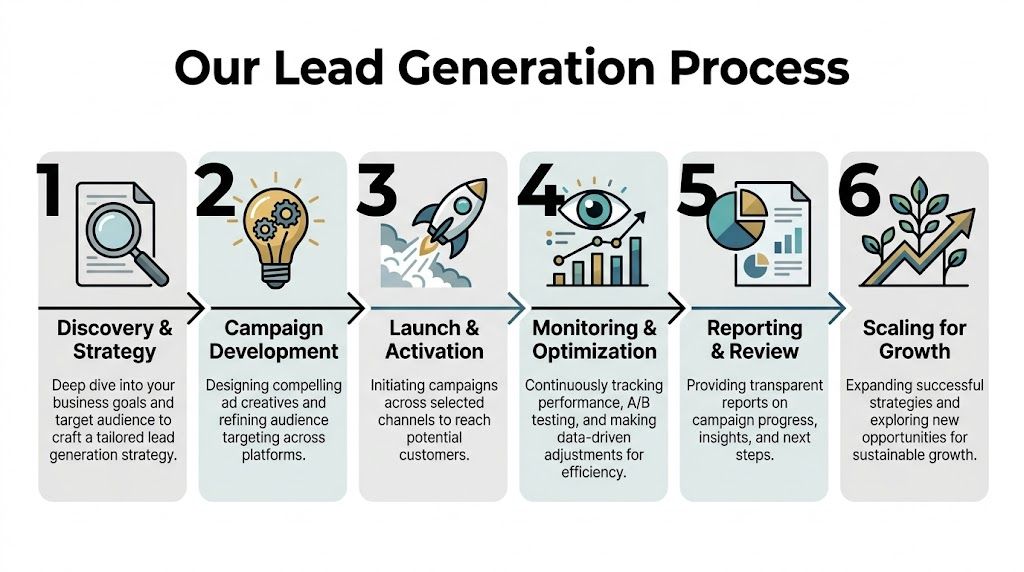
When there’s no structured path from diagnosis to launch to optimisation, businesses end up reacting instead of improving. A proper lead generation service needs a repeatable operating model.
The six stages that keep campaigns honest
Discovery
We start with the business, not the ad account. Offer, margin, sales process, geography, seasonality, buying cycle, existing data, and what a good lead looks like.Strategy
During strategy, channel choice, landing page requirements, and budget logic get sorted. If someone asks what budget to spend on Google Ads, the only honest answer is “it depends on search demand, competition, and conversion quality”. Budget should match economics, not guesswork.Onboarding
Accounts, access, tracking, GTM, GA4, CRM touchpoints, product feeds, event mapping, and audience setup all get aligned here. This stage is boring to most clients and essential to performance.
Launch is only the midpoint
Once campaigns go live, the actual work starts.
Launch
Campaigns go active with a controlled structure. That means sensible naming, audience segmentation, exclusions, conversion goals, and a clear testing plan.Optimisation
Practitioners earn their keep through search term reviews, landing page feedback, Meta creative testing, bid strategy changes, PMAX versus standard Shopping decisions, campaign priority analysis, and lead quality reviews.Scaling
Once something is working, then you push. More budget isn’t the first lever every time. Sometimes the better move is expanding geographies, building a stronger retargeting sequence, improving the site, or widening the product feed carefully.
What owners should expect from the process
A solid process should feel clear, not mysterious.
- You should know what’s being tested
- You should know what counts as success
- You should know where the bottleneck is
- You should know whether the issue is traffic, conversion, or follow-up
The best campaign reporting doesn’t just say what happened. It explains what changed and what happens next.
That’s the difference between account management and actual growth work.
Choosing the Right Lead Generation Partner in Melbourne
Not every agency that sells lead generation builds a reliable lead system.
Some are good at buying traffic. Some are good at design. Some are good at reporting. Fewer are good at connecting traffic, website performance, tracking, and sales follow-up into one commercial process. That matters even more in an unstable market. Excelerate360 notes that Melbourne SMBs in services experienced a 14.2% fluctuation in new business inquiries quarter-over-quarter in Q1 2026. If lead flow swings around, you need a partner who can stabilise the system, not just “boost a few posts”.
Questions worth asking before you sign
If you’re speaking to a digital marketing agency Melbourne business owners recommend, ask practical questions.
How do you define a qualified lead
If they can’t separate enquiries from qualified opportunities, reporting will get messy fast.How do you measure success for Facebook ads
A weak answer focuses on reach and clicks. A stronger answer covers conversion events, creative testing, remarketing, and lead quality.What do you do when Google Shopping ads aren’t spending
You want a real diagnostic process. Feed quality, product eligibility, campaign structure, audience signals, and site readiness all matter.Who handles tracking setup
If no one owns GTM, GA4, CAPI, and CRM attribution, you’ll struggle to trust the numbers.
What to avoid
I’d be cautious if an agency does any of these:
| Red flag | Why it matters |
|---|---|
| Promises instant wins without reviewing your site | They’re treating media buying like magic |
| Talks only about clicks and impressions | Those are activity metrics, not business outcomes |
| Can’t explain how landing pages affect lead quality | They’re ignoring conversion architecture |
| Has no process for follow-up or CRM handoff | Leads can leak after the form submit |
One more thing matters. Industry fit. A team that understands eCommerce usually gives better guidance on merchandising, feed setup, product segmentation, and revenue tracking than a generalist agency built around broad service categories. If your store needs that kind of support, working with an eCommerce marketing agency makes more sense than hiring a provider that treats all accounts the same.
A quick explainer on evaluating agency fit is below.
Good agencies don’t hide the hard parts. They explain trade-offs, tell you what isn’t ready yet, and fix the foundations before pushing budget.
Advanced Tech for Measurable Results Automation and Tracking
This is the part many businesses skip because it sounds technical. It’s also the part that often decides whether your lead generation service is profitable.
If tracking is weak, you can’t trust optimisation. If follow-up is slow, good leads cool off. If events are missing, ad platforms learn from the wrong signals. That’s why the “geeky” layer matters.
Tracking that tells the truth
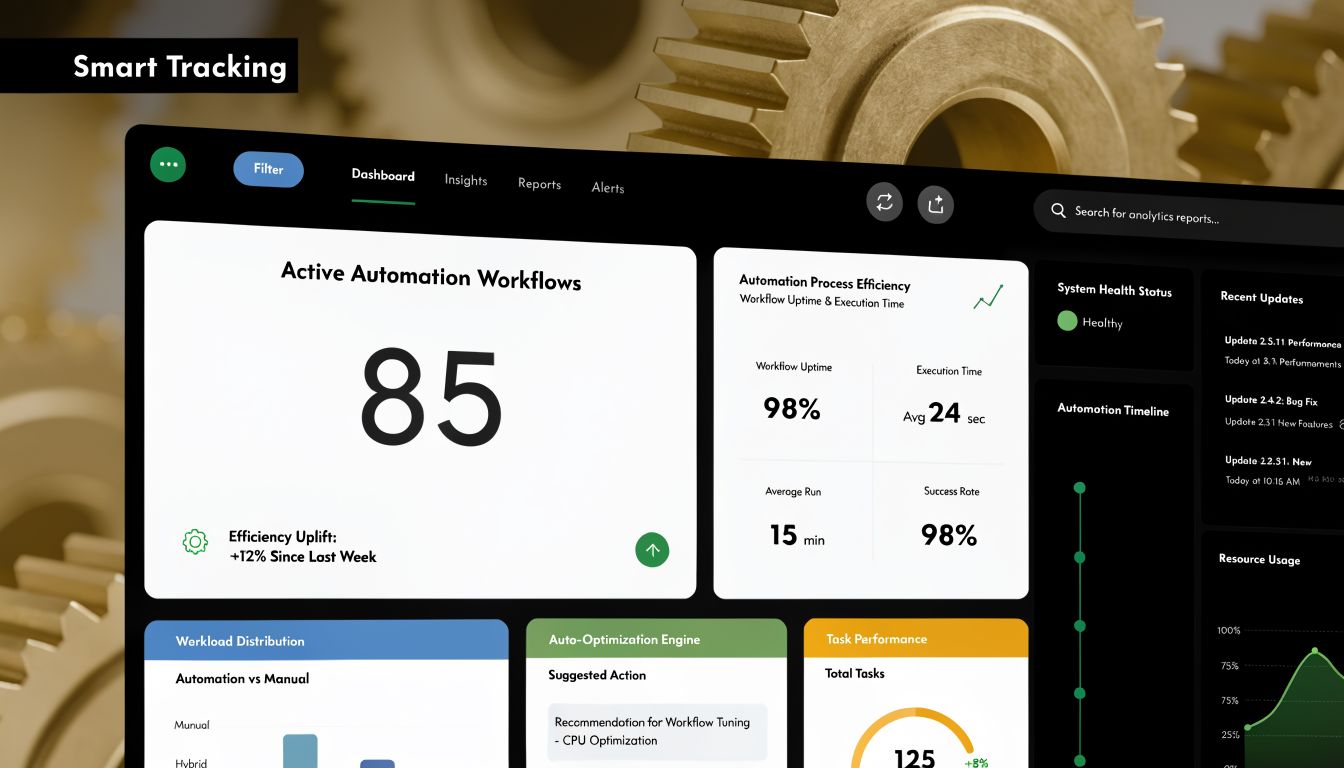
A serious setup usually includes Google Tag Manager containers, GA4 events, Meta Conversions API, CRM syncing, and channel-level attribution checks.
Meta CAPI matters because browser-only tracking leaves gaps. GTM matters because it gives you cleaner control over event deployment. For Shopify, this often connects to checkout, add-to-cart, and lead events. For WordPress, it usually means form submissions, calls, booked appointments, and key page actions.
On the data side, Ditlead reports that AI-driven lead scoring can achieve 95% data accuracy and enable a 3-5x improvement in ROAS for Google Ads campaigns. That’s useful when it’s applied carefully through CRM data, campaign behaviour, and real qualification criteria instead of vanity scoring.
Automation that protects revenue
For service businesses, especially tradies, clinics, salons, and local operators, missed calls are often missed revenue.
That’s why I like pairing ad traffic with practical call handling. A custom number through Twilio can route calls, support always-on answering workflows, and book appointments into your calendar or Calendly. It doesn’t get tired, it doesn’t forget to log the call, and it helps capture demand outside business hours.
Useful tools in this layer often include:
- Call tracking software such as CallRail or GoHighLevel for PPC call campaigns
- Twilio numbers for routing, IVR logic, voicemail handling, and booking workflows
- Email and SMS automation for quote follow-ups, reminder sequences, and reactivation
- Lead source capture so the sales team knows where each enquiry came from
If you’re relying on email nurture, deliverability also matters. Poor inbox placement can undermine follow-up. This guide on how to stop email from going to spam in Gmail is worth reviewing if your nurture emails aren’t consistently landing where they should.
Behind the scenes insight: The best-performing ad account can still look average if calls aren’t answered and follow-up is slow.
FAQs for Melbourne Business Owners
Do I need SEO, Google Ads, or Meta Ads first?
It depends on your timeline and business model.
If you need demand now, Google Ads usually gives the fastest feedback. If you need stronger long-term visibility, local SEO and Google Business Profile work matter. If you sell visually or need to create demand, Meta is often the right complement. Most businesses don’t need one channel forever. They need the right sequence.
How much does it cost to start Google Ads?
The better question is whether your site, tracking, and offer are ready.
I wouldn’t judge readiness by ad budget alone. A smaller budget with sharp targeting and a strong landing page can teach you more than a larger budget on a weak setup. Before launching, make sure conversion tracking, forms, phone handling, and page messaging are sorted.
Is WordPress or Shopify better for lead generation?
For service businesses, WordPress is often more flexible for content structure, SEO, and custom page design.
For product businesses, Shopify is usually the cleaner eCommerce stack. If your store is central to growth, experienced shopify development partners or a reliable shopify developer api specialist can help with custom functions, app logic, and cleaner integrations.
What should tradies focus on first?
Start with intent capture and fast response.
That usually means local Google Ads, call tracking, a landing page built for contact form submissions or calls, and a clear local offer. If you’re in trades, practical campaign support like Google Ads for plumbers or paid social help such as Facebook ads for electricians is often more useful than broad generic advice.
How do I know if my current agency is underperforming?
Look for signs, not slogans.
If you don’t know which leads are qualified, if reports focus on clicks instead of outcomes, if tracking is unclear, or if nobody can explain what was tested last month, you probably don’t have a real growth partner.
If you're looking for a team that understands websites, paid media, tracking, and lead flow as one system, take a look at Alpha Omega Digital. We’re a Melbourne-based agency working with businesses across Melbourne, Sydney, Brisbane, Newcastle, Perth, Adelaide, Darwin and Hobart. If you're a business with a paid ads budget of at least 3k a month, I'd love to offer you a low risk deal, get a month of paid ads management FREE. Apply now through the contact page.