For those seeking a Facebook Ads agency in Brisbane, a common feeling is frustration. You've spent money, watched clicks come in, maybe even seen decent traffic, yet sales feel patchy and leads don't match the spend. I hear that a lot from Brisbane eCommerce owners who thought the issue was Facebook itself, when the actual problem was the setup around it.
I run a marketing agency Melbourne businesses use for growth across paid ads and web development, and we've worked with brands well beyond Victoria. The pattern is consistent. Most underperforming accounts don't fail because nobody touched Ads Manager. They fail because the business hired someone to run campaigns, not someone to build a conversion system.
For eCommerce, that difference matters. A campaign can look active and still be commercially weak. Good media buying won't fix a slow Shopify product page, weak WordPress design, poor GTM and Google Analytics setup, missing Meta Conversions API events, bad creative testing, or an offer that doesn't hold up after the click.
Why Your Facebook Ads Might Be Failing in Brisbane
The usual story goes like this. A Brisbane store owner launches ads, sees some traffic, maybe even gets a few add-to-carts, then the numbers stall. Costs rise, reporting gets vague, and the agency keeps talking about reach, clicks, and engagement while revenue stays flat.
That disconnect is why so many businesses think Facebook ads don't work for them.
The problem usually starts after the click
A lot of agencies in Brisbane sell campaign management as if media buying is the whole game. It isn't. If the landing page is clunky, the product page loads poorly on mobile, the checkout has friction, or your trust signals are weak, the ad account ends up carrying blame for a website problem.
That matters even more for eCommerce brands on Shopify and WordPress. I've seen stores with solid products and decent ad creative burn through budget because the product page had no clear purchase flow, weak imagery, poor variant selection, or a theme that wasn't built for conversion. That is where Shopify development, Shopify design, WordPress development, and WordPress design stop being "web tasks" and start becoming paid media issues.
Most failing accounts don't need more campaigns first. They need fewer leaks in the funnel.
Brisbane advertisers have the audience, but not always the system
Facebook still gives Brisbane businesses serious reach. Facebook currently has over 16 million monthly active users in Australia, meaning that 64% of the total Australian population are active Facebook users, which is a major reason the platform remains valuable for local advertisers targeting consumers across Australia and Brisbane in particular, as noted in BizWisdom's Brisbane Facebook advertising overview.
So the issue usually isn't market size. It's execution.
A weak setup often looks like this:
- Poor tracking: Pixel installed loosely, no event validation, no proper Conversions API installation for Meta, and no confidence in what genuinely drove the sale.
- Bad traffic routing: Ads point to generic collection pages instead of specific landing pages or strong product detail pages.
- Creative fatigue: The same static image runs for too long because nobody has a real Meta ads creative testing process.
- No conversion support: There is no support from Shopify developers, no WordPress website developer, no one building custom landing experiences, and no one using building custom blocks in Gutenberg to improve merchandising.
- Wrong expectations: The agency sells hype, then blames the algorithm.
What I look for first in a struggling account
When we audit an account, I don't start by asking whether the audience was broad or interest-based. I start lower in the stack.
I want to know:
- How clean is the tracking? That means reviewing events, attribution signals, GTM, and Google Analytics.
- What happens on-site? Is the store built to convert, or is ad traffic hitting an average theme with no thought behind UX?
- What creative angles have been tested? Not just colours and headlines. Hooks, offers, product framing, UGC styles, and landing page alignment.
- What channel role is Facebook playing? Prospecting, retargeting, catalogue sales, offer validation, or support for Google Ads.
If those basics are weak, changing campaign settings won't rescue the account. That's why any real Facebook ads agency should also understand Google Ads, Google shopping ads for dropshipping, PMAX vs Google Shopping ads, campaign priority in Google Ads, and how paid social fits the wider funnel.
What a Great Facebook Ads Agency Actually Does
A good Brisbane Facebook ads agency builds the system around the ads. That means checking whether the account can support more spend before trying to scale it. If the tracking is wrong, the offer is weak, or the site leaks conversions, better media buying only makes the waste more efficient.
Tracking comes before scaling
I want an agency to verify the technical setup before it touches budget. That includes the Meta Pixel, setting up Meta Conversion API, and confirming that purchase, add-to-cart, and other key events are firing properly. If the business also runs Google Ads for service based businesses or eCommerce search campaigns, the agency should also be comfortable setting up Google Tag Manager containers and checking your GTM and Google Analytics setup so attribution is at least directionally reliable.
Poor data creates expensive confidence. The reporting can look clean while the account is optimising toward the wrong actions, missing purchases, or overcounting results. That is how brands keep spending while wondering why revenue and cash flow do not match the dashboard.
Platform knowledge matters here too. On Shopify, a capable team should understand how theme speed, app conflicts, product page layout, and cart flow affect conversion rate and remarketing performance. On WordPress, they should know the difference between a simple landing page change and a bigger structural issue that needs development support. If they only talk about audiences and bid settings, they are working too high up the funnel.
Creative testing needs a real process
Creative is usually the biggest variable in Meta performance, but many agencies still treat it like an occasional refresh. That approach stalls fast, especially for Brisbane eCommerce brands competing in crowded categories.
A better process tests different sales angles, buyer objections, formats, and offers on purpose. The point is not to produce more ads. The point is to find which message gets the right click, then confirm that the landing page can carry that intent through to purchase.
According to Gravitate Digital's Brisbane Facebook ads agency page, stronger results come from structured split testing across audiences, creative, copy, and calls to action, and weak audits or poor Pixel setup often hold accounts back before scaling even starts. I agree with that. The accounts that improve consistently usually have a repeatable testing rhythm, not random bursts of new creative when performance dips.
A practical testing workflow usually includes:
- Hook testing: Different opening messages tied to price, quality, speed, trust, pain point, or desired outcome.
- Format testing: Static images, carousels, founder-led video, UGC-style clips, product demonstrations, and testimonial creative.
- Offer testing: Full price, bundle, threshold offer, gift with purchase, welcome discount, or stronger product education.
- Message match: The product page or landing page carries the same promise, tone, and objection handling as the ad.
If you want an example of process-led thinking, Meta ads creative testing is one area where disciplined iteration usually beats account hacks.
They should understand the full commerce stack
This is the gap I see all the time. The agency can launch campaigns, but it cannot fix the page those campaigns send traffic to. That leaves the business paying for traffic while basic conversion problems stay untouched.
For Brisbane eCommerce brands, a paid social partner should understand how the pieces connect:
- Shopify development and Shopify design
- WordPress development and WordPress design
- Instagram Shop and Facebook Shop
- Google Shopping setup and product feeds
- Beginners guide to Google Shopping ads concepts for newer stores
- Local SEO and Google My Business for brands with physical locations
- How Meta and search work together across prospecting, retargeting, and branded demand capture
Netstripes' Meta Ads guide for Australia explains that Meta Ads let advertisers target users based on interests, behaviours, demographics, and online activity. That targeting range is useful, but it does not remove the need for a good site experience, clear merchandising, and a sensible funnel. Precision at the ad level does not fix confusion after the click.
That is why I rate agencies higher when they can speak clearly about ad creative, feed quality, landing pages, product pages, checkout friction, and customer intent across channels. Running ads is one skill. Building a conversion system is the job.
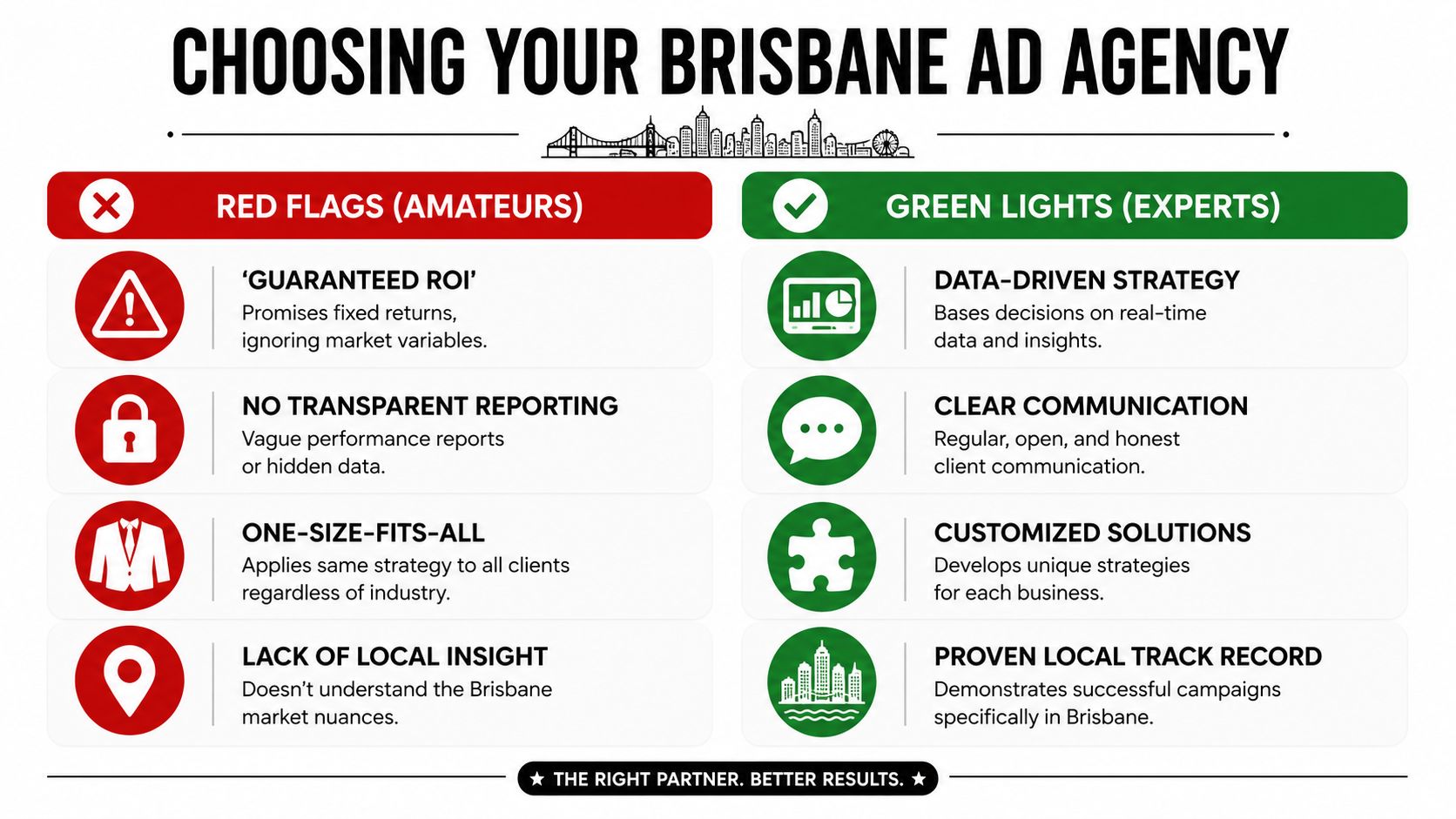
Separating Brisbane's Experts from the Amateurs
Brisbane has no shortage of agencies promising aggressive growth. The hard part is figuring out who can build a profitable system and who is just good at sales calls.
The fastest way to sort them is to listen for what they emphasise.
Red flags I take seriously
If an agency leads with guaranteed ROI, I get cautious quickly. Facebook performance changes with creative quality, offer strength, website experience, competition, and margins. Any guarantee made before a proper audit usually says more about the sales process than the delivery process.
The second red flag is when they only want to talk about ad account metrics. That's incomplete. Good operators ask about average order value, margin, repeat purchase behaviour, merchandising, stock constraints, checkout issues, and whether the site itself deserves more traffic.
Another warning sign is a complete absence of web capability. For eCommerce, that matters a lot. Data shows that 70% of Australian eCommerce abandonment occurs due to poor post-click site experience, not just ad targeting, and fewer than 15% of Brisbane agencies bundle web development with paid social, which leaves a real gap between traffic generation and actual conversion, according to Karma Media's Brisbane Facebook ads agency page.
That gap is why many Brisbane stores get stuck. They hire one team for ads, another for design, and no one owns the full funnel.
What experts do differently
A more capable agency behaves more like a commercial partner than a channel manager.
You should notice a few things early:
- They ask harder business questions: margin, fulfilment, inventory, promo cycles, product-market fit.
- They look at site architecture: collection pages, PDPs, checkout flow, mobile speed, and trust signals.
- They understand platform build: whether you need a Shopify developer or changes from a broader web design team.
- They discuss channel interplay: how Facebook supports Google Ads, branded search lift, and retargeting across platforms.
- They care about the right reporting: not just dashboard activity.
If an agency can't talk intelligently about your website, they probably can't improve your ad account for long.
Why the full-funnel view wins
This is the part a lot of Brisbane businesses miss when comparing proposals. The better partner is rarely the one offering the flashiest pitch deck. It's usually the team that can connect paid social, site UX, analytics, feed health, and conversion behaviour.
That means knowing when a store needs better Shopify design, when a WordPress store needs a WordPress web developer, when Google Shopping ads not spending budget is really a feed issue, and when Meta underperformance is just a symptom of a weak offer page.
An expert won't pretend ads live in isolation. They know profitable growth comes from aligned systems.
Critical Questions to Ask Any Potential Agency
Most agency selection calls are too soft. The business owner asks about industries, turnaround times, and pricing. The agency replies with general confidence. Everyone sounds competent, and nothing useful gets revealed.
You need better questions than that.

Ask about how they define success
A serious paid social partner should be very clear here. If they talk mostly about CTR, CPC, impressions, or engagement, keep digging. Those metrics can be useful diagnostics, but they aren't the primary decision-makers.
The two most critical metrics for optimising Facebook Ads campaigns are cost per conversion and return on ad spend, while secondary metrics like click-through rate or cost per click are far less impactful for decision-making, as noted in this discussion on Facebook ad optimisation metrics.
Ask them directly:
- Which metrics do you optimise around weekly?
- What would make you pause spend, even if traffic looks healthy?
- How do you report performance to an eCommerce brand versus a lead gen brand?
The quality of the answer matters more than the polish.
Ask about process, not outcomes
Plenty of agencies can talk about wins. Fewer can explain repeatable operating discipline.
I'd ask questions like these:
- How do you run creative testing? I want to hear about angles, formats, fatigue management, and how they decide what gets replaced.
- How do you handle onboarding for Pixel and Conversions API? If they can't explain this clearly, they're not technical enough.
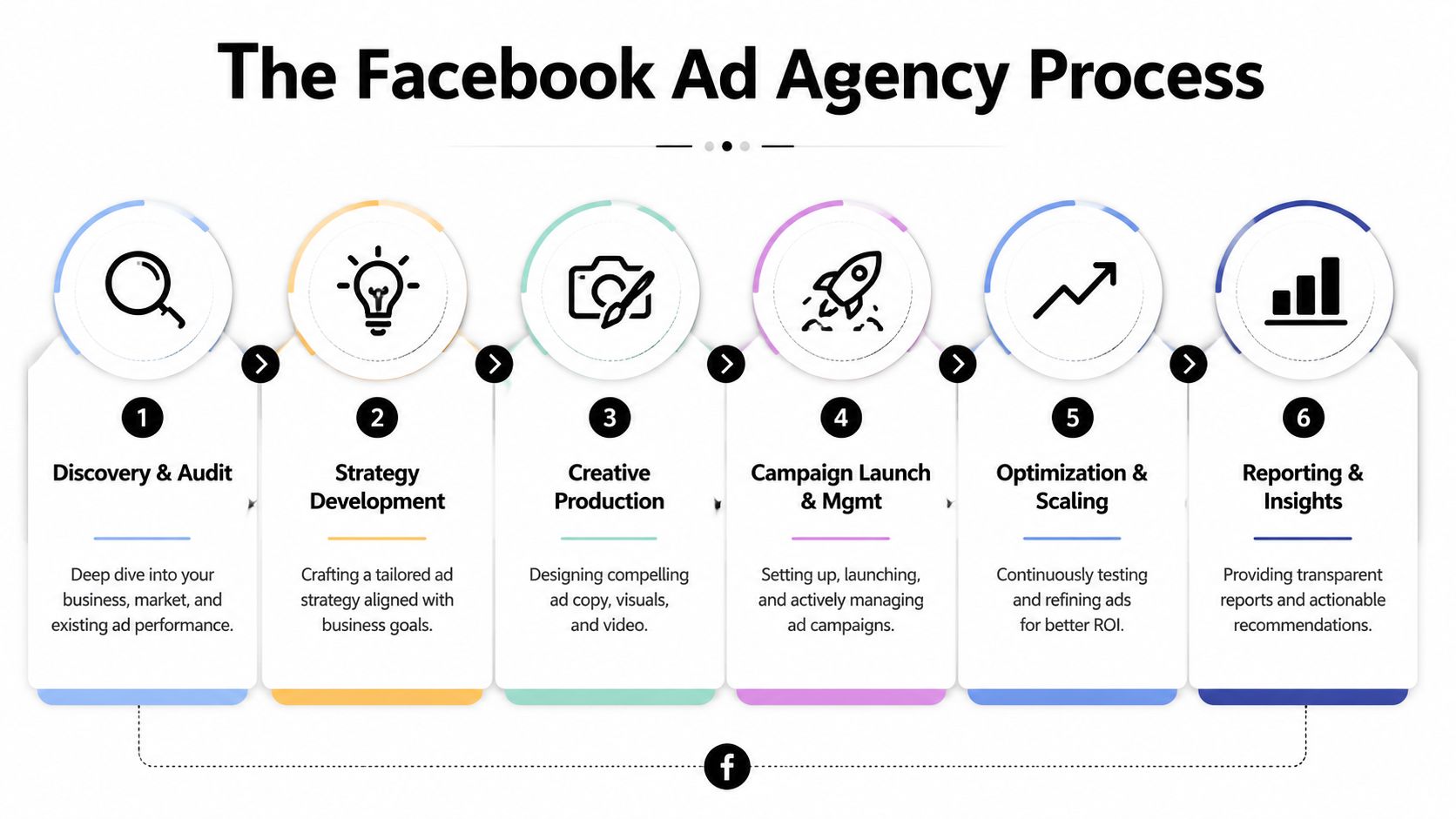
- What happens in the first month? There should be an audit, tracking validation, offer review, creative roadmap, and landing page review.
- How do you work with Shopify or WordPress? If they only manage ads and can't guide site changes, that's a limitation.
- How do you approach audience targeting in Brisbane? They don't need to overplay local magic, but they should understand regional nuance.
A good answer usually sounds specific, slightly unglamorous, and operational. That's what you want.
Ask where they need your involvement
Often, many relationships break down. A weak agency pretends they can do everything without client input. A good one tells you exactly where collaboration improves results.
I'd expect them to ask you for:
- Product priorities: what needs to sell now, what has margin, what has stock.
- Customer feedback: objections, reviews, repeat buyer patterns.
- Promotional calendar: launches, bundles, sale periods, inventory changes.
- Creative assets: product demos, founder insights, customer footage, UGC.
The best agency relationships don't feel hands-off. They feel well organised.
If you're a service business instead of pure eCommerce, ask about call tracking too. For plumbing, electrical, and other high-intent services, there should be a clean method for measuring phone leads. That's where related experience with Google Ads for plumbers or Facebook ads for electricians becomes useful, along with call tracking tools such as CallRail, GoHighLevel, and Twilio.
We've also built custom Twilio-based number setups that can support 24-hour call answering, route enquiries, and book appointments into a calendar or Calendly. For tradies, hairdressers, beauty therapists, dentists, restaurants, and doctors, that kind of system can reduce missed opportunities caused by unanswered calls. It doesn't replace campaign strategy, but it can make paid traffic more commercially useful.
Decoding Pricing and Measuring True ROI in Brisbane
Pricing conversations get messy because businesses often compare agency fees without comparing capability. A cheaper retainer can cost more if the team can't fix tracking, improve landing pages, or run disciplined testing.
For Brisbane businesses, I prefer looking at total commercial efficiency. Not just management fees, but what the agency helps you avoid wasting.
What ad costs actually look like
There are at least two numbers every business should know before signing with a Facebook ads agency Brisbane provider.
Australian businesses typically pay between $0.50 and $2.00 per click on Facebook ads, while B2B lead generation costs can range from $40 to $90 per lead, depending on audience targeting and industry, according to Digital Nomads HQ's Facebook ads agency guide.
That doesn't mean your campaign should sit neatly in the middle of those ranges. It means you need context. A premium product, narrow audience, or weak conversion path can push costs around fast.
Here's a simple benchmark table to keep expectations grounded.
| Metric | Typical Range (AUD) |
|---|---|
| Cost per click | $0.50 to $2.00 |
| B2B cost per lead | $40 to $90 |
If you want a broader explainer on budgeting assumptions and common cost variables, Website Builder Australia's Facebook ad guide is a useful reference point.
Agency fees and budget reality
I won't invent a neat one-size-fits-all fee range because good pricing depends on scope. Some brands need just campaign management. Others need tracking repair, feed work, landing page changes, Shopify support, or extra creative production.
What I can say from experience is this: if your ad budget is too low, optimisation gets harder because there isn't enough data to make decisions with confidence. That applies whether you're running Meta, Google Ads for contact form submissions, or product-led search campaigns.
For eCommerce, I also push owners to think beyond ad spend. Budget often needs to cover:
- Creative production
- Landing page iteration
- GTM and analytics maintenance
- Feed and catalogue management
- Platform development support
That is why a pure media buyer can look cheaper but perform worse. They only control one lever.
What true ROI looks like
Real ROI isn't "we got traffic". It's profitable orders, sustainable acquisition cost, and a system you can improve over time.
For some brands, that means Meta handles product discovery while Google captures branded and high-intent search. For others, Facebook and Instagram do the heavy lifting while Instagram Shop and Facebook Shop improve product discovery inside the platform. For local brands with a showroom or hybrid retail setup, local SEO and Google My Business can support the paid channels by improving trust and branded search conversion.
The practical point is simple. Judge the partner by whether they can explain how revenue is created, tracked, and improved. If they can't, the proposal is incomplete.
Your Blueprint for a Successful Agency Partnership
You hire a Brisbane Facebook ads agency, the campaigns go live, and two months later the numbers look ordinary. The agency says results need more time. Your team says sales should already be up. In my experience, this is the point where a lot of partnerships drift off course, not because the media buying is broken, but because nobody agreed on how growth would be built.
A strong agency relationship starts with shared responsibilities. The agency owns strategy, execution, testing, and reporting. The business owns speed, product context, margin reality, and approval flow. If either side goes quiet, performance usually stalls.
What good onboarding should include
Good onboarding should answer one question early. What is stopping this account from producing profitable growth right now?
Sometimes it is the ad account. Sometimes it is the offer. Sometimes the ads are fine and the product pages are doing the damage. Brisbane eCommerce brands often hire for campaign management when the actual need is a partner who can connect ad creative, landing pages, checkout flow, tracking, and merchandising into one system.
A useful onboarding process usually includes:
- Access to ad accounts, catalogue, and analytics
- A review of the store experience on Shopify or WordPress
- Pixel and Conversions API checks
- GTM and GA4 validation
- Creative review by angle, format, and offer
- Landing page and product page assessment
- A clear 30 to 90 day test plan
Platform support matters, but it does not need three separate links and a stack of jargon. If your store runs on WordPress or Shopify, the agency should be able to coordinate developer work, whether that means page speed fixes, template updates, app cleanup, product page changes, or checkout improvements. If they cannot handle that work directly, they should at least know how to brief it properly and prioritise the changes that affect conversion.
When businesses want one provider handling both web and paid media, Alpha Omega Digital's eCommerce marketing agency service is one example of that model. It suits brands that want fewer handoffs between the ad team and the people changing the site.
How the relationship should run month to month
The best partnerships are operational.
That means fewer padded reports and more decision-making. I want a client to know what is changing, why it is changing, and what we expect to learn from it.
A practical monthly rhythm looks like this:
- Weekly updates on revenue, CPA, MER, conversion rate, and any problems affecting performance.
- Monthly strategy calls focused on creative tests, offer changes, landing page edits, and budget allocation.
- Fast communication around stock levels, promos, pricing changes, and new product launches.
- A live testing pipeline so the account keeps producing new learnings instead of repeating old ads.
Patience matters, but blind patience is expensive. Give testing enough time to produce a signal. Cut weak ideas quickly. Keep the process disciplined.
The brands that get the most from an agency
The best clients are rarely the ones with the biggest budget. They are the ones who make it easy to act on what the account is showing.
They share sales call notes, customer objections, best-selling SKUs, margin differences, and repeat purchase patterns. They approve new creative without sitting on it for two weeks. They understand that scaling a Brisbane brand through Meta usually requires work both inside the ad account and on the site.
That is the gap many agencies miss. Running ads is one task. Building a conversion system is the job.
If you want a quick sense check before increasing spend, use a tool that helps calculate social media ROI based on revenue and acquisition cost, not clicks and reach alone.
The partnership should feel honest. You should hear where the friction is, what the trade-offs are, and what has to improve next. If an agency can explain how ads, creative, product pages, tracking, and conversion rate work together, you are far more likely to get real business growth from the relationship than a tidy dashboard and a disappointing month.
If you're a business with a paid ads budget of at least $3k a month, I'd love to offer you a low risk deal through Alpha Omega Digital. Get a month of paid ads management FREE. Apply now through the contact page. Alpha Omega Digital is a marketing agency based in Melbourne, Australia, and also services clients from Sydney, Brisbane, Newcastle, Perth, Adelaide, Darwin and Hobart. Have a project in mind? Contact us.
[email protected]
Read more insights from our team on web design, paid ads, and growth strategy.